
India’s Offshore Sand Mining: Corporate Greed and Environmental Destruction

Anie Anna Thomas
Published on Feb 25, 2025, 05:03 PM | 8 min read
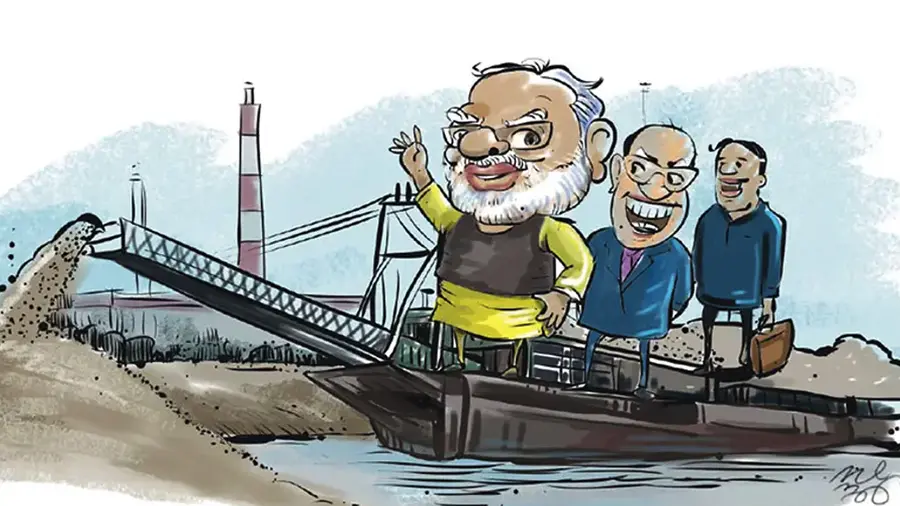
The Government of India has initiated offshore sand mining operations along the coast of Kerala under its Blue Economy initiative, promoting it as a measure to boost economic growth and optimise resource utilisation. However, this project has triggered widespread concern among , coastal communities, environmentalists and scientists. The Kerala government has launched strong resistance against the Centre’s move, stating that deep-sea mining will devastate marine ecosystems, threaten the livelihoods of fishing communities, and infringe upon state powers. Despite this, the Modi government is aggressively pushing forward with its sand mining plans, seemingly prioritising corporate profits over environmental and social well-being.
The Blue Economy: Development or Exploitation?
The Blue Economy, promoted by the central government as a strategy for sustainable development, is increasingly being seen as a mechanism for large-scale corporate exploitation of India’s offshore resources. Policies introduced under this initiative are enabling private and multinational corporations to extract valuable marine resources, raising concerns about environmental destruction and the displacement of coastal communities.
A major turning point was the 2023 amendment to the Offshore Areas Mineral (Development and Regulation) Act, 2002, which allows private entities to secure mining leases for up to 50 years. This move has paved the way for corporate involvement in the extraction of marine sand, heavy minerals, and other valuable deposits. The South Indian coastline, particularly Kerala, Tamil Nadu, and Andhra Pradesh, has become a focal point for these extractions, prompting fears of severe ecological damage.
A similar attempt was made by the UPA government in 2006 during Manmohan Singh’s tenure, but Kerala strongly resisted, citing concerns over environmental degradation and the displacement of coastal communities. This historical resistance highlights that concerns over deep-sea mining are not new and have long been a point of contention between state and central authorities.
According to the Geological Survey of India, Kerala’s offshore region holds 74.5 crore tonnes of sand deposits, with 30.2 crore tonnes concentrated along the Kollam coast. The government has already initiated the leasing process for 242 square kilometers of Kollam’s coastal area, with tenders set to be finalized by February 28. These areas are not just mineral-rich zones; they are critical ecosystems that support marine biodiversity, protect against coastal erosion, and sustain thousands of fishing communities
With corporate interests being prioritised over ecological and social concerns, the Blue Economy is becoming a tool for unchecked exploitation rather than sustainable development. The large-scale removal of offshore resources threatens to disrupt marine ecosystems, weaken coastal resilience, and displace communities that depend on these waters for their survival. As extraction intensifies, the irreversible damage to India’s coasts raises urgent questions: Who truly benefits from the Blue Economy, and at what cost?
Kerala’s Strong Opposition to Central Move
The Kerala government has expressed strong disagreement with the amendment to the Offshore Areas Mineral (Development and Regulation) Rules (OAMDR). On March 11, 2023, the Principal Secretary of the Fisheries and Ports Department sent a letter to the Director of the Union Ministry of Mines, stating that permitting deep-sea mining would completely disrupt marine fisheries in the country. The state government has argued that the Centre’s move amounts to an infringement on state powers, as fisheries fall under the jurisdiction of the state. Only fishing activities beyond 12 nautical miles from the coast fall under the Union List.
During a roadshow conducted by the Union Mining Department in Kochi on January 11, 2025, the Principal Secretary of the State Industries Department presented concerns related to the issue, highlighting the state’s policy stance and the environmental and social problems associated with mining. The Secretary of the Union Ministry of Mines was also informed of Kerala’s opposition. Subsequently, on January 19, the matter was discussed at the Central Geological Programming Board meeting in Bhubaneswar, where it was decided that the National Institute of Oceanography would conduct an environmental impact study before proceeding further.
How Offshore Sand Mining Endangers Coastal Livelihoods
For millions of fisherfolk across India, the sea is more than just a source of income—it is their lifeline, deeply tied to their cultural and social identity. However, with the central government pushing forward with offshore sand mining, these communities now face an uncertain future. By disrupting traditional fishing grounds, the project threatens to displace coastal populations and undermine their primary source of sustenance.
In Kerala, the Kollam Shelf—a 3,200-square- kilometre stretch rich in marine biodiversity—has long been one of the state’s most productive fishing zones, supporting commercially valuable species like shrimp, squid, mackerel, and sardines. Now, with this area designated for sand mining, fisherfolk fear losing access to the waters that have sustained them for generations. Similar concerns are emerging in other coastal states, where vital fishing zones face destruction.
Countries like Singapore and Indonesia have already experienced severe coastal erosion and the disappearance of beaches due to large-scale marine sand mining. India, with its vast 7,500- kilometre coastline, is at similar risk. The removal of seabed sand threatens to accelerate shoreline erosion, making coastal areas more vulnerable to natural disasters such as cyclones, tsunamis, and floods. In Kerala, where rising sea levels and extreme weather events already pose a threat, sand mining will only intensify these dangers. Shrinking beaches will weaken natural barriers against storm surges, damage coastal infrastructure, and disrupt industries like tourism and fishing. Essential activities such as boat docking, fish drying, and net weaving will also be affected, leading to potential job losses.
Already struggling with the effects of climate change—rising sea temperatures, unpredictable weather, and declining fish stocks—these communities now face an even greater challenge. Large-scale seabed sand extraction could push them further into economic distress while causing irreversible damage to marine ecosystems.
Environmental Devastation: A National Crisis
The environmental consequences of seabed sand mining are profound and far-reaching. The dredging process disrupts seabed structures, increases water turbidity, and reduces oxygen levels, adversely affecting marine biodiversity. Essential habitats like mangroves, coral reefs, and seagrass meadows—key breeding grounds for marine species—face destruction, leading to ecological imbalances.
Phytoplankton, the foundation of the marine food web, depend on sunlight for photosynthesis. Increased water turbidity from mining activities blocks sunlight penetration, hindering phytoplankton growth. This reduction affects zooplankton and subsequently larger marine species, potentially leading to a collapse of fish populations. Studies have shown that turbidity can hamper photosynthesis for up to 48 hours and stir up pollutants, including heavy metals, from the ocean bed, further jeopardizing the ecosystem. This cascading effect can lead to the collapse of fish populations, threatening India’s marine biodiversity. For instance, the Kollam Shelf alone supports over 200 species of fish, many of which are commercially important. Similar ecosystems exist off the coasts of Tamil Nadu and Andhra Pradesh, all of which are at risk.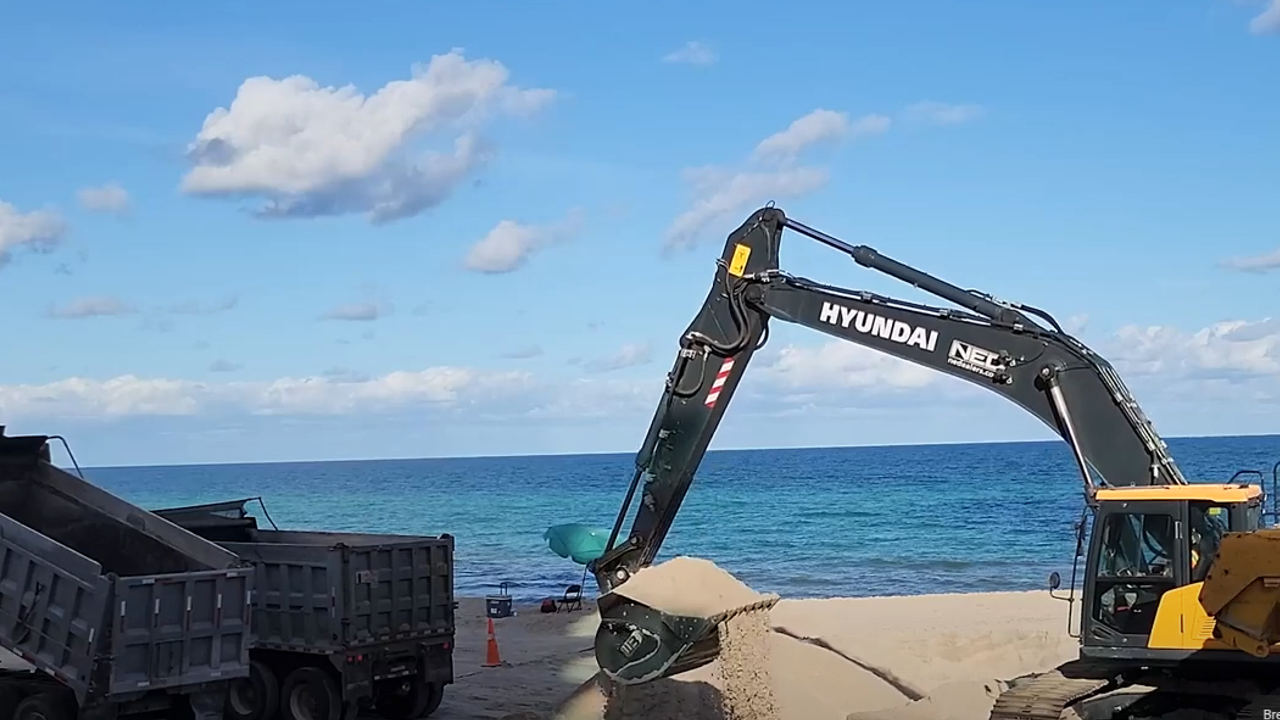
Health and Food Security Risks
India’s coastal regions are home to a significant portion of the population, many of whom rely on fish as a primary source of protein. Kerala, for instance, has an annual fish consumption of 9.12 lakh tonnes, with the state currently producing only 60% of its demand. Any intervention that depletes fish stocks will have serious implications for food security and public health.
Seabed mining can release heavy metal contaminants into the water, which can accumulate in fish and other marine organisms. When consumed by humans, these toxins pose severe health risks, including neurological disorders and cancer. Furthermore, the disruption of ocean currents and sediment transport caused by large-scale mining can have far-reaching consequences, potentially altering wave dynamics, nutrient distribution, and even global oceanic circulation patterns. In a country already grappling with the impacts of climate change, these changes could be catastrophic.
Political and Social Resistance
The Kerala government’s strong opposition to the central government’s offshore sand mining initiative highlights a crucial battle between environmental and social welfare on one side and corporate-driven economic policies on the other. Environmentalists and local communities have also raised alarms about the potential ecological fallout of deep-sea mining.
In response, the Kerala State Fisheries Workers Federation (CITU) has announced a day-and-night satyagraha demonstration in front of Raj Bhavan to protest the Centre’s move. The protest will take place from 10 AM on February 28 to 10 AM on March 1, with CITU State General Secretary Elamaram Kareem inaugurating the event.
However, the Congress party’s stance on the issue has raised questions about its political motives. Instead of mounting a direct challenge to the Modi government’s push for offshore sand mining, Congress has primarily focused on criticizing the Left government in Kerala, effectively diverting attention from the Centre’s pro-corporate policies. By doing so, the party appears to be aiding the BJP’s agenda rather than standing with fisherfolk and environmental activists in resisting the ecological and social fallout of deep-sea mining. With opposition to the project now fractured along political lines, the Centre continues to move forward with its plans, leaving coastal communities vulnerable to irreversible environmental damage and economic displacement.












0 comments