
MGNREGA Replaced by VB-GRAM-G Bill Amid Opposition Protests in Lok Sabha
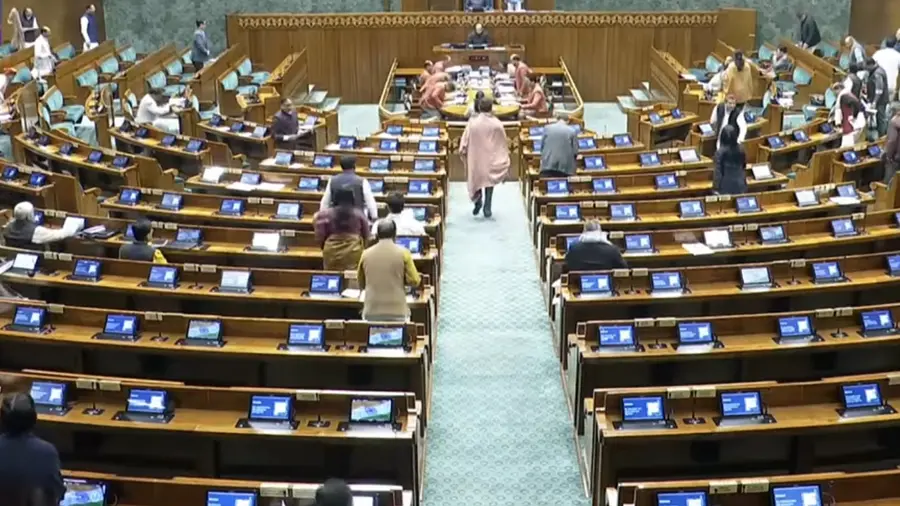
New Delhi: The Lok Sabha on Thursday passed the Viksit Bharat – Guarantee for Rozgar and Ajeevika Mission (Grameen) Bill, 2025 (VB-GRAM-G), a legislation that replaces the Mahatma Gandhi National Rural Employment Guarantee Act (MGNREGA), removes Mahatma Gandhi’s name from the scheme, and significantly alters its funding structure by shifting a major portion of the financial burden onto state governments. The bill was passed by a voice vote amid intense protests by the Opposition.
Opposition MPs staged a protest during Union Agriculture Minister Shivraj Singh Chouhan’s reply, tearing copies of the bill inside the House. Despite the uproar, the government pushed the legislation through. The bill is expected to be taken up in the Rajya Sabha shortly, with the Centre aiming to secure its passage before the end of the Winter Session on Friday.
The new legislation fundamentally restructures the rural employment guarantee program. While removing Mahatma Gandhi’s name, it also centralises control of the scheme and revises its funding pattern. Under the bill, the Centre will now bear 60 per cent of the wage cost, while states will be required to contribute 40 per cent. The annual expenditure on the scheme is estimated at around 1.5 lakh crore rupees, which would force states to collectively bear about 55,000 crore rupees.
A major departure from the existing law is the introduction of a provision allowing the scheme to be suspended for up to 60 days during peak agricultural seasons, including sowing and harvesting periods, through advance notification by states. The existing MGNREGA does not permit suspension under any circumstances. This could deny employment at the time rural households need it most.
The bill also reduces the role of gram sabhas and panchayats in implementation, instead emphasising digital systems such as mobile-based attendance, biometric verification, geo-tagging, and artificial intelligence-driven audits.
Heavy Financial Impact on Kerala
According to estimates, the revised funding structure would impose an additional annual burden of 1,600–2,000 crore rupees on Kerala. At present, the Centre contributes nearly 90 per cent of the scheme’s expenditure in the state. Last year alone, Kerala received 4,838 crore rupees under the program. While the national average central share in state revenues is 53 per cent, Kerala receives only about 25 per cent, surviving largely by increasing its own revenue.
Left Criticises Congress, Calls Bill “Death Knell”
Left parties have termed the bill the “death knell” of the rural employment guarantee scheme. They accused the Congress and the UDF of limiting their protest to the removal of Mahatma Gandhi’s name, while remaining silent on provisions that they say undermine the very foundation of the program.
They also criticised UDF MPs from Kerala for prioritising other issues in Parliament on the day the bill was introduced, instead of opposing what they described as the dismantling of a crucial national welfare scheme.
MGNREGA was introduced during the first UPA government under pressure from Left parties and was fully funded by the Centre. Two decades later, the new law requires states to shoulder 40 per cent of the cost, raising concerns about the scheme’s long-term viability.
Nationwide Protests Announced
Left parties have called for nationwide protests on December 22 against the bill. They argue that the legislation legally absolves the Centre of its responsibility to provide funds on demand, weakens the right to work, and risks excluding large numbers of rural families through digital reforms and job card revisions.
They have also dismissed the government’s promise to increase annual workdays from 100 to 125 as misleading, alleging that the changes would instead result in widespread denial of employment. Mandatory digital attendance and the suspension of work during peak agricultural seasons would force workers to depend on landowners, critics warned.
In a joint statement, CPI(M) General Secretary M.A. Baby, CPI General Secretary D. Raja, CPI(ML) Liberation General Secretary Dipankar Bhattacharya, RSP General Secretary Manoj Bhattacharya, and Forward Bloc General Secretary G. Devarajan demanded the immediate withdrawal of the bill. They called for strengthening the scheme by ensuring adequate funding, universal coverage, and guaranteeing at least 200 days of work per household.
Tags



Related News
Dont Miss it




0 comments