

Lawyer Seeks AG’s Permission for Criminal Contempt Proceedings Against CEC Amid Reports of Disagreements Among EC Members
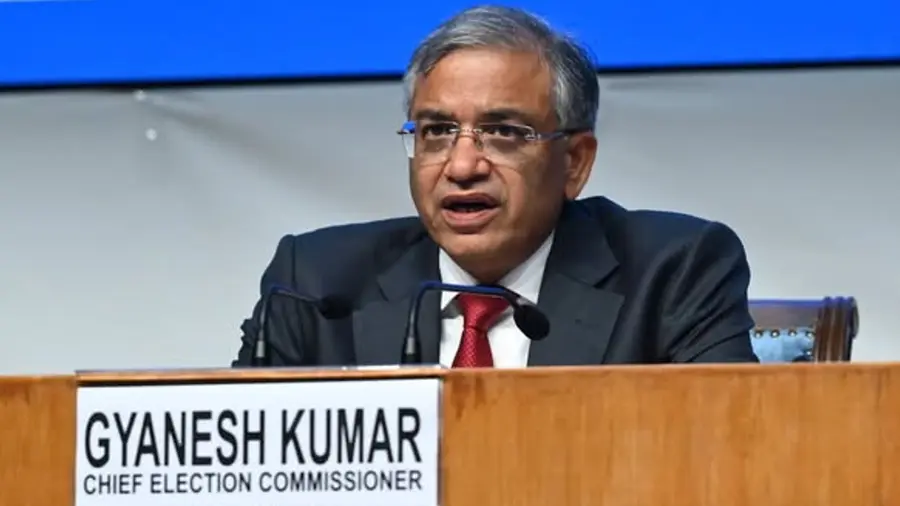
New Delhi: Supreme Court lawyer Brajesh Singh has approached Attorney General R Venkataramani seeking permission to initiate criminal contempt proceedings against Chief Election Commissioner Gyanesh Kumar, alleging that the Election Commission was being run without the required consensus among its members, according to reports.
Singh's letter comes a day after a Supreme Court bench delivered a split verdict on challenges to the law governing the appointment of the Chief Election Commissioner and Election Commissioners. In his separate opinion, Justice Dipankar Datta stressed that the Election Commission must not only be independent but also be seen to function independently to ensure free and fair elections.
Under the applicable procedure, consent from the Attorney General or Solicitor General is required before criminal contempt proceedings are initiated against anyone in the Supreme Court.
According to Singh's letter, based on an investigative report published by The Indian Express on September 23, Election Commissioners Sukhbir Singh Sandhu and Vivek Joshi had recorded written objections on at least 14 occasions over the previous 10 months. The letter states that the objections concerned decisions involving voter-registration software, changes to Form 6 and the addition or deletion of names during the Special Intensive Revision process across the country.
The lawyer has alleged, citing the report, that such decisions were taken without the knowledge or approval of the full panel in the Commission. He contended that this amounted to an undermining of the constitutionally mandated multi-member structure of the Election Commission.
Singh further relied on Supreme Court judgments, including T N Seshan v Union of India and Anoop Baranwal v Union of India, to argue that the CEC is required to function as a “first among equals” within the Commission rather than exercise unilateral authority.
The letter alleges that bypassing the other Election Commissioners and issuing decisions in the name of the full Commission could amount to wilful disobedience of the law declared by the Supreme Court under Article 141 of the Constitution.
The Supreme Court on Wednesday delivered a split verdict on hearing a batch of pleas whether the 2023 law replacing CJI with a Union Cabinet Minister in the panel to appoint Election Commissioners should be referred to a larger five-judge bench.
Justices Datta and Satish Chandra Sharma differed on whether the challenge should be referred to a Constitution Bench, but the matter was placed before the Chief Justice of India for consideration of a larger bench.











0 comments