

Kerala Calls for Community Action to Tackle Youth Aggression and Substance Abuse
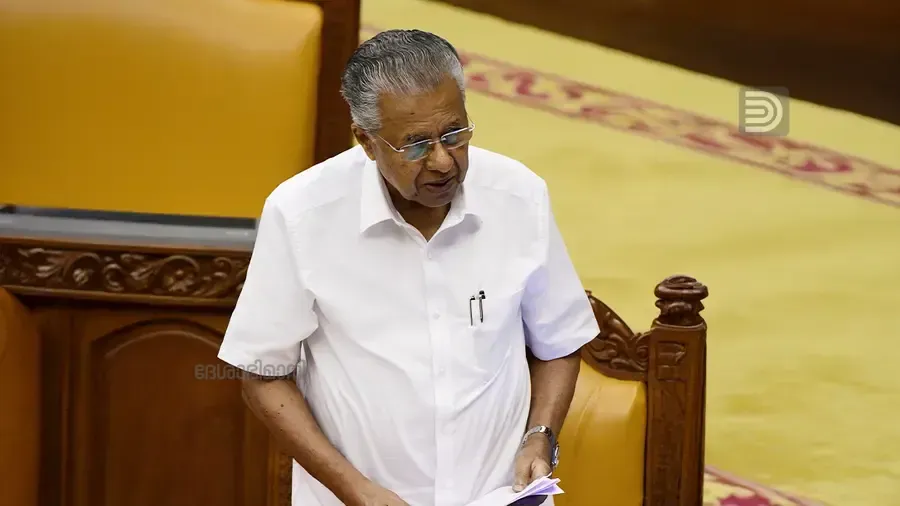
The Kerala Legislative Assembly, on Monday, engaged in a crucial discussion addressing the rising challenges of aggression and substance abuse among children and adolescents. Chief Minister Pinarayi Vijayan, responding to the concerns, asserted that the increasing violence and addiction among the youth is not merely a law-and-order issue but a reflection of deeper social, economic, and moral failures. He emphasized that tackling this problem requires more than just enforcement—it demands a comprehensive approach that involves systemic changes in education, parenting, and social responsibility. Calling for collective action, he stressed that safeguarding the younger generation is a shared responsibility of families, communities, and the government. The urgency of a holistic approach is evident from recent incidents of violence and addiction. Recognizing the gravity of the situation, the government is committed to stringent legal measures while fostering societal awareness and shared responsibility. Given its national and global relevance, he urged a coordinated effort from all sections of society.
Global Trends in Child Aggression
The Chief Minister highlighted that aggression among children is a global issue. In 1999, a 12th-grade student in Colorado, USA, shot and killed twelve classmates and a teacher at Columbine High School, injuring twenty-one others. Since then, such attacks have occurred worldwide, sparking ongoing discussions on youth aggression and preventive measures. A similar incident took place in April 2007 in Blacksburg, Virginia. Over the years, multiple school shootings and violent attacks by children have occurred, prompting the United Nations to express concern over the rising trend. However, the Chief Minister asserted that Kerala cannot justify such incidents within its society by citing global examples. Instead, he stressed the need for proactive measures to address the root causes and protect the younger generation from such alarming trends.
Pinarayi Vijayan identified multiple causes behind rising aggression among children. He pointed to the modern capitalist system and corporate-driven lifestyles that create immense competition in education, employment, and even within families. The deeply ingrained notion of "defeating others to succeed" fosters stress, insecurity, and aggression among children.
Many children live a restricted childhood, moving from home to the school bus and from the classroom back home, with limited opportunities for social interaction beyond academics. Professional educational institutions charge hefty fees for coaching from an early age, yet fail to provide an environment for mental relaxation. Meaningful engagement with nature or society is often missing. By the time they return home, they often feel isolated, with no one to share their emotions. In many families, parents are preoccupied with their own lives, often consumed by television serials or personal routines. This sense of neglect drives children to retreat into a digital world, gradually leading to digital addiction. Attempts to break free from this virtual escape, whether by parents or friends, often face resistance, further intensifying aggression.
Another contributing factor is the influence of media and popular culture. Movies and TV series often glorify violence, portraying aggression as a means of heroism and success. Children who idolize such characters may develop a false sense of power through aggression. The Chief Minister expressed concern over an education system that prioritizes academic success over character development. The removal of literature and poetry with moral values from the syllabus has led to a lack of emotional intelligence among students. Education, he asserted, should aim at nurturing compassionate individuals, not just producing skilled workers.
The Rising Threat of Substance Abuse: How the State Deals With It
The discussion also highlighted the alarming increase in drug abuse among children. The Chief Minister termed drug addiction a deadly epidemic that must be eradicated without compromise. While drugs are not produced in Kerala, they enter through national and international smuggling networks. These substances are transported via ports in other states, making it difficult to prevent their entry entirely. However, Kerala has stringent measures in place to control distribution within the state. According to a Rajya Sabha response, no Kerala port is involved in drug importation, as the state's ports maintain strict regulations preventing drug unloading. Nevertheless, drug consumption within Kerala remains a significant concern.
Under the current government, by December 31, 2024, 87,702 cases were registered under the Narcotic Drugs and Psychotropic Substances (NDPS) Act, resulting in 93,599 arrests. Compared to the previous government’s term, where 37,340 cases were registered, this shows a massive increase in enforcement actions. As part of the "De-Hunt" special drive (February 22–March 1, 2025), 17,246 individuals were inspected, leading to 2,762 cases being registered. Consequently, 2,854 individuals were arrested for possessing various narcotic substances. A total of 1.312 kg of MDMA, 153.56 kg of cannabis, 18.15 grams of hashish oil, 1.855 grams of brown sugar, 13.06 grams of heroin, and several types of narcotic tablets were seized during the operation.
The conviction rate for drug cases in Kerala stands at 98.19%, significantly higher than the national average of 78.1%. In comparison, conviction rates in Telangana and Andhra Pradesh are 25.6% and 25.4%, respectively. A Rajya Sabha reply from December 2022 confirmed that Kerala has the highest conviction rate for drug-related offenses in India, highlighting the efficiency of its law enforcement agencies.
In 2024, Kerala convicted 4,474 individuals in NDPS cases, with only 161 acquittals. The previous year saw 4,998 convictions and just 100 acquittals. During this period, Kerala recorded 24,517 drug-related arrests, far exceeding Punjab’s 9,734. The state’s commitment to rehabilitation is also evident through the Vimochana de-addiction program, which has successfully treated 1,36,500 outpatients and 11,078 inpatients.
On a national level, according to the central government’s Press Information Bureau, narcotics worth ₹25,000 crore were seized in 2024, marking a 55% increase from ₹16,100 crore in 2023. While the value of seized drugs in Kerala remained below ₹100 crore, the state's high conviction rate underscores its effectiveness in tackling drug abuse. According to UN figures, the global number of drug users rose from 240 million in 2011 to 296 million in 2021, reflecting a 17.3% increase.
Community Engagement Initiatives
The Chief Minister emphasized the necessity of a community-driven approach to combat aggression and substance abuse. Many locals are aware of drug distribution hubs but hesitate to report them due to safety concerns. To address this, the Chief Minister proposed a secure reporting system enabling citizens to inform higher police officials via mobile without physically visiting a police station.
School Protection Groups should be established, comprising police, panchayats, local government representatives, teachers, and child protection committees. Monthly joint meetings between police and residents should be held in residential areas to address drug-related concerns. Additionally, the Student Police Cadet Program must be reinforced to instill discipline and social responsibility among students.
Addressing the Root Causes
Pinarayi Vijayan stressed that solutions should focus on reducing excessive competition among students, encouraging emotional bonding within families, regulating digital consumption to prevent addiction, reintroducing moral education back into school curriculums, and creating awareness about the dangers of substance abuse. He emphasized that it is not just alcohol or drugs but also the deeper social tendencies that contribute to these issues. These rising trends require a sociological approach to treatment, as only by recognizing the disease can effective solutions be implemented.
Some voices have called for depoliticizing campuses, but the Chief Minister warned that such a move could backfire. In depoliticized campuses, gang conflicts, senior-junior factionalism, and drug abuse tend to rise. He emphasized that only campuses with strong political awareness and social responsibility can prevent the spread of anarchic tendencies.
A Collective Responsibility
Pinarayi Vijayan concluded by emphasizing the collective responsibility of society in addressing these challenges. The government will collaborate with student and youth organizations, cultural and media bodies, and teacher-parent associations to develop a comprehensive action plan. He reiterated that children must learn that the world is not solely driven by competition and negativity but also by kindness and humanity. They must be encouraged to appreciate nature, relationships, and human values. The government remains committed to taking all necessary measures to protect the younger generation and build a society that fosters emotional well-being, security, and moral consciousness.



Related News
Dont Miss it






0 comments