

Kerala
Kerala’s Child Nutrition and Welfare Schemes Earn National Recognition

Web desk
Published on Jul 17, 2025, 02:44 PM | 3 min read
Thiruvananthapuram: Kerala’s Department of Women and Child Development has earned national recognition for its work in child nutrition and early development. The state’s initiatives, including the revamped Anganwadi nutrition menu, the “Poshaka Baalyam” scheme providing eggs and milk to children, and the “Kunjooz Card” for tracking child development, have been presented as model governance practices at a national seminar held ahead of the Chief Secretaries’ Conference.
The projects were presented by Dr. Sharmila Mary Joseph, Principal Secretary of the Women and Child Development Department, with Director Haritha V Kumar also participating in the event.
"This recognition reflects our government’s continued commitment to improving child welfare through structured and targeted interventions," said Health and WCD Minister Veena George. "These initiatives are not just about addressing malnutrition — they are designed to ensure holistic development during the crucial early years of a child’s life."
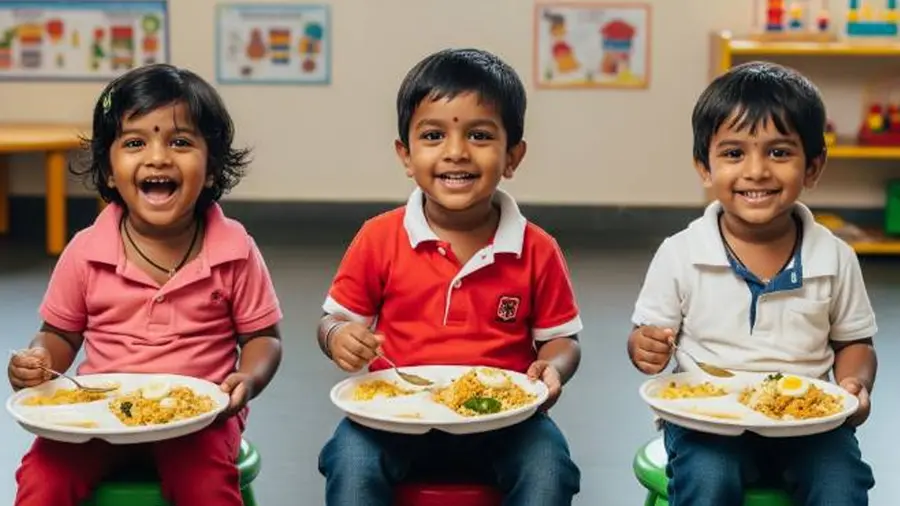
The Poshaka Baalyam scheme was initially launched to provide eggs and milk to Anganwadi children twice a week, and it has since been expanded to three days a week. The objective is to enhance protein and calcium intake among preschoolers, particularly in vulnerable communities, as part of a broader strategy to reduce childhood under-nutrition.
Kerala is also the first state to implement a unified, centrally designed Anganwadi food menu. This menu includes popular yet nutritionally balanced dishes such as egg biryani and vegetable pulao. Designed with inputs from nutritionists and health experts, the revised menu reduces sugar and salt content while increasing essential nutrients like protein and energy. The goal is to ensure that the meals are not only healthy but also appealing to young children.
Another significant innovation is the introduction of the Kunjooz Card, a child development monitoring tool created to assess progress in cognitive, emotional, physical, and social domains. This card was developed with the support of a technical committee consisting of paediatricians and public health experts, including those from the CDC in Thiruvananthapuram. It serves as a systematic mechanism for Anganwadi workers and parents to track each child's developmental milestones.
Alongside these flagship programs, the department also highlighted other complementary interventions. These include “Anganappoomazha,” a children’s activity workbook developed following a 2024 gender audit, and “Anganathaimav,” a teaching guide designed to support Anganwadi staff, especially in tribal and remote areas. The department also developed a picture dictionary based on the Anganathaimav model, tailored for children from tribal communities to support early language and concept learning.
To expand access to educational content, the department launched “Kilikkonjal,” a televised early childhood education series broadcast via the state-run VICTERS channel. Furthermore, Kerala has introduced a program focused on the first 1,000 days of a child’s life, recognising the critical importance of early development. Special Anganwadis have been set up to support children with disabilities and those living in difficult-to-reach areas. Additionally, the “Trivandrum Development Monitoring Card” was introduced to track program outcomes and service delivery in the capital district.
These comprehensive and integrated programs reflect Kerala’s systemic approach to early childhood care, combining nutrition, education, health monitoring, and inclusivity. The state’s efforts offer a scalable and replicable model for other Indian states looking to strengthen their own child development systems.



Related News
Dont Miss it









0 comments