

Kerala CM Pinarayi Recalls Communal Strife and UDF’s Role from Marad to Simla Conference

Web desk
Published on Jan 08, 2026, 08:07 PM | 4 min read
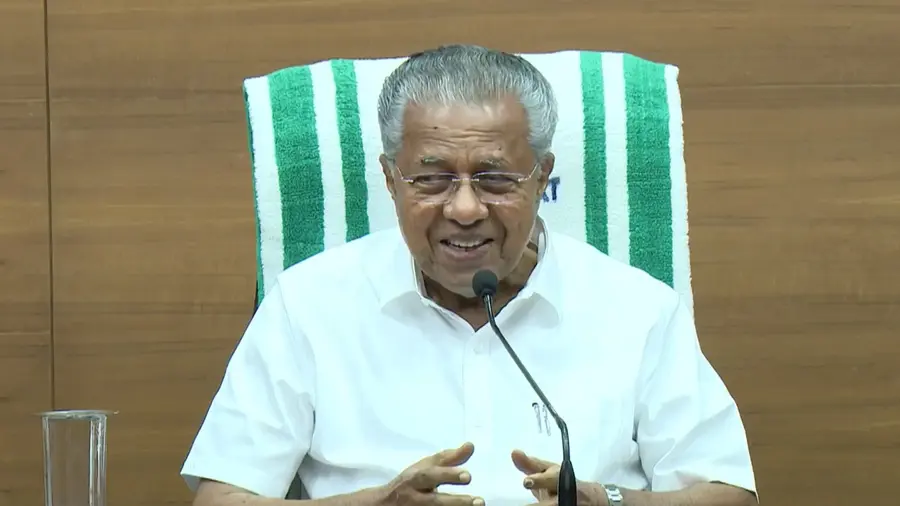
Thiruvananthapuram: Chief Minister Pinarayi Vijayan said that communal issues have been deliberately stirred in Kerala as part of the UDF’s political stance. The UDF has not taken a precise stance in dealing with communal conflicts. Communal forces have not left Kerala, but they are not able to act freely now. If communal forces attempt to assert themselves, the current government deals with them through strict measures. This, the Chief Minister said, is the difference between the LDF and the UDF.
Kerala today is a state without communal riots. However, the picture was different in the past. This was recalled by A K Balan. After the Marad riots, when then-Chief Minister A K Antony was preparing to visit the site, the RSS intervened in front of the Chief Minister, stating that P K Kunhalikutty should not accompany Antony. Consequently, when Antony went from the Kozhikode Guest House to the riot site, Kunhalikutty was not allowed to join him. Why did a Chief Minister of Kerala take a stance after seeking approval from the RSS?
At that time, CPI M state secretary who went there did not seek anyone’s permission. He went, spoke with the people, and returned. The issue lies in how the UDF approaches communalism.
Any form of communalism is harmful to the nation. Kerala’s experience shows how the focus on majority votes can be politically manipulated. This is exemplified by the propaganda of the minority communalists of the Jamaat-e-Islami. When speaking against communalism, it is not aimed against any particular community. If one speaks against the RSS, does it mean opposing Hindus, or against Jamaat-e-Islami or SDPI, does it mean opposing Muslims? The overwhelming majority across all religious communities are secular-minded. Only by strengthening secularism can communalism be effectively addressed. Those who nurture hatred toward other religions must be openly exposed. Fostering secularism and peace in the state is of paramount importance. The LDF does not seek political gain by exploiting communalism. People remember what then- Chief Minister A K Antony said after the Congress’s Simla conference, upon returning to Kerala: that the minority community was using organised power to pressure the government. Antony resigned making such accusations.
CK Govindan Nair was a leader who opposed giving more seats to the Muslim League in Malabar, according to Ramesh Chennithala, who was then KPCC president, during a commemorative programme. Chennithala said it was later proven that CK Govindan Nair’s words were accurate. He highlighted Nair’s call for a clear boundary between communal forces and communal organisations. The same Chennithala is now in a leadership position in the UDF, keeping Jamaat-e-Islami at bay.
V D Satheeshan, K Muralidharan, Aryadan Mohammed, among others, had previously stated similar things publicly. The controversy over the fifth ministerial post during the UDF tenure is remembered by everyone. Satheeshan had said that the fifth ministerial post was an immature decision, and the League leadership should reflect on whether it was politically beneficial or detrimental. Instead of exploiting the issue to create a stir in Kerala, it would have been sufficient to satisfy the League’s desire, Satheeshan had said.
Satheeshan also criticised the UDF government’s decision to start 33 new schools in Malabar. He said schools should be sanctioned considering Kerala’s social context, and that the schools permitted in Malabar would lead to the concentration of the majority community. Satheeshan also pointed out that Jamaat-e-Islami is currently not advocating for a religious state.
Like caste- based politics, communalism is exploited and often covered up by opportunistic Congress leaders. However, the Chief Minister said, the LDF stands firm on secularism and takes a consistent stance in opposing all forms of communalism.



Related News
Dont Miss it







0 comments