

Trump Declares Iran Ceasefire 'Over' After Fresh Strait of Hormuz Attacks
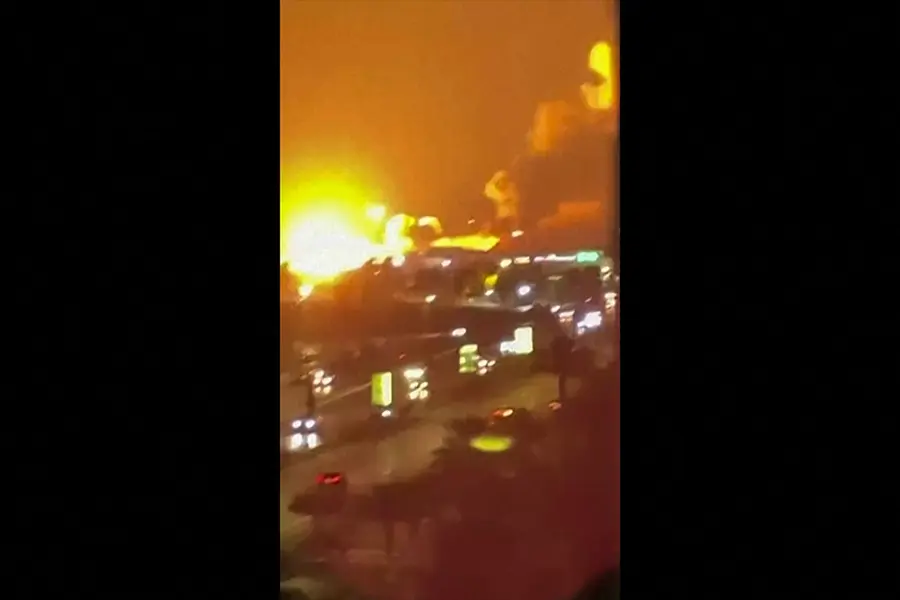
This frame grab made from a UGC video footage of an unknown source posted on social media on July 8 show explosions going off in Iran's major port city of Bandar Abbas. (Photo | AFP)
Washington DC/ Tehran: US President Donald Trump on Wednesday declared that the ceasefire with Iran was effectively over, citing renewed hostilities in the Strait of Hormuz and expressing little confidence in ongoing diplomatic efforts between the two countries.
Speaking at the NATO summit in Turkey, Trump said he no longer considered the truce to be in effect, although he indicated that US negotiators could continue talks if they wished. "As far as I'm concerned, it's over," he said, adding that he saw little value in further negotiations. His remarks came after Iran carried out fresh attacks on commercial vessels in the strategically vital Strait of Hormuz, prompting a sharp rise in global oil prices.
The latest escalation has placed additional strain on the interim memorandum of understanding reached last month to end the conflict that erupted in late February following large-scale US-Israeli strikes on Iran. Tehran has maintained that it has the right to regulate traffic through the Strait of Hormuz, proposing fees for vessels using the waterway and warning that ships deviating from its authorised routes could be targeted.
Iranian state media reported multiple explosions around the Strait of Hormuz on Wednesday, including incidents on Qeshm Island, Sirik, Bandar Abbas and Bushehr, home to Iran's only civilian nuclear power plant. A member of Iran's Islamic Revolutionary Guard Corps (IRGC) was also reported killed in the country's southwest.
The US Central Command (CENTCOM) said its forces struck more than 80 Iranian military targets, including coastal radar installations, air defence systems and dozens of IRGC boats. According to the US military, the operation aimed to reduce Iran's capability to attack international shipping passing through the strategic maritime corridor.
Iran responded by launching strikes on US military facilities in Kuwait and Bahrain. Authorities in both Gulf states confirmed that their air defence systems had been activated, though they did not immediately report any casualties or significant damage.
Iran's chief negotiator, Mohammad Bagher Ghalibaf, accused Washington of violating the memorandum of understanding by restoring oil sanctions and interfering with Iran's management of maritime traffic in the Strait of Hormuz. The US, meanwhile, revoked sanction waivers that had temporarily allowed Iranian crude oil exports, with officials saying any future economic relief would depend on Iran complying with the agreement.
The latest maritime incidents involved three commercial vessels operating near Oman. British maritime security agency UKMTO reported that an unidentified projectile struck a tanker, causing a fire, while two additional ships were also hit. CENTCOM identified the affected vessels as the Marshall Islands-flagged AL Rekayyat, the Saudi Arabia-flagged Wedyan, and the Liberia-flagged Cyprus Prosperity.
The attacks occurred near a temporary shipping corridor proposed by Oman, an initiative opposed by Tehran, which continues to insist that future navigation through the Strait of Hormuz must remain under its oversight. Diplomatic efforts to establish a long-term framework for managing one of the world's most important oil shipping routes remain uncertain amid the renewed conflict.



Related News
Dont Miss it










0 comments