
Three Years After October 7: Gaza in Ruins, a World Divided

Rahna Mariyam
Published on Oct 07, 2026, 02:19 PM | 5 min read
Three years ago, Hamas-led fighters stormed southern Israel, killing about 1,200 people and taking 251 hostages. The last captive's remains were returned in January 2026. Israel's Defense Ministry counts 1,318 security personnel and others killed since October 7 across all fronts.
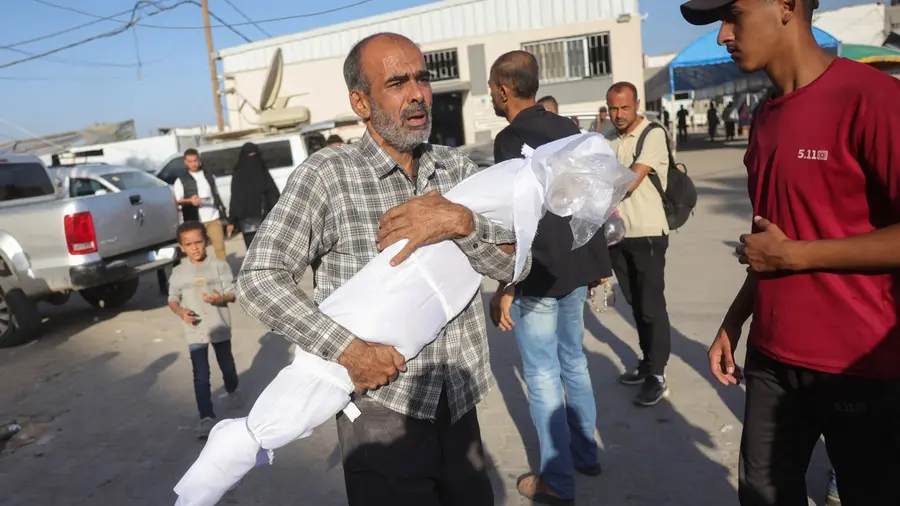
Gaza has paid a far heavier price. More than 74,000 Palestinians have been reported killed and over 175,000 injured, and thousands more are believed to lie under rubble. In September 2025, a UN commission of inquiry concluded that Israeli authorities and forces had committed four acts defined as genocide under the Genocide Convention. Leading genocide scholars and major rights groups have reached similar conclusions, even though Israel rejects the charge.
The humanitarian emergency is just as stark. The UN-backed hunger monitor confirmed famine in August 2025. After the ceasefire of October 10, 2025, it said famine had receded, while warning that the situation was fragile. Israel's UN ambassador said that finding proved there had been no famine, and Israeli authorities say 600 to 800 aid trucks enter daily. Yet in July 2026 the monitor reported that over 1.2 million people, 59 percent of Gazans, still faced crisis-level hunger or worse. Human Rights Watch says aid has stayed below UN-required minimums and that at least 593 aid workers had been killed by late April. Even under the truce, the Gaza Health Ministry reports nearly 1,400 deaths.
The world's response has split along familiar lines, and Spain has been among the most outspoken. In May 2024, Spain, Ireland and Norway recognised a Palestinian state, and Madrid later joined South Africa's ICJ case against Israel. In September 2025, Prime Minister Pedro Sanchez announced measures to "stop the genocide in Gaza," including a total ban on defence exports to Israel and on imports from Israeli settlements. Parliament enshrined the embargo in law by 178 votes to 169. Israel, which had already withdrawn its ambassador from Madrid, called the measures antisemitic. Sánchez has since called a snap election for November 29.
France followed on September 22, 2025, when Emmanuel Macron recognised Palestine at the UN, a day after Britain, Canada, Australia and Portugal. Macron said France would open an embassy only after a ceasefire and the release of all hostages, and warned that Israel's actions put the two-state solution at risk.
Israel also had supportera . When the UN's New York Declaration passed with 142 votes, only ten countries opposed it. They were Israel, the United States, Argentina, Hungary, Paraguay and several Pacific states. Argentina's Javier Milei has made support for Israel a cornerstone of his foreign policy, and Hungary's Viktor Orban is a close ally of Netanyahu. Germany, Italy and Japan, though critical of Israel's conduct, declined to recognise Palestine. Israel and the US argued that recognition rewards Hamas.
Donald Trump has been Israel's most important backer, though not without friction. When he unveiled his peace plan alongside Netanyahu, he noted that the Israeli leader opposed a Palestinian state. Washington also refused Palestinian leader Mahmoud Abbas a visa for the UN General Assembly. Yet Netanyahu objected publicly to the makeup of Trump's Gaza executive board before agreeing to join his Board of Peace. More recently, he rejected the plan's terms, insisting there would be no Palestinian state while he is prime minister.
That isolation was on display on September 24, when dozens of delegates walked out of the General Assembly as Netanyahu began to speak. According to reports, roughly 70 countries either walking out or absent, with most Arab and Muslim delegations leaving and India decided to stay. Netanyahu told those who remained that any other "moral cowards" should go too. The scene played well at home, with Israeli elections approaching.
The divide has reached the pitch as well. In the Nations League, Ireland's players wore black armbands for Palestinians killed in Gaza and refused to shake hands with the Israeli team. More than 70 athletes, including Paul Pogba, Hakim Ziyech and Adama Traore, signed a letter urging UEFA to ban Israel. Norway's federation pledged ticket revenue from an Israel qualifier to Gaza, and Israel's Premier Tech cycling team was expelled from an Italian race after protests. The Palestinian side says 1,009 athletes had been killed by June 2026. The opposing side has largely rested on institutions holding firm. UEFA paused a possible suspension vote after the ceasefire, and Israel's football association said its teams would not be deterred.
Hollywood has split in the same way. In 2025, more than 380 film figures, including Ralph Fiennes, Richard Gere and Susan Sarandon, condemned "genocide" in Gaza ahead of Cannes. This September, over 5,000 signatories, among them Debra Messing and Mayim Bialik, rejected the term, arguing that it fuels antisemitism.
The argument reached the stadium circuit with the Macklemore controversy. Macklemore, an opener on Ed Sheeran's Loop Tour, voiced pro-Palestine messages onstage at MetLife Stadium in New Jersey. The Israeli-American Council petitioned for his removal, and tour promoter Messina then said venues would refuse to host him. Macklemore blamed Patriots owner Robert Kraft. Sheeran said the decision was the promoter's, not his. Sheeran's backing band and most other openers quit, and protesters gathered outside his Philadelphia show. Macklemore's own "Free Palestine" tour sold out immediately. The BBC called it the biggest controversy of Sheeran's career.
Three years on, the central dispute is unresolved, the world is divided more than everand the dead are still being counted.



Related News
Dont Miss it








0 comments