

Rafah Border Crossing Reopens After Nearly Two Years, Offering Lifeline to Residents of Gaza
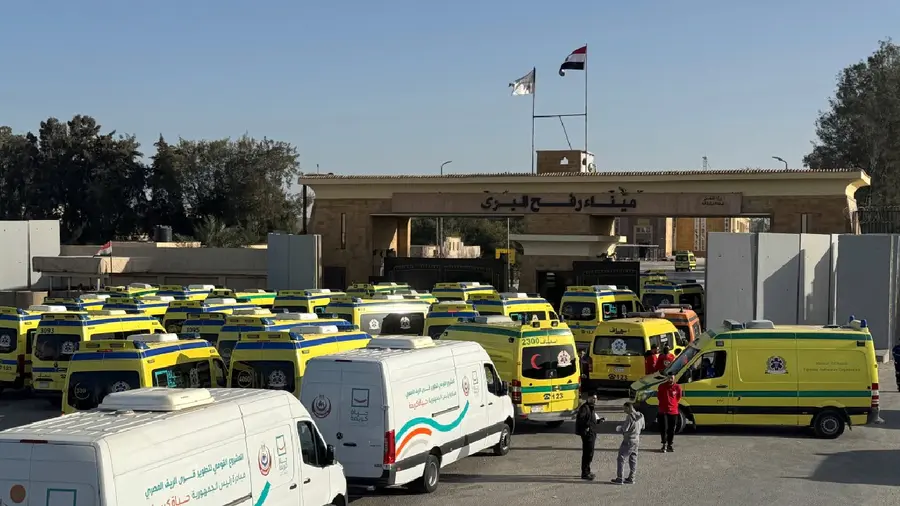
Ambulances wait on the Egyptian side of the Rafah border crossing with the Gaza Strip in northeastern Egypt on February 1, 2026. (Photo | AFP)
Gaza: The Rafah border crossing — the Gaza Strip’s only direct access point to Egypt and the outer world— has been reopened after almost two years of near-complete closure, marking a major development in the fragile ceasefire agreed between Israel and Hamas and offering a much-needed lifeline to civilians stranded by the prolonged conflict.
The Israeli military’s civilian affairs agency (COGAT) said the crossing was opened on Sunday in a pilot phase, allowing limited movement of people for the first time since it was sealed off in May 2024 following an attack against Hamas. Under the initial arrangement, only a small number of individuals will be permitted to exit or enter each day, with priority given to wounded or sick Palestinians requiring medical care.
Authorities coordinating the reopening — including Egypt, Israel and the European Union monitoring mission — said that travel will be subject to prior security clearance and screening, with movement set to begin in both directions on Monday. Around 50 people per day in each direction are expected initially, including medical patients and relatives, as part of the phased reactivation of the crossing.
For many Gazans and their families outside the enclave, the resumption of crossings brings a cautious sense of relief after years of isolation and hardship. Thousands are registered to return from Egypt, where many have been unable to reunite with relatives due to the prolonged closure. However, humanitarian organisations warn that the limited daily quotas fall far short of the urgent needs, particularly for advanced medical treatment and family reunification.
Despite the reopening, underlying tensions persist. Sporadic violations of the ceasefire have continued, and restrictions on the flow of aid and commercial goods through Rafah remain significant, leaving much of Gaza’s population reliant on constrained supply routes through other crossing points. The crossing’s partial activation is considered a cautious step rather than a full restoration of freedom of movement, and observers say further progress will depend on sustained de-escalation on the ground.



Related News
Dont Miss it










0 comments