
French PM Sebastien Lecornu Resigns Less Than 24 Hours After Forming Government
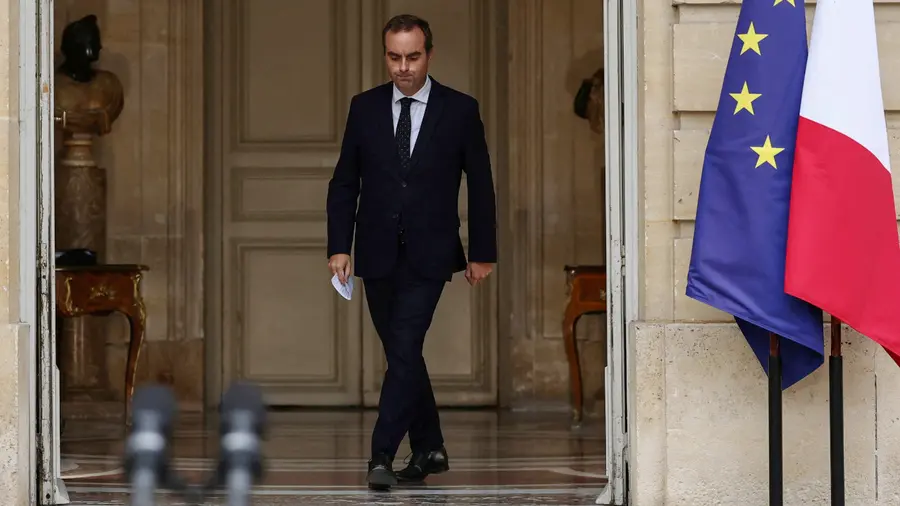
Photo Credit: AFP

Web desk
Published on Oct 06, 2025, 08:14 PM | 3 min read
Paris: France plunged further into political chaos as Prime Minister Sebastien Lecornu resigned less than 24 hours after forming his government, barely a month into office. The abrupt exit exposes the fragility of President Emmanuel Macron’s leadership and the deep dysfunction at the heart of his administration.
Lecornu, a loyal ally, cited his inability to build consensus among rival factions as the reason for stepping down. “It would require little to make it work,” he said. “By showing more selflessness for many, by demonstrating humility. One must always put the nation ahead of party loyalties.” His resignation, however, also highlights a broader pattern of instability under Macron, who has now seen four prime ministers serve in under a year amid a polarised political landscape.
The National Assembly remains deadlocked following last year’s snap elections. Far-right and left-wing factions together hold more than 320 seats, while centrists and allied conservatives control 210, leaving no party with a majority. Macron’s centrist platform has repeatedly faltered, leaving him exposed to attacks from both opposition parties and disillusioned allies.
Opposition leaders immediately seized on the crisis. France Unbowed and other leftist parties also called for a coalition to replace Macron’s centrist bloc. The president now faces the prospect of governing without parliamentary support or political legitimacy.
Markets reacted sharply to the upheaval, with the CAC-40 index tumbling nearly 2 per cent. Ministers appointed only the previous night were reduced to caretaker roles, unable even to implement routine policy. Agnes Pannier-Runacher, reappointed minister for ecology, described the situation on X as a “circus.”
Lecornu’s ministerial choices drew broad criticism. His decision to move Bruno Le Maire from finance to defence provoked particular concern, given France’s public debt of 3.346 trillion euros, or 114 per cent of GDP. Debt servicing alone accounts for around 7 per cent of state expenditure. Macron’s repeated failures in fiscal leadership, coupled with his inability to command loyalty, leave France facing mounting economic and institutional pressure.
Other key posts remained largely unchanged: Bruno Retailleau continued as interior minister; Jean-Noel Barrot retained the foreign ministry; Géral Darmanin remained justice minister. Retailleau criticised Lecornu for failing to consult him on Le Maire’s appointment, declaring that the government "embodied all the conditions to be censured.'
In forming his cabinet, Lecornu had consulted political parties and trade unions and pledged not to employ constitutional shortcuts previously used to force budgets through Parliament. These efforts, however, were insufficient in a legislature fractured by years of Macron’s mismanagement.
With less than two years to the next presidential election, France now confronts political paralysis, economic strain, and a president whose authority is in decline. Lecornu’s resignation is the latest, and most dramatic, symptom of a leadership incapable of steering the country through repeated crises, leaving the nation teetering between instability and institutional gridlock.



Related News
Dont Miss it









0 comments