

Fiji Declares National HIV Emergency as Cases Surge
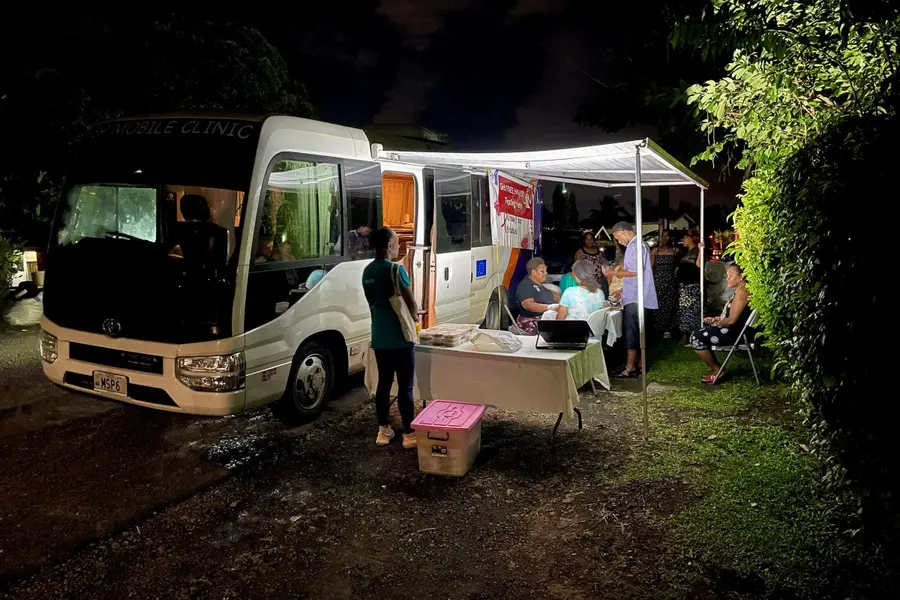
This picture taken on March 19, 2026 shows a Medical Services Pacific Moonlight programme team offering free HIV testing during an outreach visit to a suburb of Suva. (Photo | AFP)
Suva: Fiji has declared a national HIV emergency as the Pacific island nation faces a sharp rise in infections, with health authorities linking the worsening outbreak partly to increasing methamphetamine use and intravenous drug consumption.
An estimated one in 60 adults in Fiji is now living with HIV, a dramatic increase from the estimate of one in 167 five years ago. The trend contrasts with a global decline in new HIV infections.
Fiji first declared an HIV outbreak in January 2025 and subsequently expanded testing, revealing the extent of the epidemic. Health Minister Dr. Atonio Lalabalavu said Tuesday that 2,016 new HIV diagnoses were recorded in 2025, describing the figures as evidence of the scale and urgency of the crisis.
CNN has reported quoting Save the Children Fiji that a two-month-old baby had become the youngest identified person in the country living with both HIV and tuberculosis. The organisation also reported that 59 babies acquired HIV from their mothers last year.
The surge has coincided with increased intravenous drug use as Fiji has emerged as a transit point for narcotics trafficked from the Americas towards markets in Australia, New Zealand and parts of Asia. Health officials say needle sharing among people who inject drugs has become a rapidly growing route of HIV transmission.
National health statistics show that people who inject drugs accounted for about half of new HIV infections in 2025 where the mode of transmission was known. Sexual transmission accounted for most of the remaining cases.
UNAIDS adviser Renata Ram told CNN that low condom use, multiple sexual partners, inadequate testing and stigma were also contributing to the spread of the virus.
The number of people unaware of their HIV status remains a major concern. Only about 39% of people living with HIV in Fiji are estimated to know they have the virus, while just 22% are receiving treatment, according to Ram.
Fiji recorded 117 HIV-related deaths in 2025, compared with 25 in 2021.
The crisis is particularly stark given the broader global trend. UNAIDS estimates that new HIV infections worldwide fell by about 42% between 2010 and 2025. Fiji, however, has experienced a sharp increase over the same period.
The country also has a significantly lower treatment rate than the global average, with about 78% of people living with HIV worldwide receiving treatment.
The government said it would accelerate its response by expanding HIV testing and treatment, increasing access to pre-exposure prophylaxis (PrEP), and introducing a formal needle and syringe programme.
Lalabalavu urged people who may have been exposed to HIV through needle sharing, other injecting equipment or unprotected sex to seek testing rather than waiting for symptoms.
He also called for an end to discrimination against people living with HIV, warning that stigma can prevent people from accessing testing and treatment.



Related News
Dont Miss it









0 comments