

With the US Relationship in Ruins, Carney Charts Canada's European Path
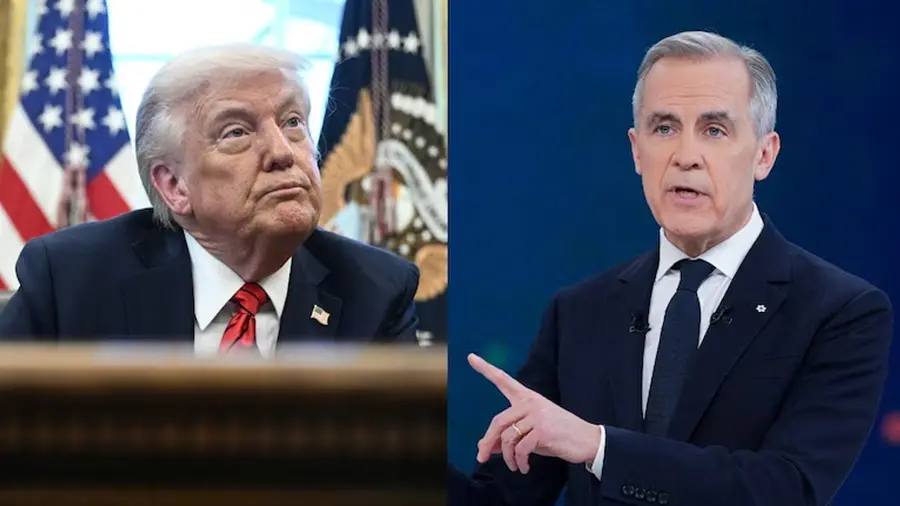
Ottawa: Canadian Prime Minister Mark Carney is moving urgently to reduce his country's economic dependence on the United States, turning instead toward Europe after President Donald Trump used tariffs and economic pressure to strain the decades-old alliance between the two neighbours.
For nearly four decades, Canada built its economy around close integration with the US. But rather than wait for a future American administration to restore that relationship, Carney has chosen to pursue new partnerships, most notably embracing the prospect of Canada becoming the European Union's first associate member. Officials describe this not as a step toward full EU membership but as a way to diversify Canada's economic ties without ceding control over its own policymaking. Carney has pointed to the tariffs, investment demands and policy conditions now attached to access to the US market as justification for the shift.
The pivot follows European Commission President Ursula von der Leyen's proposal, unveiled in Strasbourg, to make Canada the EU's first-ever "associate member," a status that does not currently exist in the bloc's treaties and would need to be negotiated and created from scratch. Addressing the European Parliament on September 17, Carney welcomed the offer, describing Canada and Europe as stronger together and framing the move as protecting shared democratic values against economic coercion, without directly naming Trump. Trump dismissed the proposal as a hostile act and warned of severe new tariffs or a full trade halt with Europe should the partnership proceed on unfriendly terms.
Both Canada and the EU have felt pressured by Washington through tariffs, questions over NATO commitments and, in Canada's case, repeated talk of annexation, pushing the two historical American allies closer together. Von der Leyen has described the goal as an "Alliance for the Future" built around shared prosperity and economic security, moving beyond the existing Canada-EU free trade agreement.
His recent schedule reflects the urgency of the effort. Carney hosted major global investors in Toronto, travelled to Strasbourg for European Commission President Ursula von der Leyen's State of the EU address, met Britain's new prime minister in Liverpool, returned to address the European Parliament, and held talks with French President Emmanuel Macron and Norwegian Prime Minister Jonas Gahr Store. He is set to open a new session of Canada's Parliament before departing for the UN General Assembly in New York.
Trump has suggested that closer Canada-EU ties could be viewed as an unfriendly act and has threatened steep tariffs on Europe in response. Observers note the effort faces real limits, since EU associate membership does not yet formally exist and Europe cannot quickly replace a US market that absorbs nearly three-quarters of Canadian exports.



Related News
Dont Miss it









0 comments