
Punjab Voters Sideline Congress, BJP Still Lagging in Local Elections

Web desk
Published on Dec 31, 2025, 06:22 PM | 3 min read
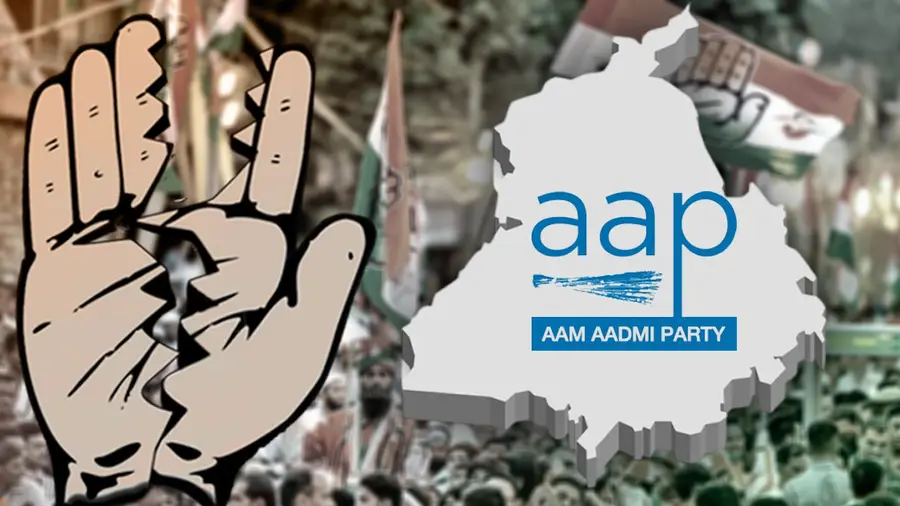
Chandigarh: The recent Zila Parishad and Panchayat Samiti elections in Punjab have laid bare the shifting contours of the State’s politics, underscoring the steady decline of the Congress and the growing complexities for all major players ahead of the 2027 Assembly polls.
Once the dominant force in Punjab, the Congress has been reduced to a shadow of its former self. In the December 14 rural body polls, the party finished a distant third, trailing behind the ruling Aam Aadmi Party (AAP) and the Shiromani Akali Dal (SAD). Of the 346 zones across 22 Zila Parishads, AAP captured 218, Congress managed 62, and SAD secured 46. The Bharatiya Janata Party (BJP) won seven, the Bahujan Samaj Party (BSP) three, and independents 10. In the Panchayat Samiti elections, AAP again dominated with 1,529 zones, while Congress won 611 and SAD 449. The BJP’s tally of 73 highlighted its limited reach in Punjab’s hinterland.
For Congress, the results confirm a deeper malaise. Despite a brief resurgence in the 2024 Lok Sabha elections, the party has failed to sustain momentum. Internal factionalism, weak leadership, and an inability to connect with rural voters have eroded its base. Once seen as the natural challenger to the ruling party, Congress now struggles for relevance, its decline exposing how quickly a legacy organization can lose ground when it fails to reinvent itself.
The AAP, which swept to power in 2022 by presenting itself as a fresh alternative, continues to dominate local polls. However, allegations of misuse of power have cast a shadow.
For SAD, the modest gains in the rural polls represent a step toward rehabilitation after crushing defeats in 2017, 2022, and 2024. The party is slowly regaining ground, positioning itself as a credible contender once again. Political observers note that SAD’s revival, though limited, signals its enduring organisational strength in Punjab’s rural belt.
The BJP, meanwhile, remains unable to break into Punjab’s political mainstream. Despite its national presence, the party has failed to expand beyond urban and semi‑urban constituencies. Its poor showing in the rural polls underscores the challenge of penetrating Punjab’s agrarian heartland. Speculation about a possible SAD‑BJP alliance has resurfaced, with leaders such as Capt. Amarinder Singh and Sunil Jakhar voicing support. Yet, internal divisions persist, as many in the BJP argue that past alliances confined the party to a junior role. Since SAD’s exit from the NDA in 2020 over the farm laws controversy, both parties have struggled independently.
As Punjab heads toward the 2027 Assembly elections, the political terrain looks increasingly unpredictable. Congress is in visible decline, SAD is clawing back relevance, BJP remains on the margins, and AAP faces the challenge of proving its governance record. The State’s politics, once defined by a Congress‑SAD rivalry, now appears set for a more complex and competitive contest.



Related News
Dont Miss it







0 comments