
Northeast Monsoon Intensifies in Keralam; Heavy Rain Expected Until October 23, Districts Put on Alert
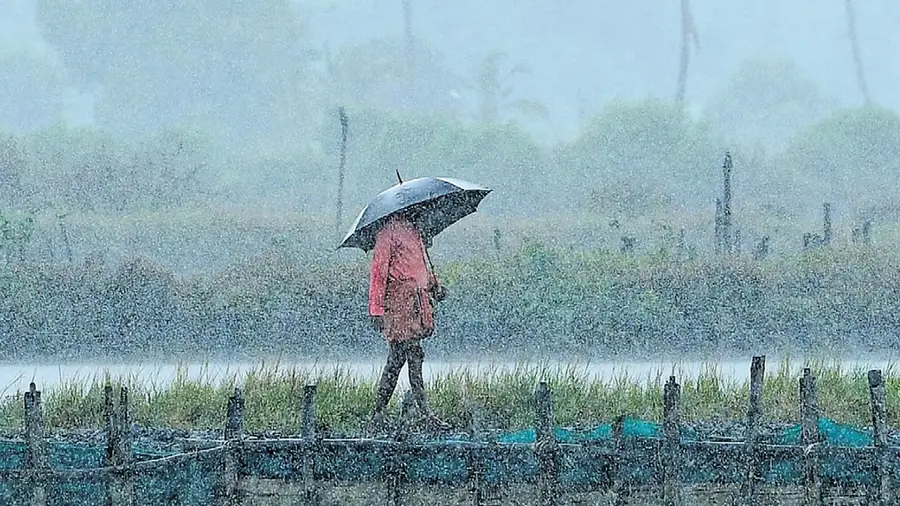
Image used for representation
Thiruvananthapuram: The northeast monsoon is gaining strength in Keralam, with the India Meteorological Department (IMD) warning that heavy rain is likely to continue over the coming days. The department has issued rainfall alerts for the next five days, with yellow alerts in several districts. Isolated heavy rainfall is forecast.
Heavy rainfall refers to rainfall ranging from 64.5 mm to 115.5 mm within 24 hours.
Yellow Alert: Districts and Dates
October 19, 2026: Pathanamthitta, Alappuzha, Kottayam, Idukki, Ernakulam, Malappuram, Kozhikode, Wayanad and Kannur.
October 20, 2026: Thiruvananthapuram, Kollam, Pathanamthitta, Alappuzha, Kottayam, Idukki and Ernakulam.
October 21, 2026: Thiruvananthapuram, Kollam, Pathanamthitta, Alappuzha, Kottayam, Idukki, Ernakulam, Thrissur, Palakkad and Malappuram.
October 22, 2026: Idukki, Ernakulam, Thrissur, Palakkad, Malappuram, Kozhikode, Wayanad and Kannur.
October 23, 2026: Thiruvananthapuram, Kollam, Pathanamthitta, Alappuzha, Kottayam, Idukki, Ernakulam and Thrissur.
Thunderstorm Warning
The IMD has warned that isolated parts of Keralam may experience thunderstorms accompanied by rain and strong winds.
On October 19 and 20, winds reaching speeds of 30–40 kmph are likely along with thunderstorms and rain. From October 21 to 23, thunderstorms and rain accompanied by strong winds reaching 40–50 kmph are expected.
Safety Precautions During Thunderstorms
1. Lightning is dangerous and can cause serious damage to human and animal life, electricity and communication networks, and household appliances connected to electrical conductors. The public should take the following precautions as soon as dark clouds begin to appear. Since lightning may not always be visible, these precautions should not be ignored.
2. Move indoors immediately at the first sign of lightning. Remaining in open areas increases the risk of being struck.
3. Keep doors and windows closed when strong winds and lightning are likely. Stay away from doors and windows, remain inside the building and avoid touching walls or floors as far as possible.
4. Disconnect electrical appliances and avoid contact with them during thunderstorms.
5. Avoid using landline telephones during lightning. Mobile phones can be used.
6. When the sky is overcast, avoid playing in open spaces or on terraces, including by children.
7. Do not stand under trees during thunderstorms or park vehicles beneath them.
8. If you are in a vehicle during a thunderstorm, remain inside and do not extend your hands or feet outside. Avoid travelling on bicycles, motorcycles and tractors during lightning. Seek shelter in a safe building and wait until the lightning stops.
9. Do not go to the terrace or yard to collect clothes when dark clouds gather and lightning is occurring.
10. Secure objects that could be blown over by strong winds.
11. Avoid bathing or collecting water from taps during thunderstorms, as lightning-related electrical currents may travel through pipes.
12. Do not enter water bodies to fish or bathe during lightning. When dark clouds begin to gather, stop fishing, boating and similar activities and try to reach the nearest shore immediately. Do not stand on a boat's deck during a thunderstorm. Stop angling and casting nets until the lightning has passed.
13. Avoid flying kites during thunderstorms.
14. Sitting on terraces, other elevated places or tree branches during lightning is dangerous.
15. Do not tether domestic animals in open areas during thunderstorms. Do not go outside to untie or move them to a safer location after dark clouds appear, as this could expose you to lightning.
16. If you are in an open area and cannot reach a nearby building, crouch low with your feet together and your head tucked between your knees, curling your body into a ball.
17. Lightning conductors can be installed on buildings for protection against lightning. Surge protectors can be fitted to safeguard electrical appliances.
18. Lightning strikes can cause burns, loss of vision or hearing, and even cardiac arrest. A person struck by lightning does not retain an electrical charge, so it is safe to provide first aid. The first 30 seconds after a lightning strike are crucial for saving a life. Seek medical assistance for the person immediately.



Related News
Dont Miss it









0 comments