

Kerala’s Manufacturing Sector: Resilient and Transforming


L T Abhinav Surya
Published on Nov 24, 2025, 07:23 PM | 8 min read
Kerala has always been a model state, renowned for its high human development indicators. The recent declaration of the eradication of extreme poverty stands as yet another testament to the state’s enduring commitment to inclusive and equitable development. But when people talk about Kerala’seconomy, they rarely discuss “industries”. Yet, a quiet industrial transformation has been unfolding in the state.
Over the past decade, Kerala’s manufacturing sector has faced shocks, reforms, and crises. But it has also adapted, modernised, and, in some ways, outperformed the rest of India.
Over the past decade, the Government of Kerala has undertaken a series of initiatives aimed at revitalising the state’s industrial base. This renewed policy thrust is reflected in the recently released “Vision 2031” document, which outlines a strategy to address environmental challenges and land constraints by promoting technology -intensive and innovation -driven industrialisation.
But how effective have these efforts been so far? A closer examination of the data reveals a narrative of resilience and renewal. Despite being dominated by small and medium enterprises and facing major disruptions such as demonetisation, the implementation of the Goods and Services Tax (GST), and the COVID-19 pandemic, Kerala’s manufacturing sector has emerged more productive, technologically sophisticated, and better integrated into contemporary value chains than ever before.
Smarter Factories
Kerala’s manufacturing sector is different from the rest of India’s. The average factory size is smaller, and the state has fewer large-scale industrial complexes than Maharashtra, Tamil Nadu, or Gujarat. Yet, its smaller factories are surprisingly efficient. From a low base a decade ago, productivity in Kerala's organised manufacturing sector has now converged with the national average. Furthermore, the state's unorganised sector, comprising small workshops, household units, and cooperatives, now outperforms its counterparts elsewhere in India.
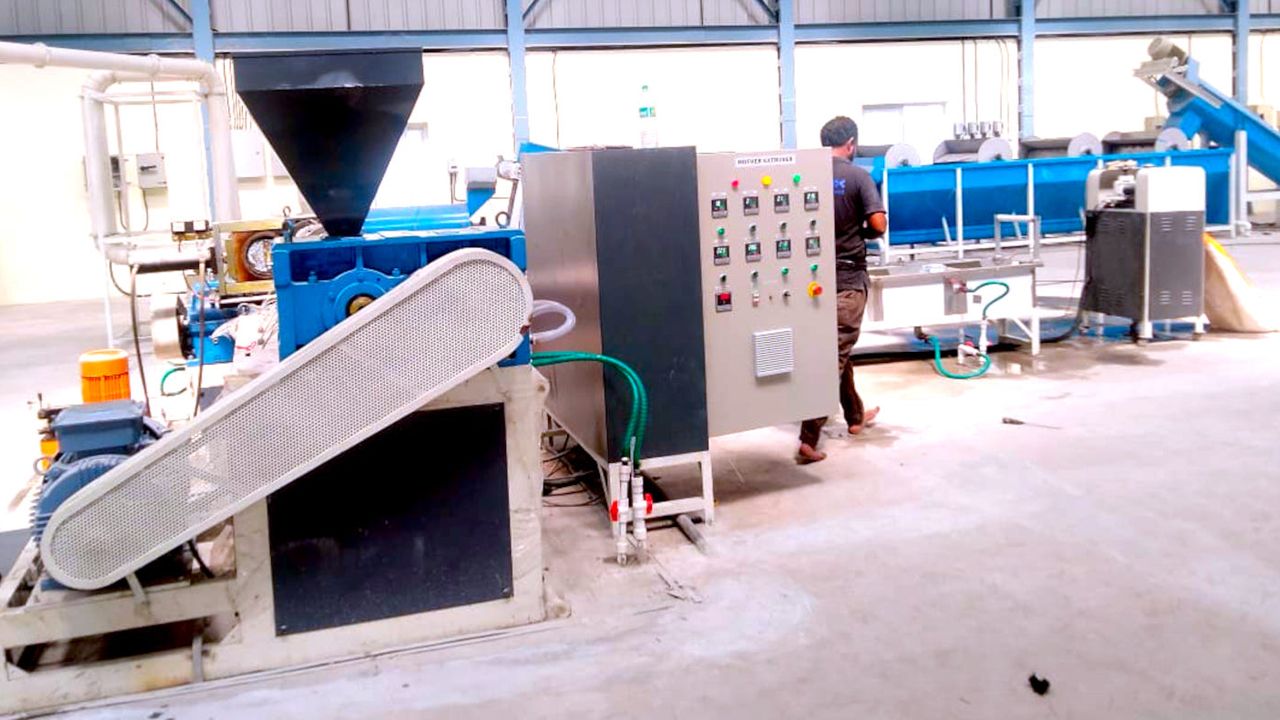 Plastic waste processing factory in Kerala
The unorganised sector’s importance in Kerala cannot be overstated. It contributes more to employment and output than the national average and forms the backbone of many local economies.
From Demonetisation to the Pandemic
The last decade has been turbulent for Indian industry. The twin shocks of demonetisation in 2016 and the COVID-19 pandemic in 2020 were particularly harsh for manufacturing. Kerala’s formal manufacturing sector was no exception. Number of factories and employment fell sharply in 2016-17 and, after a brief revival, again during the lockdown years.
Yet, despite these challenges, both factory output and capital investment continued to rise in Kerala. Gross Value Added (GVA), a key measure of industrial output, showed consistent growth, accompanied by a steady expansion in capital stock. In other words, the factories that endured did more than merely survive - they upgraded. They invested in advanced machinery, streamlined production processes, and achieved notable gains in productivity.
The convergence of labour productivity to the national level has been accompanied by a significant rise in average wage rates. These wages increased from two -thirds of the national average in 2011-12 to match it by 2022-23. Such a pattern of growth distinguishes Kerala’s factory sector from much of the rest of India during the same period.
Changing Employment
Kerala’s workforce in formal manufacturing has undergone a profound transformation over the past decade. Traditional industries such as food processing, coir, cashew, and textiles have witnessed a steep decline in prominence, with their share of factory employment shrinking significantly, and, in several cases, recording absolute job losses.

In their place, new industries have grown. Medium- tech sectors such as plastics, rubber, and metal products have expanded, as have medium- high -technology industries like chemicals, transport equipment, and machinery. The transport equipment sector, which includes vehicle and auto-component manufacturing, is particularly dynamic.
Even high-tech industries like pharmaceuticals and electronics are gaining ground. Electronics manufacturing, long anchored by the public- sector KELTRON and its suppliers, has seen renewed growth in output and employment.
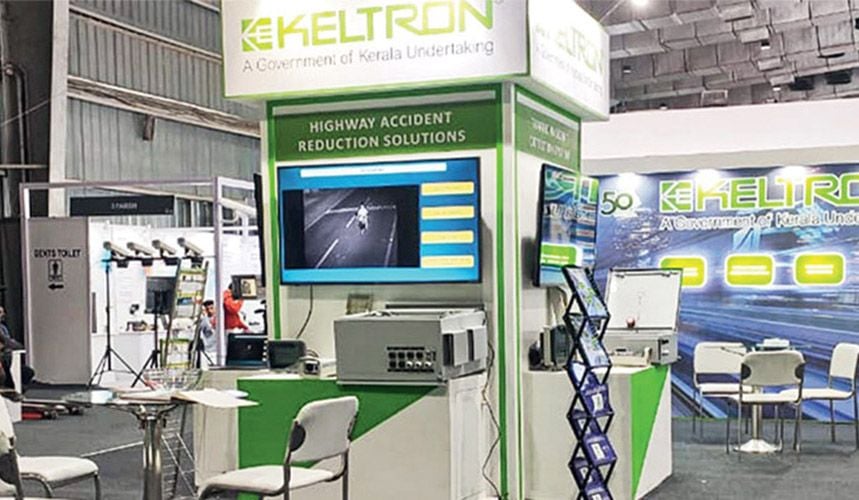
This shift marks a structural transformation. Kerala is moving from a traditional, labour-intensive base to a more diversified, knowledge-driven manufacturing system.
Investment and Technology
Capital investment tells a big part of the story. In low- tech industries like food processing and textiles, capital stock has grown substantially since 2015. These industries are modernising, introducing labour- saving technologies that boost output. However, this also explains why employment has stagnated in some sectors: machines are replacing manual work.
In contrast, the medium- high- tech industries have shown what might be called balanced modernisation. Sectors like chemicals and transport equipment havemanaged to increase both productivity and employment simultaneously. These industries are using new technologies not just to cut costs, but to expand capacity and reach new markets.
High-tech industries are smaller but increasingly important. Research and development (R&D) spending in Kerala’s manufacturing has risen steadily since 2015, particularly in pharmaceuticals and electronics. Kerala’s share in India’s manufacturing R&D expenditure has increased over the last decade. R&D intensity in Kerala’s factories, which is the R&D spending as a share of output, has increased substantially after the pandemic, suggesting that innovation -led growth is finally taking root.
Unorganised Sector
If the formal sector is modernising, the unorganised sector, is also showing resilience. Yes, demonetisation, GST, and the pandemic hurt these enterprises. Many struggled with cash shortages and compliance costs. Yet, the sector has bounced back. Between 2015-16 and 2022-23, the unorganised sector’s output in Kerala grew faster than the national average. During this period of economic difficulty, the unorganised sector experienced employment decline across India. However, the rate of contraction was more moderate in Kerala.
A crucial reason is the rising share of Hired Worker Enterprises (HWEs), i.e., small firms that employ regular workers, rather than relying solely on family labour. These units are modernising faster, investing more in machinery, and producinghigher value goods. In the rest of India, the unorganised sector remains dominated by tiny Own Account Enterprises (OAEs). In Kerala, however, the balance is shifting towards more formalised and technologically capable firms.
Even within the informal economy, industries like chemicals, rubber goods, and machinery are growing rapidly. Labour productivity in Kerala’s unorganised sector has overtaken the national average. In high-tech manufacturing, thenumber of small establishments has increased between 2015-16 and 2022-23, showing that new enterprises are emerging despite crisis situations. This suggests that Kerala’s informal manufacturing is not stagnant, and it is evolving.
Kerala’s Uniqueness
Kerala’s manufacturing trajectory stands out for three reasons. First, despite multiple shocks, the sector has maintained steady growth in output and productivity. Second, modernisation is happening across both large and small industries, with growing R&D spending and skill upgrading. Third, unlike many states where industrial growth has widened wage gaps, Kerala’s wage growth has broadly kept pace with productivity growth.
The state’s emphasis on education, social infrastructure, and worker rights seems to have created a more balanced industrial ecosystem. Unlike other parts of India, efficiency gains in factories do not automatically translate in to wage suppression in Kerala.
Policy Priorities
Kerala’s success does not mean the challenges are over. Job creation remains a pressing concern, especially as automation rises in low-tech industries. The state must ensure that technological upgrading does not come at the cost of stagnant employment.
The state must focus on encouraging balanced growth. Pattern of industrialisation, like chemicals and transport equipment industries, that can modernise while still creating jobs, must be emulated elsewhere.
Given Kerala's distinct geographical and environmental constraints, fostering innovation-driven growth is imperative. This necessitates strengthening linkages between universities, research institutions, and industry to sustain R&D-led economic expansion.
Critically, such a development paradigm requires significant public sector interventions to crowd in private investment for high-tech industrialisation. While the Kerala government should accelerate its efforts in this domain, the Union government possesses superior fiscal capacity, institutional power, and consequent responsibility to catalyse this transition through strategic public investments.
Given the significance of the unorganised sector in Kerala, supporting small enterprises is crucial. Providing credit, infrastructure, and marketing support is essential, particularly for firms transitioning from informal to formal status. Furthermore, lessons from recent crises highlight the need to establish institutional safety nets, such as credit guarantee and working capital schemes, to enhance resilience.
Finally, the state must continue to protect the welfare of workers and extend social security and training programs to ensure that labour flexibility does not translate into precarity.
Industrial Revolution on the Horizon
Kerala’s manufacturing sector rarely makes headlines. Yet, beneath the surface, it is quietly reshaping itself into one of the most productive, balanced, and modernised state-level manufacturing systems in India.
Kerala’s story shows that industrial progress need not come at the expense of equity, and that even a state known for its social model can build a modern industrial base, by combining technology, productivity, and human development.
(Author is a Visiting Scholar at the University of Geneva, a Senior Research Fellow at the Centre for Development Studies, Thiruvananthapuram)













0 comments