

John Brittas MP Flags Lack of Clarity in Centre’s Reply on Kerala High-Speed Rail
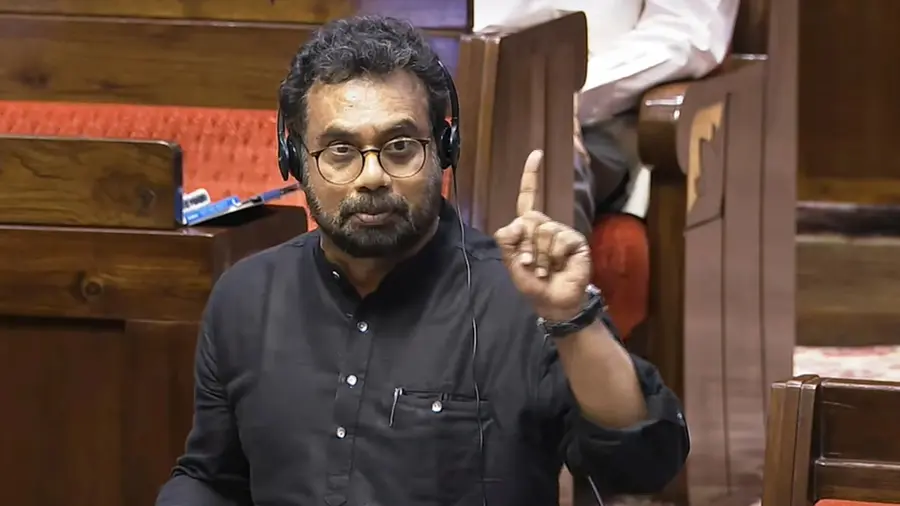
New Delhi: John Brittas, MP, has expressed concern over the Central Government’s response in the Rajya Sabha regarding high-speed and semi-high-speed rail projects in Kerala, calling it concerning. He criticized the government for lacking clarity, commitment, and a time-bound action plan for the high-speed rail corridor, which is crucial for Kerala’s railway development.
Instead of offering a concrete solution for the future of the Silver Line or suggesting a viable alternative, Brittas pointed out that the Ministry’s reply primarily referenced old surveys and procedures that date back several years.
The response acknowledged that only surveys for a 160 km high-speed rail line, including the Shoranur-Ernakulam third line, have been permitted. However, many of these surveys remain incomplete, even though they were announced years ago. Brittas specifically highlighted the Shoranur-Ernakulam third line, where permission for a survey was granted back in 2018-19. Despite the completion of the Detailed Project Report (DPR) in March 2025, its submission to the Railway Board only occurred in April of the same year. According to the Southern Railway, the approval of this project will depend on financial viability estimates, which means the project’s future remains uncertain.
Brittas questioned why the Ministry continues to reference outdated surveys instead of making decisions on these projects. He noted that, despite years of discussion about the high-speed rail corridor, the Centre has yet to approve any new high-speed or semi-high-speed lines in Kerala. Even though seven high-speed lines were sanctioned in this year’s budget, Kerala was once again left out.
The MP also took issue with the Centre’s evasive response regarding the Silver Line project. While the Centre proposed replacing the K-Rail standard gauge with broad gauge and integrating it into the existing railway line, the Kerala government has insisted on maintaining the Silver Line as an independent project. Brittas argued that this stance is essential, as the existing railway network in Kerala is overcrowded. The current broad gauge lines are already operating beyond capacity, and adding a new semi-high-speed service would only worsen operational bottlenecks. A separate standard gauge line is necessary to ensure high speeds and efficient operation, especially given the overloaded rail network in the state.
Brittas also scrutinized the financial figures presented by the Centre. While the government claims that Kerala’s budget allocation has increased from Rs 372 crore annually (from 2009-14) to Rs 3,042 crore in 2025-26, Brittas pointed out that this allocation doesn’t guarantee project completion. Of the six sanctioned projects covering 266 km at a cost of Rs 9,415 crore, only 26 km (about 9.7%) have been commissioned. Additionally, only 26 km of a planned 120 km doubling project has been completed. As of March 2025, the expenditure stands at Rs 3,250 crore, which is just one-third of the sanctioned amount.
Brittas also responded to the Ministry's claim that the delay in the Angamaly-Sabarimala project lies with Kerala. He called this misleading, stating that Kerala has consistently offered to cover 50% of the revised project cost and has demanded that the loan taken through KIIFB (Kerala Infrastructure Investment Fund Board) not count against the state's borrowing limit. Kerala even went ahead with land acquisition for the project using its own funds before receiving Centre approval, demonstrating the state’s commitment. However, Brittas emphasized that this dedication has not been reflected in the Centre’s response.











0 comments