
CPI(M) at Madurai 2025: A Turning Point for the Left in India

Anusha Paul
Published on Apr 08, 2025, 10:46 PM | 9 min read
The 24th Congress of the CPI(M) in Madurai marked an important moment, blending cultural vibrancy with bold political resolutions. Amidst global shifts and national challenges, the party redefined its strategies, reaffirming its commitment to democratic rights, social justice, and grassroots activism.
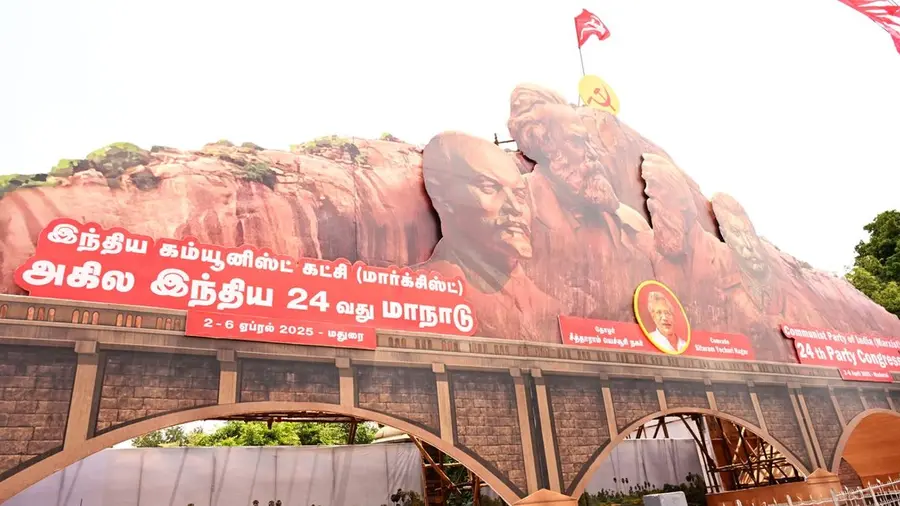
The 24th Congress of the Communist Party of India (Marxist) (CPI(M)) took place in Madurai from April 2 to 6, 2025, against the backdrop of significant shifts in both the national and global political landscape. The ancient city, Madurai—represented by the CPI(M) in Parliament—served as a vibrant host, reflecting the party’s rich cultural heritage and its deep-rooted connection to its ethos.
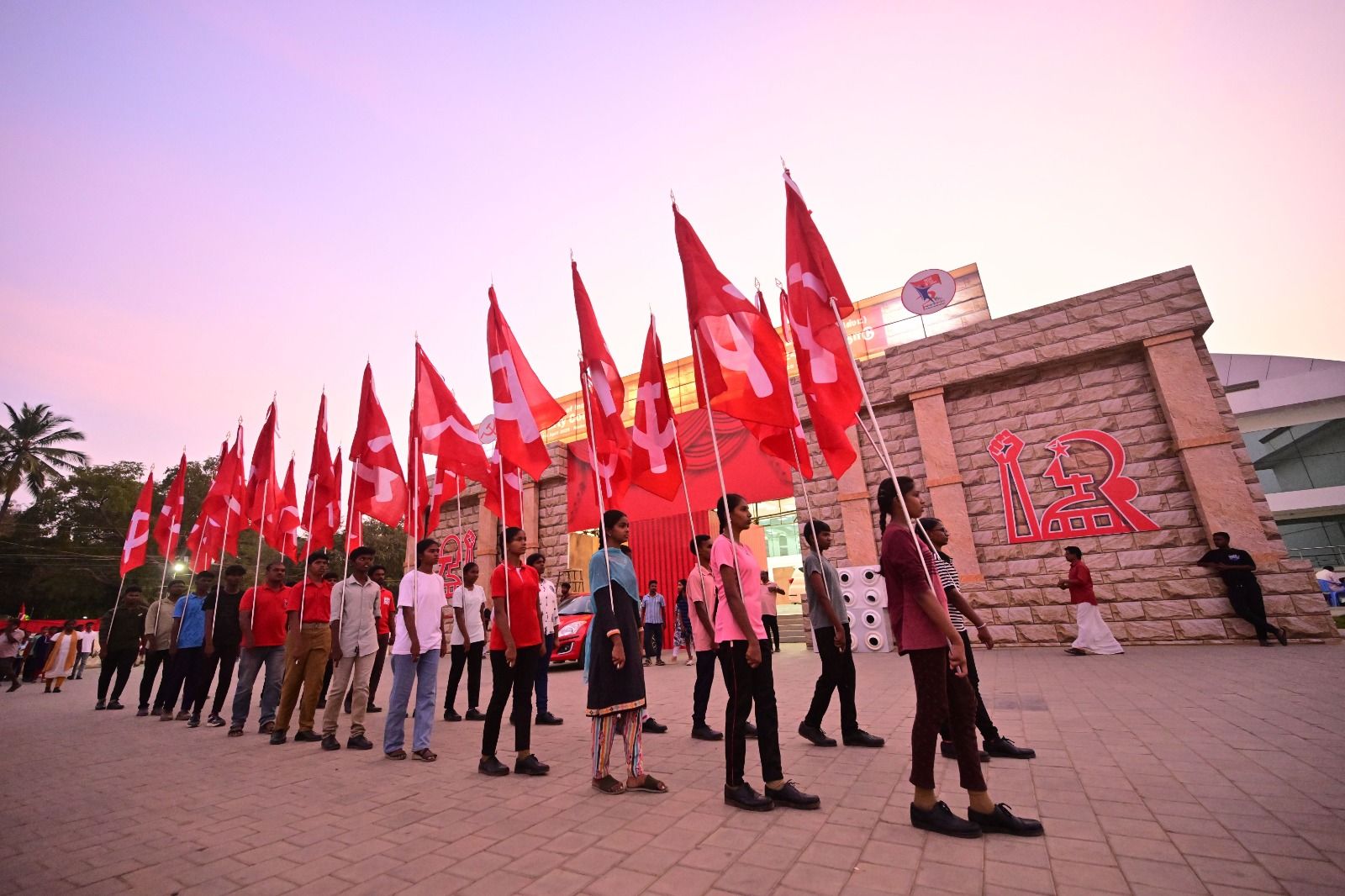
The Congress was a celebration of cultural expressions, organized with great enthusiasm by Tamil Nadu, a state known for its artistic traditions. Festivities unfolded at Sitaram Yechury Nagar in Tamukkam Ground, where artists from Tamil Nadu and neighboring states such as Telangana, Karnataka, and Kerala came together for a people’s festival, extending solidarity with the struggles of the masses.
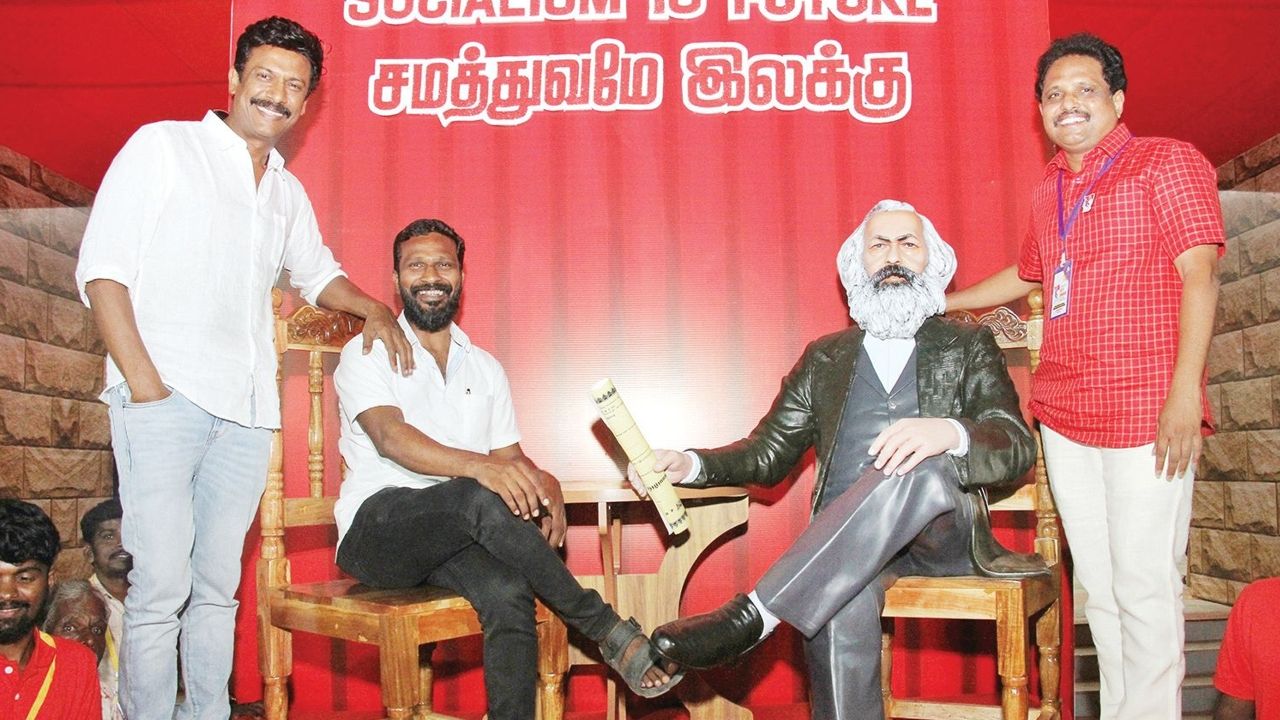
The event showcased a diverse range of performances, including folk dances, tribal and rural community acts,Oppana, traditional music,Singari Melam, satirical acts, and dramas. Cinema personalities like Samudra Kani, Sasi Kumar, Prakash Raj, and director Vetrimaran graced the event, adding to the vibrant atmosphere.
Renowned filmmaker Vetrimaran, known for his socially and politically charged films, praised CPI(M) workers from Tamil Nadu and across the country. He remarked, “We are familiar with leaders who live in bungalows and drive expensive cars. But we are not as familiar with leaders who walk among the people, live with them, and fight alongside them. Yet, they are there—in every area and village of this state and our country.” He further emphasized, “If a leader is not grounded in Marxian principles, they will walk against the people one day.” Other artists and actors echoed the same sentiment, highlighting the inseparable connection between art and politics, as both reflect the lives, experiences, and struggles of the people.
A poignant highlight of the Congress was the visual installation commemorating the Keezhvenmani massacre—a stark reminder of a deep wound and a turning point for the Communist Movement in Tamil Nadu and neighboring states. The massacre, which took place in 1968 in Nagapattinam district, claimed the lives of 44 party martyrs, including women and children, at the hands of feudal landlords who unleashed violence against agricultural landless laborers.
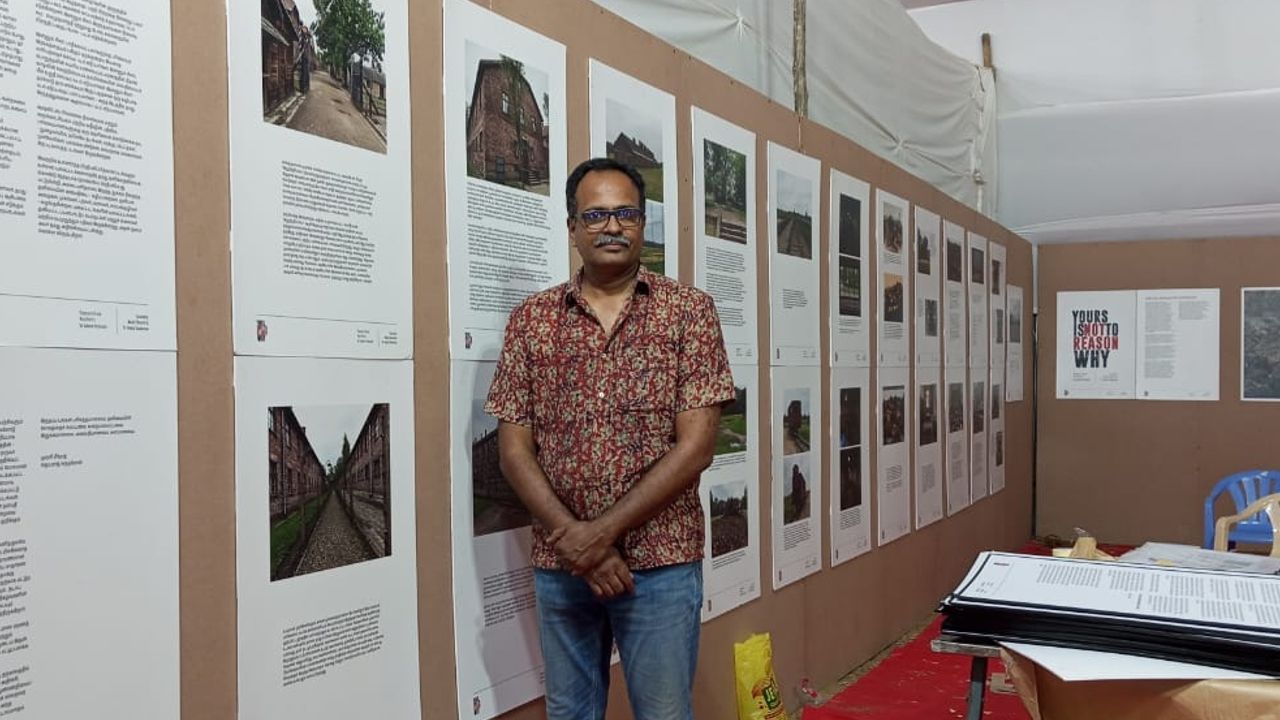
Solidarity at the Congress extended beyond regional and national boundaries. Reflecting the CPI(M)’s internationalist roots, an exhibition titledYours Is Not Reason Whywas organized, featuring photographs from Germany, including images of homes and Holocaust ruins. This exhibition, dedicated to solidarity with Palestine, was the work of photographer Sudheer. He explained, “This art exhibition was designed during the CAA protests in India, but its theme evolved as both global and national situations changed. There is a multi-dimensional aspect to it, but everything connects to Palestine.” Through this exhibition, the CPI(M) aimed to highlight how the narratives of victims can never be those of perpetrators, drawing parallels between the horrors of Nazi Germany and the present struggles faced by Palestinians.
The solidarity did not end there. Over 800 delegates and observers wore keffiyehs, and the hall resonated with the slogan, “From River to the Sea, Palestine will be free.” A resolution expressing solidarity with Cuba amid the U.S. embargo was also passed. Additionally, the Congress adopted more than 100 resolutions addressing both national and international issues, including demands for the repeal of the Waqf Amendment Act and support for full statehood and democratic rights for Jammu and Kashmir.
The Congress unfolded against complex global dynamics. Progressive forces are resurging worldwide—Latin American nations like Brazil, Chile, Colombia, and Mexico, alongside European powers such as France and Germany, are witnessing a rise in scientific socialism. In South Asia, Sri Lanka’s Left has come to power, marking a significant political shift. However, the Indian political landscape presents stark contrasts the Congress noted. The current central government has been criticized for its authoritarian tendencies, economic inequality, and attempts to stoke communal divisions. The BJP’s indifference toward global justice struggles, including the Palestinian cause, reflects a regressive political stance that isolates India from progressive global movements.
The Congress’s political resolution delivered a strong critique of the RSS-BJP’s Modi government, highlighting its role in weakening democratic institutions and widening economic disparities through the “corporate-communal nexus.” The CPI(M) condemned the BJP’s economic policies for deepening wealth concentration among the elite while promoting divisive ideologies to distract from critical national issues. In response, the party pledged to expand its outreach, focusing on Dalits and marginalized groups, and initiated a nationwide campaign demanding a caste-based census, affirmative action in the private sector, and measures to dismantle entrenched inequalities.
The Congress saw vigorous discussions, with delegates actively participating and 174 amendments tabled. The final resolution, passed unanimously, reinforced the CPI(M)’s firm stance against communalism, centralization, and neoliberal economic policies. It urged the formation of a broad-based democratic alliance to safeguard constitutional principles and federal integrity, stressing the need to adapt to the country’s evolving political challenges.
A seminar on the changing relations between the state and center further enriched the Congress, featuring discussions with the Education Minister of Karnataka, the Chief Minister of Tamil Nadu, and Kerala Chief Minister and Politburo member Pinarayi Vijayan.
The Congress took on added significance following the BJP’s third consecutive victory in the general elections, pushing opposition parties to reconsider their strategies. For the CPI(M), the Madurai Congress was more than just a regular meeting—it was an opportunity to rethink the party’s role in India’s changing political landscape. While the CPI(M) maintains a strong presence in states like Kerala, its influence at the national level has declined. The leadership acknowledged the need to improve outreach efforts, build strong alliances, and strengthen the party’s structure.
The organizational report, presented by B.V. Raghavulu, outlined the party’s involvement in various mass movements, including labor strikes, farmer protests, and campaigns for land rights, housing, and jobs. In Kerala, the CPI(M) led protests against central government policies, while in West Bengal and Tripura, the party focused on youth employment issues and fought against political violence. The report also highlighted efforts to combat gender-based violence and noted a growth in membership, with increased participation from women and youth.
Membership showed steady growth, rising from 985,757 in 2021 to 1,019,009 in 2024. The proportion of women members increased from 18.2% to 20.2%, and youth membership grew from 19.5% to 22.6%. The working class remained the largest section, constituting 48.25% of members, followed by agricultural laborers at 17.79% and poor peasants at 9.93%, totaling nearly 76% from economically marginalized groups. Membership in mass organizations grew by 6.4 million, reflecting broader engagement across the party’s base.
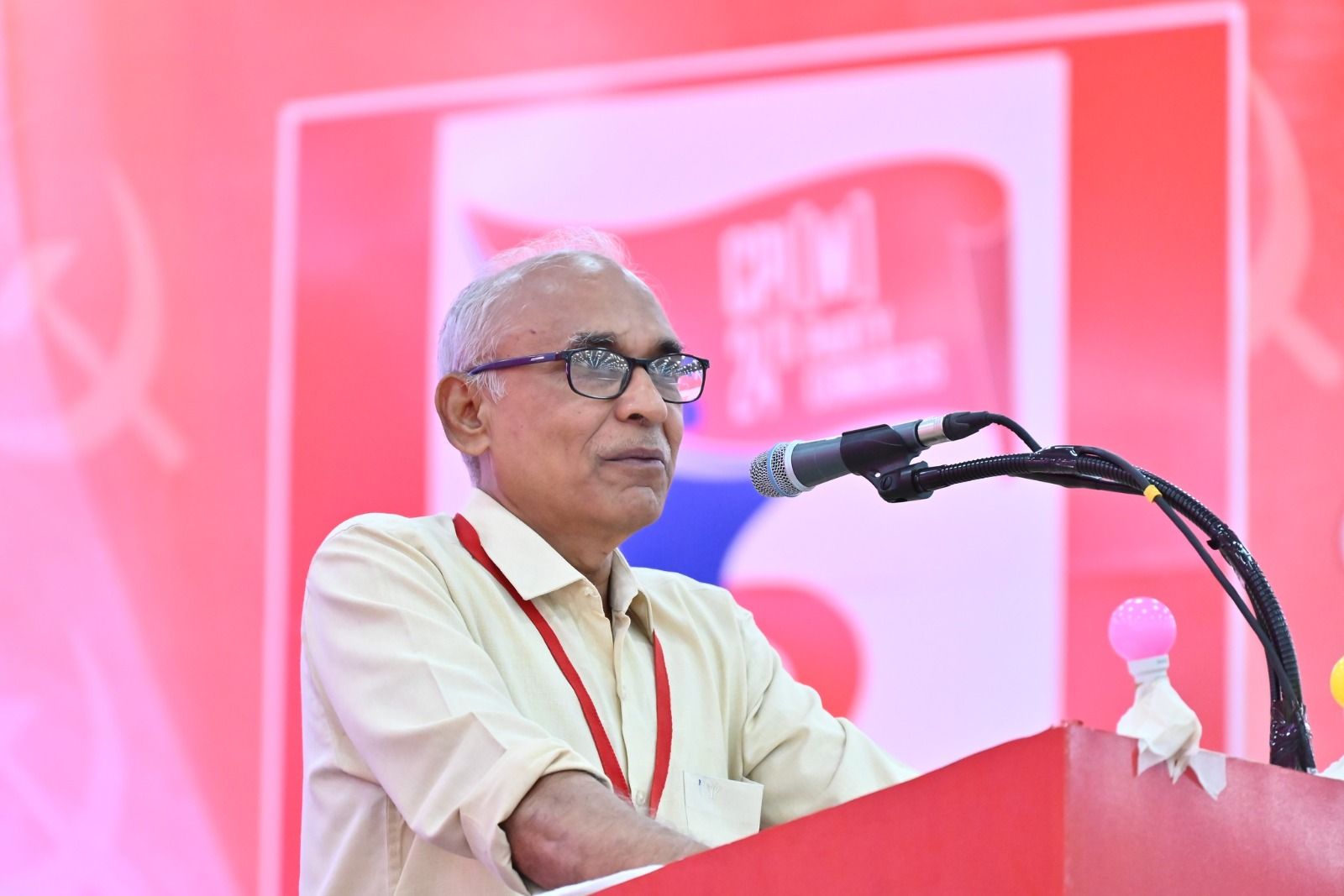
The Congress passed several resolutions addressing both national and international issues. These included demands for the withdrawal of the Waqf Amendment Act, calls for restoring full statehood and democratic rights to Jammu and Kashmir, and expressions of solidarity with Cuba while condemning the U.S. economic blockade. Other key resolutions focused on agricultural reforms, recognizing basic needs as fundamental rights, extending reservations for SCs, STs, and OBCs to the private sector, and opposing the privatization of the electricity sector.
Further resolutions tackled environmental concerns, such as opposing deep-sea mining, addressing violence against women and children, combating youth drug addiction, ensuring rights and dignity for LGBTQ+ individuals, seeking justice for persons with disabilities, and rejecting the UGC’s proposed regulatory framework.
The new central committee features seasoned leaders like Pinarayi Vijayan, B.V. Raghavulu, Tapan Sen, Mohammad Salim, Ramchandra Dome, and K.K. Shailaja, alongside newer members such as Anurag Saxena, Vinod Nikole, Meenakshi Mukherjee, and John Wesley, reflecting a conscious effort to include diverse regional and generational perspectives.
The 18-member politburo includes Vijayan, Baby, Raghavulu, Sen, Nilotpal Basu, A. Vijayaraghavan, Salim, Ashok Dhawale, Dome, M.V. Govindan, Jitendra Choudhury, K. Balakrishnan, U. Vasuki, Amra Ram, Srideep Bhattacharya, R. Arun Kumar, Mariam Dhawale, and Vijoo Krishnan.
The central control commission, elected during the Congress, includes G. Ramakrishnan, M. Vijayakumar, U. Basavaraju, Rabin Deb, Jogendra Sharma, and Rama Das, with G. Ramakrishnan serving as chairperson.
At the concluding public meeting, General Secretary M.A. Baby acknowledged the Left’s diminishing influence in India but reaffirmed the party’s commitment to reconnecting with the masses and learning from their experiences. He also highlighted the continued presence of Left-led governments globally, challenging the narrative of a global rightward shift.
The Congress also addressed the rising tide of neo-fascism globally, emphasizing its dangers to democracy, human rights, and social justice. Neo-fascism, as an advanced form of authoritarianism, is not merely a resurgence of past fascist ideologies but a sophisticated reconfiguration that merges corporate capitalism with state power. It thrives on the contradictions of neoliberal globalization, where economic inequality deepens, social divisions widen, and democratic institutions are systematically weakened.
In the political economy of neo-fascism, the consolidation of wealth and power in the hands of a few transnational corporations is paralleled by the state’s deployment of authoritarian measures to manage dissent. This nexus—often referred to as the “corporate-communal nexus” in the Indian context—manifests in policies that prioritize elite interests while eroding workers' rights, suppressing minority voices, and fostering a climate of fear and division.
The CPI(M) critically analyzed the Modi government’s economic and political strategies as emblematic of this neo-fascist trend. The government's neoliberal economic policies, characterized by privatization, deregulation, and fiscal austerity, have intensified wealth concentration, while its communal agenda seeks to distract and divide the masses. The party identified the BJP’s governance as a textbook example of neo-fascism, where state apparatus is leveraged to perpetuate corporate interests and authoritarian rule under the guise of nationalism.
The CPI(M) stressed that combating neo-fascism requires more than electoral resistance; it demands a comprehensive struggle that unites democratic, secular, and progressive forces. The Congress concluded with a resolute call to action: to defend democracy not just as an institutional framework but as a living, breathing struggle for justice, equality, and human dignity. This is the party’s unwavering commitment in the face of rising authoritarianism—both at home and abroad.



Related News
Dont Miss it





0 comments