
Dharmasthala Mass Burial Probe:SIT Begins Seventh Excavation

Web desk
Published on Aug 01, 2025, 05:36 PM | 4 min read
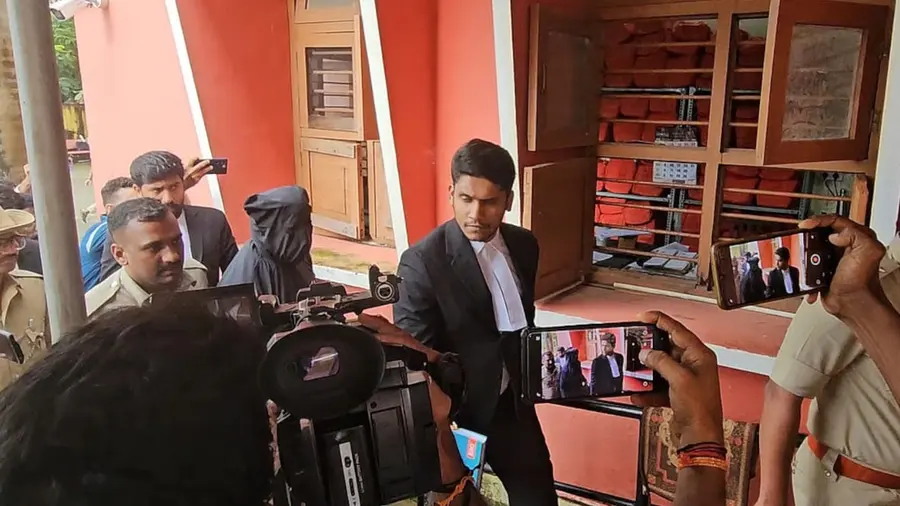
Dharmasthala/Mangalore: The Special Investigation Team (SIT) on Friday commenced excavation at the seventh identified location in Dharmasthala, intensifying its probe into chilling allegations of mass burials, rape, and murder that reportedly took place in the temple town over the past two decades. The move follows the discovery of skeletal remains at an adjacent site (Point No. 6) on Thursday, an indication that the investigation is beginning to uncover physical evidence that could validate the explosive claims made by a former sanitation worker.
The SIT, set up by the Karnataka government under pressure from the disturbing nature of the allegations, has identified 15 locations for excavation. Additional personnel, labourers, and heavy machinery have now been deployed, police said. However, critics argue that this action, though necessary, comes suspiciously late, raising uncomfortable questions about why the government waited so long to act on a complaint linked to systematic and gruesome abuse.
Forensic experts in Mangaluru have noted that only complete or nearly complete skeletons can offer conclusive legal evidence. Isolated bones, like those recovered so far, may fail to provide answers to the core question: Were these victims of natural death or deliberate extermination? That distinction will be central to the direction of the probe.
Meanwhile, in an apparent attempt at damage control, the Dharmasthala Grama Panchayat issued a clarification, stating that over 200 unidentified or unclaimed bodies were buried since 1995, allegedly in accordance with legal procedures, and often in forest fringes, riverbanks, or government land due to the absence of a formal burial ground. This explanation, however, has only deepened the public’s suspicion. If these burials were truly legal, why were they undocumented for decades, and why did a sanitation worker allege he was forced to bury bodies showing signs of sexual violence.
That whistleblower, whose identity remains protected, claimed in his statement to a magistrate that he was employed in Dharmasthala from 1995 to 2014 and had buried several bodies, including those of women and minors, some of which bore evidence of sexual assault. These are not mere procedural lapses, they are allegations of institutionalised violence.
In a separate but related development, Karnataka Home Minister G Parameshwara told the media in Bengaluru that the government is “monitoring” social media for posts related to the mass burial case and warned of action against content that may “instigate feelings in the society.” This pronouncement is being viewed by many as an attempt to suppress public discourse and criticism, especially as confidence in the investigation’s transparency continues to erode.
The Minister emphasised action against hate speech and communal messaging, citing previous examples in Dakshina Kannada. But conspicuously absent was any commitment to transparency, public updates, or independent oversight in this deeply disturbing case. Instead, the state appears more concerned with controlling the narrative than uncovering the truth.
Further clouding the investigation is the uncertainty surrounding SIT Chief Pronab Mohanty, who met the Home Minister on Friday amid speculation that he might be transferred to the Union government. Though Parameshwara claimed the meeting was unrelated to the Dharmasthala probe and was focused on internal security and upcoming regulations on fake news and online gambling, the timing has drawn criticism. Removing the head of the SIT at this critical juncture, before any significant conclusions have been drawn, would severely compromise the probe’s credibility.
Critics argue that the Karnataka government’s mixed signals, belated excavations, vague explanations from local officials, veiled warnings about social media scrutiny, and potential reshuffling of the investigation’s leadership, reveal a political establishment more invested in damage limitation than truth-seeking. The government’s lack of urgency over the past two decades, despite now-admitted burial practices of hundreds of unidentified bodies, is itself an indictment of administrative apathy or worse.



Related News
Dont Miss it








0 comments