
IndiGo Fatigue Crisis Exposes Railway Safety Threat: All India Loco Running Staff Association
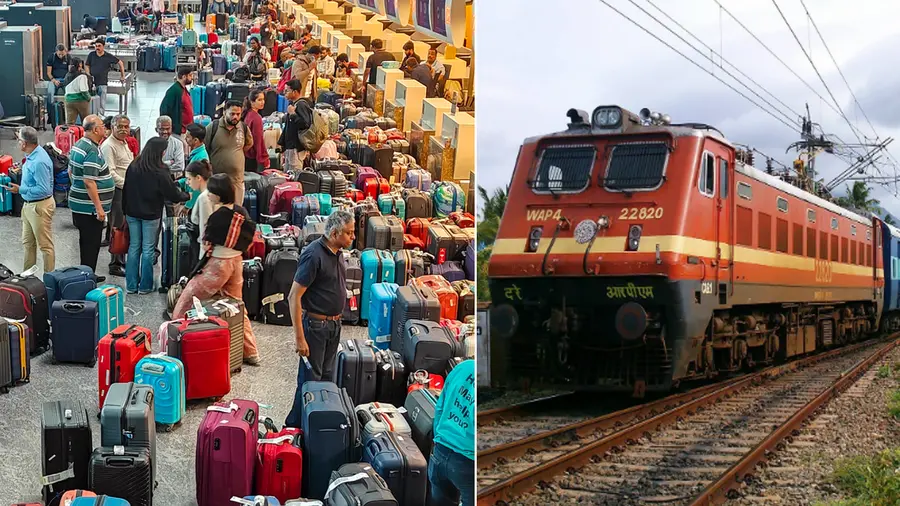
New Delhi: Referring to the IndiGo crew fatigue crisis, the All India Loco Running Staff Association said safety regulations in India are being steadily weakened under corporate pressure and warned that Indian Railways now faces a far more serious fatigue-driven safety threat.
The union pointed out that although the government adopted the Fatigue Risk Management System in 2023 and notified revised Flight Duty Time Limitations to be implemented from November 2025, IndiGo failed to make the required preparations, including crew restructuring and manpower expansion. When the deadline approached, pressure from the airline led to a postponement of the safety rules. The disruption led to chaos at airports across the country, while passengers were forced to pay sharply increased airfares, even as safety concerns were pushed aside.
Drawing a parallel with Indian Railways, the association said loco pilots have been working under unscientific and exhausting duty schedules for decades. Despite repeated recommendations from expert committees and courts for scientific duty-hour limits and proper rest, the Railway Board has not implemented meaningful reforms. The union said safety in railways is even more dependent on human alertness than in aviation, as the sector lags behind in automation.
Referring to the Singpur train collision near Bilaspur in 2023, the association said the official inquiry found that some loco pilots were on duty for more than 20 hours at the time of the accident, even though a 12-hour limit exists on paper. It also said railway authorities had admitted before the Madras High Court that no proper job analysis of loco pilots had ever been conducted in India, even after the court directed that such a study be carried out.
The union criticised the government for taking a tough stand against worker agitations in public sector industries while showing leniency towards large private companies that resist safety regulations. It also warned that new labour codes allowing 12-hour duty days could further weaken safety protections for transport workers whose alertness directly affects passengers.
Citing global practices, the association said strict fatigue limits are followed in transport systems across Europe, the US, Australia and Canada, and that fatigue risks cannot be treated as negotiable. It demanded immediate implementation of a scientific, fatigue-based working hour system for loco pilots, warning that the safety of millions of railway passengers depends on it every day.



Related News
Dont Miss it










0 comments