
Labour
Is the ELI Scheme Solving India’s Job Crisis—Or Just Subsidising Employers Again?
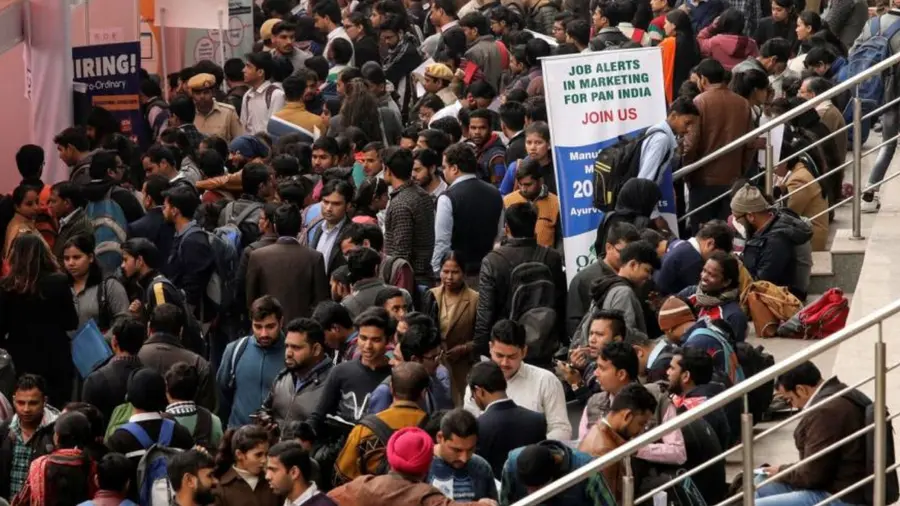
Image courtesy: Washington Post

Anusha Paul
Published on Jul 07, 2025, 05:34 PM | 6 min read
In a country facing a deepening unemployment crisis, the Union Cabinet’s approval of the RS. 99,446 crore Employment-Linked Incentive (ELI) Scheme has been presented as a major initiative to create over 3.5 crore jobs over two years. However, for many among the country’s unemployed youth, it reflects a familiar pattern of ambitious announcements with almost no delivery.
The ELI Scheme follows the trajectory of earlier government initiatives like the RS. 1.46 lakh crore Production-Linked Incentive (PLI) Scheme and the Rs. 76,000 crore Capital Expenditure Incentive (Capex) Scheme, all launched with the stated aim of driving employment growth. While framed as bold interventions, these schemes have, in effect, operated as large-scale transfers of public resources to private enterprises, with least employment outcomes.
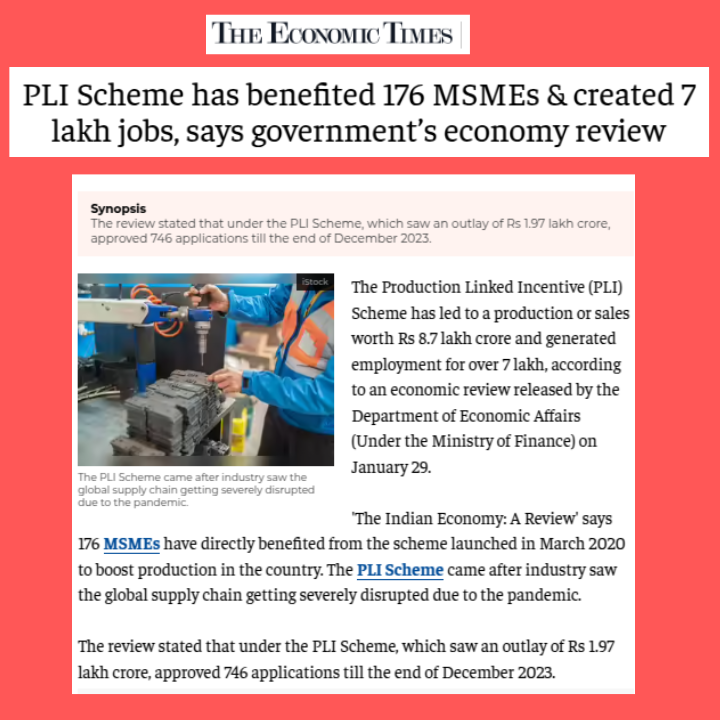
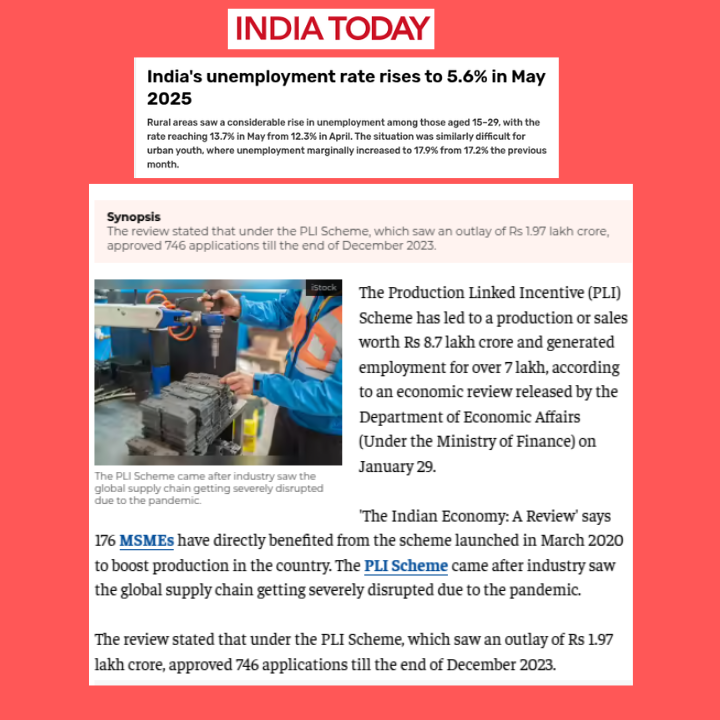
Launched in 2020 to stimulate investment and job creation in 14 manufacturing sectors—later expanded to 17—the PLI Scheme promised 60 lakh jobs and a boost in the manufacturing sector’s share of GDP from 15.4% to 25%. Five years on, only 7 lakh jobs have materialised, and the sector’s contribution to GDP has instead fallen to 14.2%. The scheme's total outlay of Rs. 1.97 lakh crore contrasts sharply with the Rs. 1.76 lakh crore in actual private investment generated, as per government disclosures in Parliament.
Similarly, the Capex Incentive Scheme has faced criticism for the scale of subsidies offered to large corporations. At the Sanand industrial hub in Gujarat, for instance, the effective subsidy amounted to over Rs. 3.25 crore per job created, benefiting firms such as Micron (USA), Tata Group, Murugappa Group, and companies from Japan and Taiwan, all involved in semiconductor manufacturing.
These schemes, far from catalysing mass employment, have primarily subsidised the investment and production costs of large domestic and international corporations. Crucially, these funds originate from public revenues, particularly Goods and Services Tax (GST) collections—contributions made by ordinary citizens.
The newly approved ELI Scheme builds on this model by subsidising labour costs directly. Employers registered under the Employees’ Provident Fund Organisation (EPFO) are eligible to receive Rs. 3,000 per employee per month, for up to two years—and in certain cases, up to four years. Workers earning up to Rs. 1 lakh per month may receive EPF-linked benefits of up to Rs. 15,000.
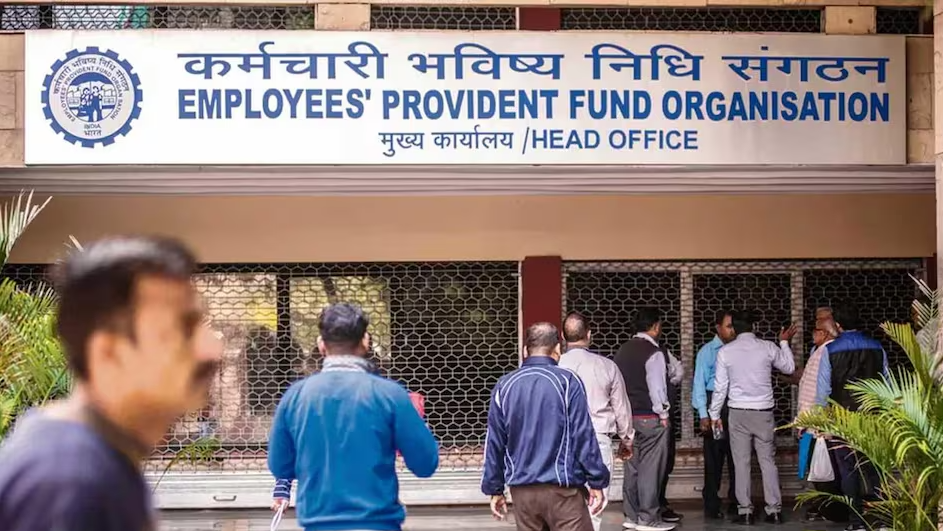
However, several concerns arise from the scheme’s structure. The most prominent is the use of the EPFO as the nodal agency. Traditionally established to safeguard workers' retirement savings, the EPFO is now being positioned as a vehicle for disbursing government subsidies to private employers. This shift represents a broader trend of re-purposing institutions meant to protect labour interests into tools for facilitating capital.
(Image courtesy: Google)
Moreover, by limiting coverage to formal-sector workers employed by registered establishments, the scheme systematically excludes the vast majority of India’s workforce—those in micro, small, and informal enterprises. These sectors are central to employment generation in rural and peri-urban India, yet they remain outside the purview of the scheme.
Even Laghu Udyog Bharati, the economic arm of the Rashtriya Swayamsevak Sangh (RSS), has raised concerns over the exclusion of firms employing fewer than 20 workers—highlighting that the scheme favours larger enterprises already integrated into formal regulatory and financial systems.
The roll-out of the ELI Scheme comes at a time when budgetary allocations for essential welfare and employment programmes such as the Mahatma Gandhi National Rural Employment Guarantee Act (MGNREGA) continue to be reduced. Despite being one and only schemes offering guaranteed employment in rural areas, MGNREGA has seen consistent underfunding in recent years.
This contrast underscores a broader shift in fiscal priorities—from public employment and social infrastructure to corporate incentives. While public spending is mobilised to lower the cost of hiring for employers, long-term investments in health, education, childcare, vocational training, and rural employment remain neglected.
CITU General Secretary Tapan Sen has criticised the scheme as “another deceptive move transferring public funds to the employers’ class,” noting that the government has ignored repeated calls from trade unions to release detailed data on the employment outcomes of earlier schemes like PLI and Capex. He further stated, “The ELI scheme continues the trend of subsidising employers while statutory duties toward workers and social security are being diluted.”
India’s employment crisis is not only about the number of jobs, but also the quality and accessibility of employment. According to Ministry of Statistics and Programme Implementation's (MoSPI) Periodic Labour Force Survey (PLFS), as of May 2025, urban youth unemployment stands at 17.9%, while rural youth unemployment is at 13.7%. The gap between educational attainment and job availability continues to widen, creating a situation where even qualified young people struggle to find secure employment.
For women, the disparities are particularly stark. Although the female unemployment rate (5.8%) is marginally higher than that of men (5.6%), the labour force participation rate remains alarmingly low—only 32.5% for women, compared to 55% for men. These figures reveal the depth of exclusion, particularly for marginalised and informal workers who are least likely to benefit from incentive-linked formal employment.
Crucially, none of these structural issues can be addressed through employer subsidies alone. Employment generation at scale requires direct public investment in labour-intensive sectors and universal social protection frameworks. These are not peripheral concerns—they are foundational to building a sustainable and inclusive economy.
Perhaps the most concerning aspect of the ELI scheme is the ongoing transformation of public institutions. By converting the EPFO into a conduit for private subsidies, the government has altered the original mandate of an institution created to protect workers' financial futures. This shift reflects a deeper erosion of accountability, where the mechanisms meant to serve public interest are increasingly aligned with private priorities.
The lack of transparency surrounding job targets, monitoring mechanisms, and long-term outcomes further compounds this concern. Without clear data or independent evaluation, it becomes difficult to assess whether these schemes deliver on their promises—or merely reallocate resources upward.
Related News
In response to the government’s continued push for employer-concentric schemes and the weakening of labour protections through the new labour codes, trade unions across the country have called for a nationwide general strike on July 9, 2025. The strike, led by a joint platform of central trade unions including CITU, demands the repeal of the labour codes and a halt to what they describe as the systematic dismantling of workers’ rights and social protections.
The call to action reflects growing frustration among the working population, not just with specific policies, but with the broader direction of economic governance—one where public wealth is increasingly channelled toward private profits, while the needs of workers remain unmet.
The ELI scheme, like its predecessors, is emblematic of a broader policy framework that privileges capital over labour. Its design, implementation, and institutional implications suggest that it is less a solution to India’s employment crisis than a continuation of policies that have failed to deliver inclusive growth. Without a shift toward direct public investment, structural reform, and stronger protections for workers, employment in India is likely to remain precarious, unequal, and exclusionary.



Related News
Dont Miss it










0 comments