
Kerala’s K-Smart: Where Technology Meets Citizen-Centric Governance

Anjali Ganga
Published on Jan 05, 2026, 06:47 PM | 5 min read
On Diwali, newlyweds Lavanya and Vishnu received their marriage certificate at the very hall where they had tied the knot, marking a remarkable milestone in Kerala’s digital governance. What made the moment extraordinary was not just the festive backdrop, but the method: immediately after their wedding, the couple completed their marriage registration via K-Smart’s video KYC system. Despite it being a holiday, officials from Kavasseri Panchayat processed the application in real time, and within minutes, the certificate was delivered to the couple through WhatsApp. Panchayat member T Velayudhan personally handed them a printed copy, a small but significant gesture that blended cutting-edge technology with human warmth.
Kerala has become the first state in India to allow marriage registration through online video KYC via K-Smart, a digital platform that is redefining the way citizens interact with local self- government. The couple’s story, widely shared on social media and endorsed by leaders like M B Rajesh, has sparked a nationwide conversation. Residents of other states are now demanding similar facilities in their local governance systems. But marriage registration is only the beginning.
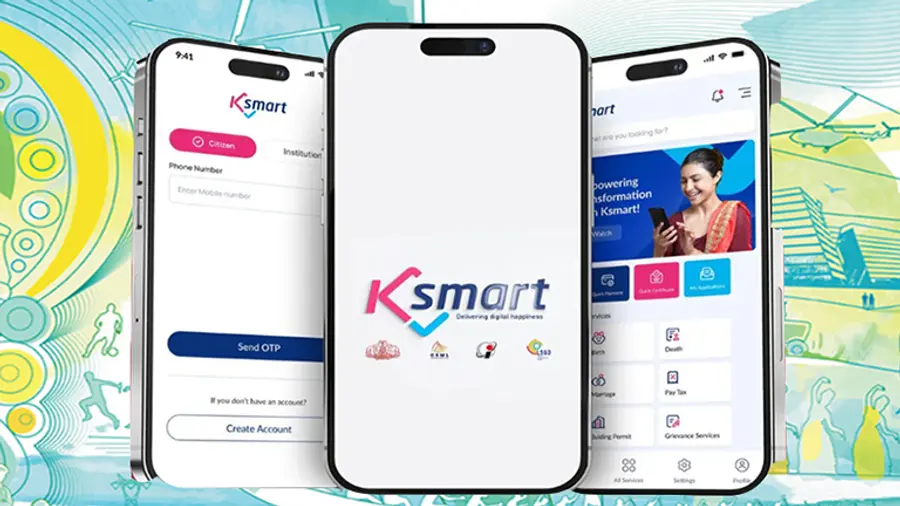
K-Smart, implemented by the Information Kerala Mission (IKM), has revolutionised citizen services across Kerala. The platform allows residents to access over 23 functional modules, covering everything from civil registrations and building permits to welfare schemes. Through K-Smart, citizens can register births, marriages, and deaths; apply for building permits; pay property tax; obtain trade licences; and even lodge public grievances. Certificates for birth, marriage, and death can be accessed instantly online, while applications and approvals for building permits and other permissions happen in real time, eliminating long queues and bureaucratic delays.
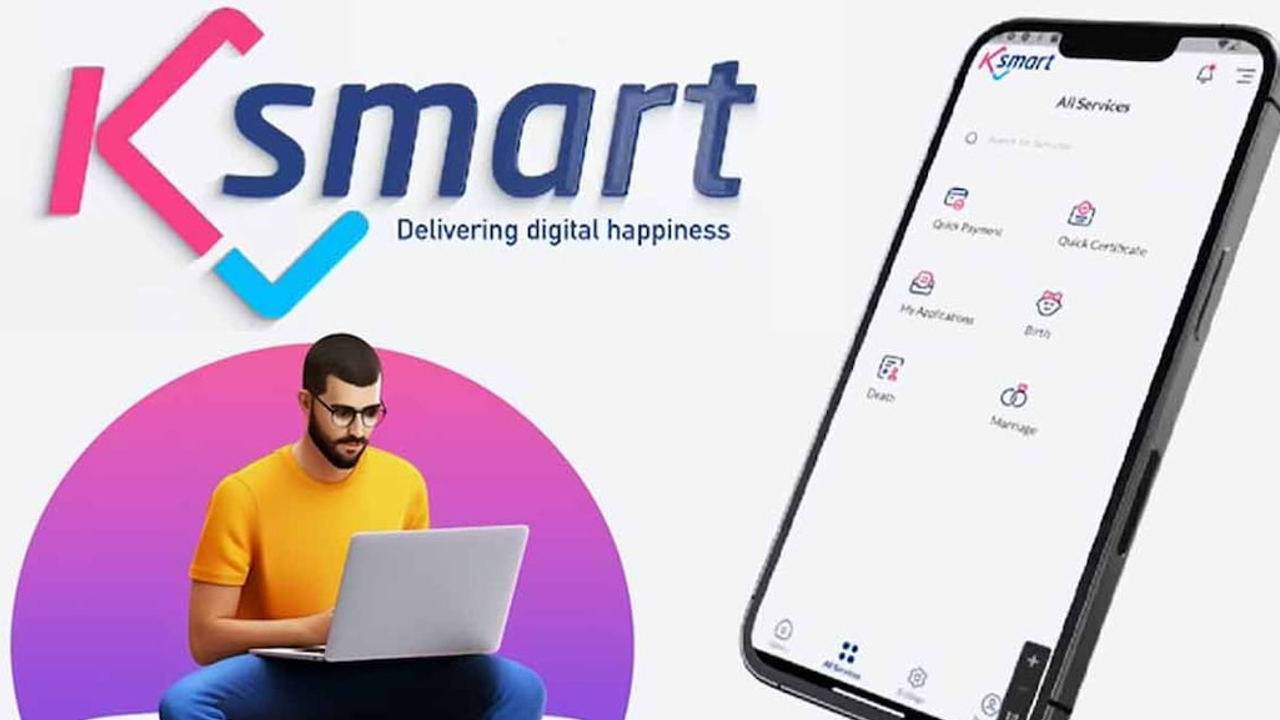
The impact on governance efficiency has been extraordinary. Since its launch, K-Smart has processed over 93 lakh files, with more than 9.14 lakh completed in just one hour, a figure that defies the long-held belief that government files move at a glacial pace. The platform allows officials to approve applications from anywhere, even on holidays, ensuring that services reach citizens without delay. Kavasseri Panchayat, for instance, received widespread praise for processing Diwali applications promptly, despite it being a holiday for government offices, reflecting both the dedication of Kerala’s local officials and the effectiveness of digital governance.

One of the most transformative aspects of K-Smart is in the realm of housing and construction. Residents can now build homes under 300 square metres immediately after receiving a digitally approved plan. Building permits are issued within a minute through the platform, and official inspections are required only at the time of occupancy. By removing previous restrictions on height and bureaucratic red tape, K-Smart has accelerated residential construction while maintaining legal compliance. Up to October 31, nearly 85,000 permits have been issued this way, covering about 80% of house construction applications in Kerala. For citizens, the promise is simple: decide today, build tomorrow.
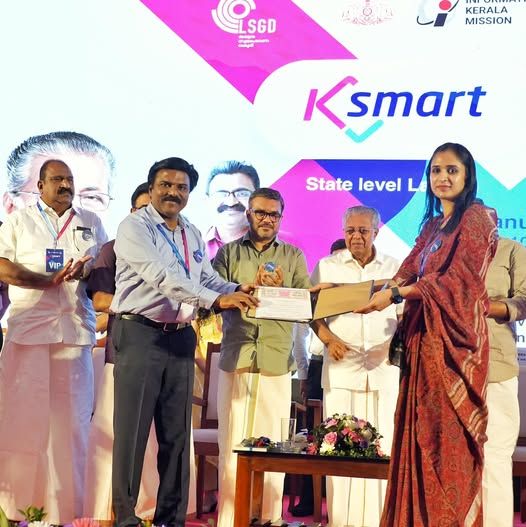 Preethi Gelot IAS, Joint Director (Reforms) of Karnataka Municipal Data Society, hands over the MoU to Dr. Santosh Babu, CMD of Information Kerala Mission, as the Chief Minister looks on
Inspiring Neighbourhood
K-Smart’s success has not gone unnoticed. Its effectiveness and efficiency have inspired other states to explore similar models. Karnataka has signed a memorandum of understanding to implement K-Smart, with preliminary discussions already underway. Delegations from Nagaland, Maharashtra, Uttar Pradesh, Jharkhand, and Punjab have also expressed interest in studying the platform. The National Urban Digital Mission (NUDM) has recognised IKMM as a partner, and the National Institute of Urban Affairs (NIUA) has empanelled IKMM as the implementing agency for its Urban Governance Platform (NUGP) across states and union territories, making Kerala the only state government agency in India with such recognition.
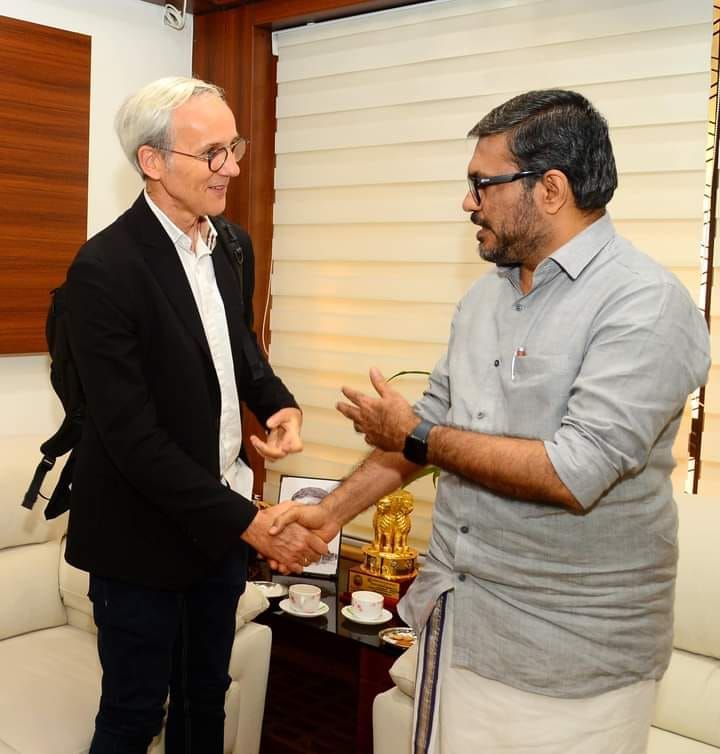 Laurent Le Danois, Head of the EU Cooperation Division in India, meets Kerala’s Local Self-Government Minister M B Rajesh
Global Recognition
Internationally, K-Smart is gaining attention as a model for citizen -centric digital governance. Laurent Le Danois, Head of the Cooperation Division of the European Union delegation in India, visited IKMM to understand the platform and explore possibilities for collaboration in digital governance and literacy. The Philippines has also shown interest. Meanwhile, the Internet Computer Protocol (ICP), a Switzerland-based non-profit foundation, has expressed keen interest in partnering with K-Smart, providing support that promises secure, cost-effective, and scalable digital services. ICP’s involvement could expand Kerala’s role as a hub for emerging technologies like blockchain and artificial intelligence, potentially creating thousands of job opportunities for the youth.
Beyond technology, K-Smart has redefined the ethos of local governance. Citizens now experience services that are faster, more transparent, and more accessible, while government officials can manage approvals efficiently without physical presence. Welfare schemes, such as the Chief Minister’s Sthree Suraksha Scheme, have been seamlessly integrated, ensuring social support is available digitally. The platform demonstrates how digital governance can serve as a bridge between technology and the everyday needs of the people, enhancing trust in government institutions.
Kerala’s success with K-Smart demonstrates what is achievable when vision meets execution. Under the leadership of M B Rajesh, the platform has transformed local self-governance, turning traditional file-based processes into fully digital services and dramatically accelerating operations across the LSGD.
In a country where local self-governments often struggle with limited resources, the state has shown that smart, digital solutions can deliver tangible results. Even as the central government continues to restrict funding for local institutions, Kerala has harnessed technology to maintain the pulse of day-to-day citizen transactions.
From a couple receiving a marriage certificate on their wedding day to thousands of citizens applying for building permits and accessing welfare schemes in minutes, K-Smart embodies the Kerala model: efficient, citizen-friendly, and digitally empowered. It has become a benchmark for other states, attracting international attention and inspiring a new wave of governance innovation. In the words of many observers, Kerala is no longer merely keeping pace with digital transformation, it is setting the standard for India and beyond.
Tags



Related News
Dont Miss it








0 comments