

Kerala’s Development Should Harness Expatriates’ Knowledge and Expertise: CM Pinarayi Vijayan
File Photo

Web desk
Published on Jan 30, 2026, 11:43 AM | 4 min read
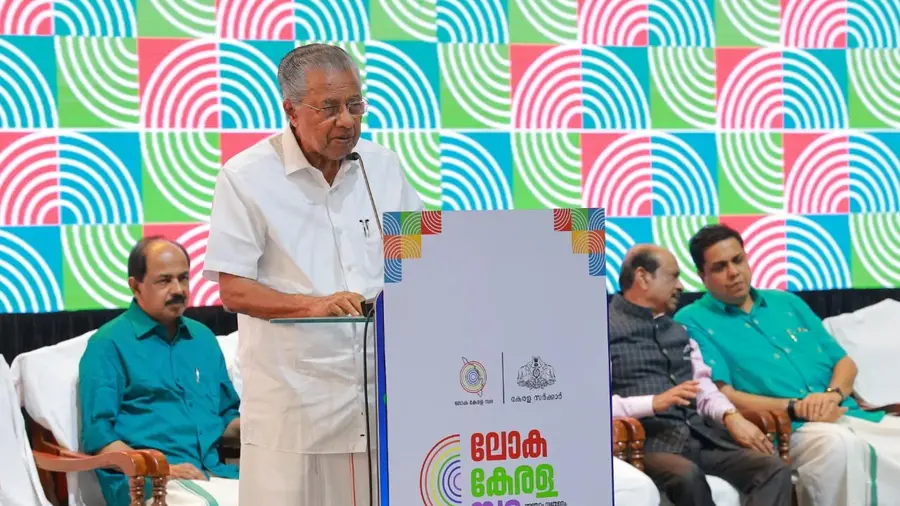
Thiruvananthapuram: Chief Minister inaugurated the delegate session of the fifth Loka Kerala Sabha, highlighting the vital role of Kerala’s expatriates in the state’s development and the efforts being made to engage them systematically in governance and planning.
Tracing the history of Kerala’s expatriates, the Chief Minister recalled that the first generation went abroad under difficult circumstances, primarily seeking physically demanding work, including agricultural labour and construction. Many of these early expatriates were not formally educated, though some had schooling. Despite limited opportunities, they persevered to sustain their livelihoods.
He noted that Kerala itself underwent a profound transformation after the formation of the state, particularly with reforms under the EMS government, including the Land Acquisition Act and the expansion of educational facilities, which allowed previously marginalised sections of society to access schooling. Over time, expatriates diversified into technical, academic, scientific, and managerial professions, contributing to Kerala’s progress in multiple spheres.
The Chief Minister emphasised that both residents within Kerala and Keralites living abroad play a significant role in shaping and reshaping Kerala’s society and culture. “Kerala must be re-envisioned as a ‘Global Kerala,’” he said, “where all Keralites, whether at home or overseas, can move forward together in unity.” He noted that while there are many ways to foster cohesion between Keralites in the state and those abroad, at the centre of these efforts is the Loka Kerala Sabha. The Sabha provides a democratic platform for the diaspora to present their vision for Kerala’s future and has now gained broad public acceptance.
The Chief Minister acknowledged that the first session of the Loka Kerala Sabha faced opposition from some quarters, including criticism and ridicule. Some reports even portrayed respected delegates in a highly negative light. “Now, there is greater tolerance toward the Sabha. People who have seen its effective functioning no longer give weight to earlier objections. This has contributed to the reduction of opposition, and recently, even the central government has cited the Sabha as a model for other states,” he said.
Highlighting international parallels, the Chief Minister referred to China’s Chunhui project, which brings back students, researchers, and professionals from abroad to strengthen knowledge -based industries and research institutions. He suggested that Kerala adopt similar strategies to leverage the expertise of its diaspora. “The knowledge, experience, and skills of expatriates can help Kerala evolve as a knowledge society. Kerala’s Fifteenth Five-Year Plan, beginning 2027–28, should integrate diaspora-focused projects,” he said.
The Chief Minister noted that the standing committee of the previous Assembly had selected 28 recommendations, of which 10 have already been implemented, 13 are in progress, and 5 have been referred to the Ministry of External Affairs. Initiatives under these recommendations include the Pravasi Mission, which focuses on economic reintegration, entrepreneurship, decentralisation of NORKA, and resettlement planning, and NORKA Care, a comprehensive health insurance programme for Keralites living anywhere in the world, the largest such initiative in India.
A NORKA Police Station is being established to tackle overseas recruitment fraud, allowing expatriates to register FIRs directly. Comprehensive online systems, including a Student Migration Portal and helpdesks in foreign countries, have been set up to support education and migration concerns, and around 50 expatriate groups in Canada have been unified under the NORKA Canada Coordination Council.
Further measures include free online mental health consultations, platforms for expatriate professionals to engage in development work, the NORKA Professional and Business Leadership Meet, and the NORKA Women’s Cell. Legislation to regulate education consultancies, requested by the fourth Assembly, is in its final stage, while efforts to implement proposals submitted directly by representatives are ongoing.
The Chief Minister warned of growing global uncertainty for expatriates, citing restrictive policies in Western countries, weakening international conventions, and instability in global governance. He emphasised that in such circumstances, the responsibility of the home government to protect and integrate its diaspora increases, and Kerala is actively fulfilling that duty. Host countries must safeguard the human and labour rights of expatriates, while expatriates themselves must maintain strong ties with their homeland. Reintegration strategies must be concrete, and returning expatriates should be prepared to assimilate and rebuild their lives locally.
He concluded by underlining the need for a structured framework to support investment, enterprise development, and integration, with the Pravasi Mission coordinating all reintegration initiatives in collaboration with state departments and local governments. The upcoming session of the Loka Kerala Sabha will review recommendations from the fourth Assembly and plan further measures to strengthen ties between Kerala and its global diaspora, ensuring that both residents and expatriates move forward together in building a “Global Kerala.”



Related News
Dont Miss it







0 comments