
Kerala
Caste-Based Land Allocation at Palakkad Crematorium Sparks Controversy

Web desk
Published on May 26, 2025, 05:18 PM | 4 min read
Kerala: A recent decision by the Bharatiya Janata Party (BJP)-led Palakkad Municipality to allocate land within the Mattumantha public crematorium to the Nair Service Society (NSS) has sparked widespread criticism from civil society groups and activists, who condemned the move to institutionalise the caste segregation in a civic space meant to serve all communities.
On September 15, 2023, the Valiyapadam Karayogam of the Nair Service Society (NSS) submitted a formal request to the municipality, seeking 10 cents of land within the Mattumantha public crematorium. The stated purpose was to construct a shed to facilitate funeral rites during adverse weather conditions and to install basic facilities like a borewell.
The municipal council approved the request in its meeting on September 30, 2023, granting not 10 but 20 cents of land. The allocation was formalised via an official letter dated February 7, 2024, issued by the municipal secretary. The NSS request also cited the existence of a separate area within the crematorium previously used by the Brahmin community as a justification for their demand.
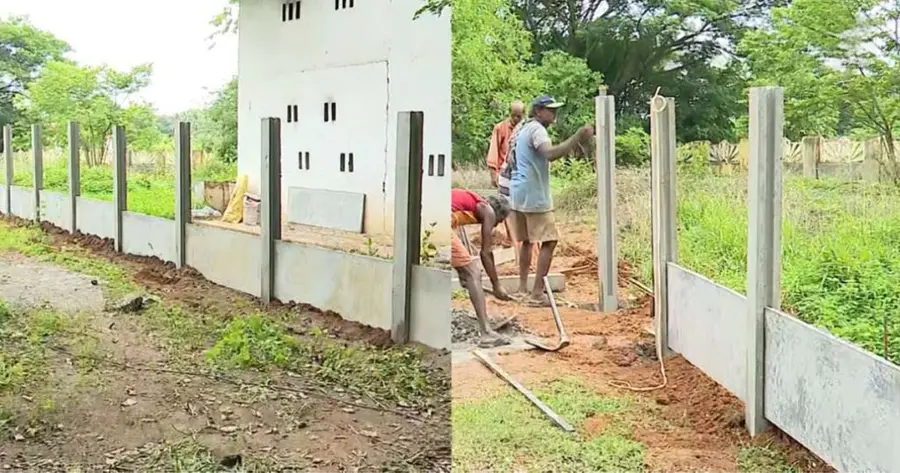
The issue became public after NSS members began constructing a boundary wall around the allotted land. This led to objections from activists and sections of the public who questioned the legality and ethical implications of building permanent boundaries in a government-owned, shared civic space. Following the protests, the municipality halted the construction and stated that any protective structures would be built by the civic body itself.
According to Municipal Vice-Chairman Adv. E. Krishnadas, the land was not allocated for exclusive use by any community. He stated that the request was approved to enable the construction of a shed and other protective measures for conducting cremations during the monsoon season. “The wall is intended for protection, not segregation,”he said.
Social activist Boban Mattumantha questioned the very basis of such allocations. “A public crematorium must remain truly public. Demarcating spaces for specific caste-based organisations sets a worrying precedent,” he said.
The absence of any clause in the allocation letter explicitly mandating that the space remain open to all communities has further fuelled concerns that these zones could become de facto exclusive.
The controversy comes in the backdrop of a recent incident involving a BJP councillor from the same municipality, who filed a complaint against Dalit rapper Vedan, accusing him of promoting caste-based hatred and insulting the Prime Minister. Activists have drawn a connection between this incident and the crematorium allocation, alleging that those accusing others of casteism are themselves enabling caste-based demarcation through administrative decisions.
Legal experts have also raised questions about whether a municipal body has the authority to allocate sections of a public crematorium—government land—to community organisations, particularly if such allocation leads to practical exclusion.
Critics argue that the move not only raises ethical and constitutional questions but also reflects a larger pattern in which public resources are being aligned with caste-based interests. Several activists likened the incident to similar trends seen in northern states, where public crematoriums have been informally or formally segregated by caste.
In light of the developments, activists and public intellectuals have called for a policy review by the municipality. They demand clear guidelines that reaffirm the inclusive nature of public crematoriums and prohibit caste-based or religion-based land allocations within them.
“Public crematoriums are civic infrastructures intended for all, irrespective of caste or religion. The Palakkad Municipality must adopt and enforce policies that reflect constitutional values of equality and non-discrimination,” said a spokesperson from a local rights forum.
As the debate continues, the Palakkad crematorium issue has opened up a wider conversation about the role of caste in public spaces, the responsibilities of local governance bodies, and the need to safeguard secular and democratic principles in civic administration.



Related News
Dont Miss it







0 comments