
Up to 500 Percent Tax May Be Imposed for Buying Russian Oil; Trump Administration Introduces New Bill
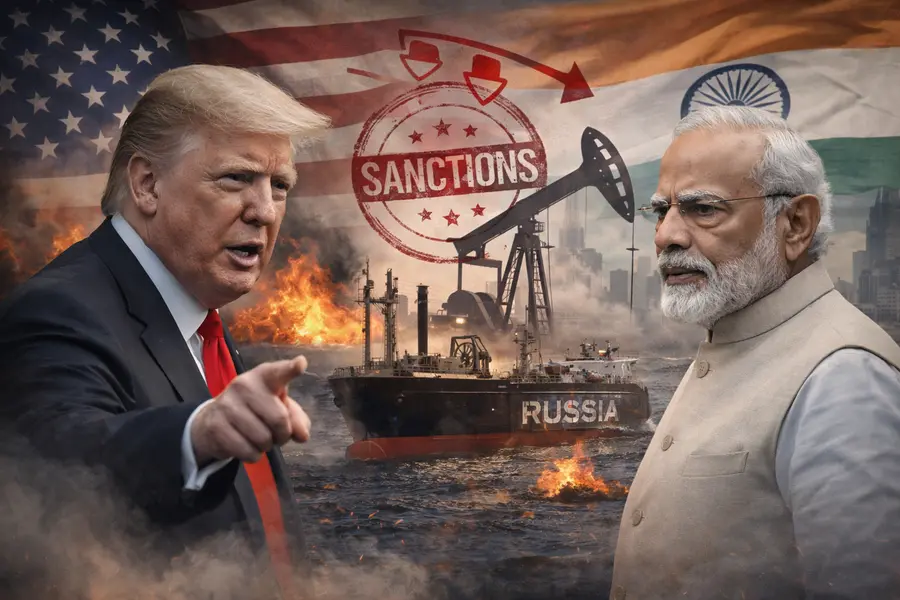
Washington DC: US President Donald Trump’s decision to greenlight a proposed sanctions bill targeting Russian oil exports has raised serious concerns for India, which has emerged as one of the world’s largest buyers of discounted Russian crude. The move threatens not only India’s energy security but also its already strained trade relations with United States.
The legislation, which is still awaiting a vote in the US Congress, seeks to tighten pressure on Moscow by banning US exports of energy products to Russia and barring American investments in the Russian energy sector. However, Senate and House leaders have postponed voting on the bill after Trump signalled a preference for using tariffs upto 500 percent—particularly against India—as a tool to curb purchases of Russian oil.
India is the world’s second-largest buyer of Russian crude after China, and Russian oil has become a crucial pillar of India’s energy strategy since the Ukraine conflict began. Access to cheaper crude has helped Indian refiners contain costs, stabilise domestic fuel prices and limit inflationary pressures. Any disruption caused by sanctions or punitive tariffs could significantly increase India’s oil import bill and ripple through the wider economy.
Last year, Trump sharply escalated trade pressure on New Delhi by imposing a 25 per cent reciprocal tariff on Indian imports, along with an additional 25 per cent penalty linked specifically to India’s purchase of Russian oil. This pushed total duties on some Indian products to as high as 50 per cent, straining India–US relations and unsettling exporters.
Trump has repeatedly hinted that further tariffs could follow if India continues to buy Russian oil. Speaking to reporters aboard Air Force One over the weekend, the US President said Prime Minister Narendra Modi “knew I was not happy.”
“PM Modi's a very good man. He's a good guy. It was important to make me happy. They do trade, and we can raise tariffs on them very quickly,” Trump said, underlining the transactional tone of US’s approach.
Energy analysts warn that if tariffs are used alongside sanctions, India could be forced to reduce Russian oil imports and turn to more expensive suppliers in West Asia or elsewhere, including US. This would likely raise fuel prices, widen the current account deficit and intensify inflation, with knock-on effects across transport, manufacturing and agriculture.



Related News
Dont Miss it







0 comments