
Netanyahu ReportedlyPressures Military to Attack Iran, Ramps Up Fear Rhetoric Ahead of Tight Israeli Election
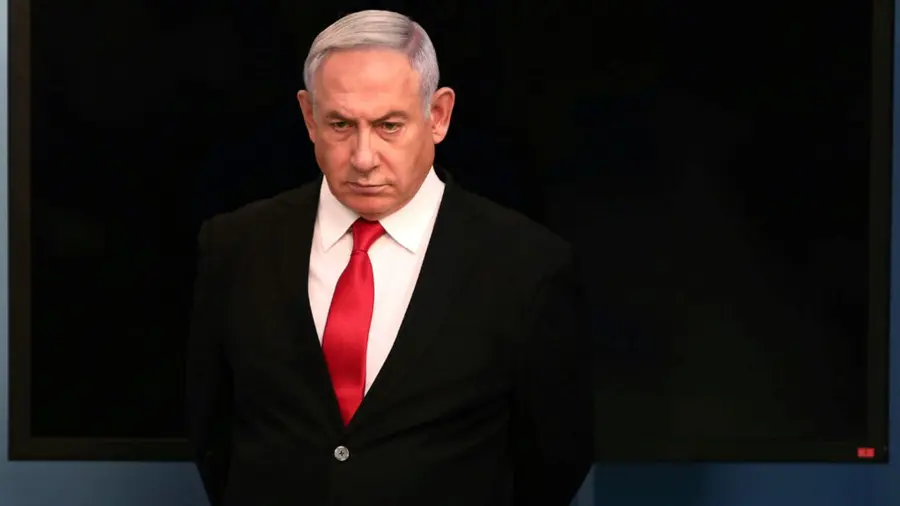
Tel-Aviv: Benjamin Netanyahu has turned to increasingly alarmist rhetoric and reportedly pressured Israel's military to act against Iran, as his far-right coalition narrowly trails in the polls ahead of Tuesday's close-run election.
The prime minister posted an AI-generated image of a nuclear mushroom cloud engulfing Tel Aviv on his X account on Sunday, urging voters to choose him or risk annihilation. "Anyone who cares about their own physical existence, that of their family, and their loved ones should have a trembling hand before voting for [the opposition]," he wrote in a post about Iran's nuclear programme.
Israel's Channel 12 reported that Netanyahu and armed forces chief of staff Lt Gen Eyal Zamir clashed in recent days over a directive that could "potentially spark an immediate conflagration with Iran at a very sensitive juncture", by provoking an Iranian miscalculation. Zamir reportedly asked for the directive, whose details were not specified, to be put to him in writing. Netanyahu denied the report, and the defence ministry later said it had no intention of carrying out military operations against Iran.
On Monday, CNN reported that Netanyahu had tried to persuade Donald Trump to launch a renewed assault on Iran in recent weeks, reviving the war the two leaders began in February. The report, which confirmed an earlier Financial Times account, said Trump ruled out any such move until next week's US congressional elections.
Opposition leader Gadi Eisenkot, a retired general and Netanyahu's most likely challenger, voiced confidence in Zamir. "We won't allow the IDF to be turned into a pawn in Netanyahu's survival campaign," he said.
Most polls show Eisenkot's mainly centre-right bloc winning more Knesset seats than Netanyahu's coalition, but neither is on course for the 61 needed for a majority. The opposition could likely reach one only through a coalition with parties representing Palestinian citizens of Israel, roughly a fifth of the population. Conservatives within the bloc have ruled that out, raising the prospect of a minority government, fresh elections and a possible Netanyahu comeback.
The main opposition parties are rightwing or centre-right, share his opposition to a Palestinian state and have largely backed the Gaza war. The bloc is united chiefly by antipathy to Netanyahu, who has dominated Israeli politics for three decades and has been accused of drifting towards authoritarianism by seeking to curb judicial independence and politicise the police and Shin Bet. He is also on trial on corruption charges, and his legal exposure could grow if he loses power.
Netanyahu has also leaned on Trump's backing, which Trump repeated on Sunday: "When you go to the Polls please remember that Bibi has been an outstanding warrior prime minister!"
The current elections draw significance as the first onensince the October 7 aatcks and Israel' genocide in Gaza. Since majority of the leaders running for the office are either centre-right or far-right, the world is closely watching to see how the result will affect Gaza and the global peace efforts.
Tags



Related News
Dont Miss it










0 comments