
Economy
One Year After Chooralmala-Mundakai: Banks Chase Disaster-Hit Poor While Writing Off Billions for Corporates

Anusha Paul
Published on Aug 01, 2025, 11:46 AM | 6 min read
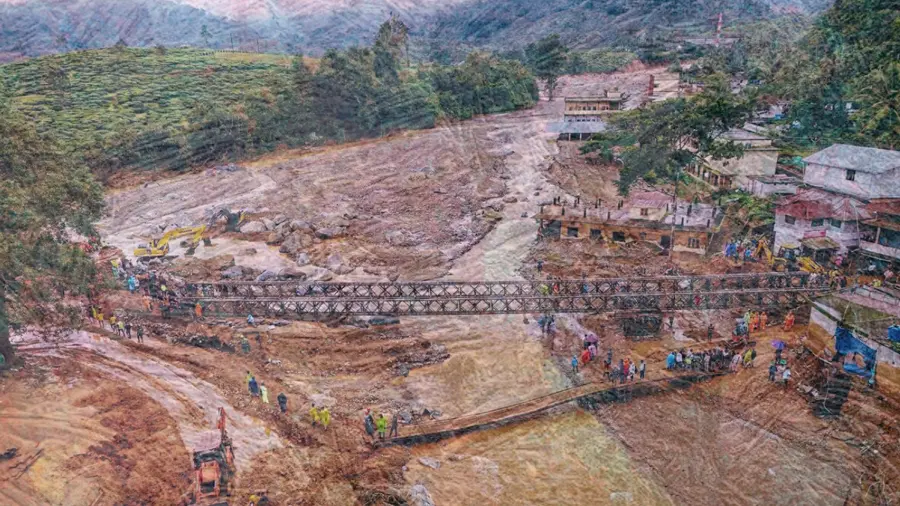
It has been one full year since the floods and landslides devastated Chooralmala and Mundakai in Kerala. Thousands of ordinary people—farmers, small traders, labourers—lost their homes, land, and livelihoods. Many had taken small loans for agricultural inputs, home repairs, or to run tiny businesses. That debt remains unpaid, not out of unwillingness, but because the disaster destroyed everything they had. And yet, even as they attempt to rebuild from scratch, banks have resumed recovery proceedings.
Apart from Kerala Bank, the other banks including the central banks have sent notices to the affected people. The Union government, led by the Bharatiya Janata Party (BJP), has shown great enthusiasm for easing business regulations—especially by implementing financial policy changes that benefit large corporations, such as relaxing norms for loan approvals, accelerating credit disbursements, and facilitating quicker resolution of bad debts through mechanisms like the Insolvency and Bankruptcy Code (IBC). However, the same urgency was absent when it came to offering similar support to the people of Kerala, particularly the affected in Wayanad. No loan waivers. No restructuring. No relief. Yet, in another part of the same country, a different class of borrowers receives an entirely different kind of treatment.

Documents tabled in Parliament this week expose similar disturbing pattern: banks bending over backwards to accommodate India’s biggest corporate defaulters, while maintaining a hard line against the working poor. In a written reply to Rajya Sabha MP Dr. V. Sivadasan, Minister of State for Corporate Affairs Arjun Ram Meghwal confirmed that over the past three years, public sector banks have taken a loss of Rs. 53,423.40 crore in just ten large insolvency cases. These losses were not due to natural disasters. They were the result of business decisions—some failed, some reckless, others plainly fraudulent.
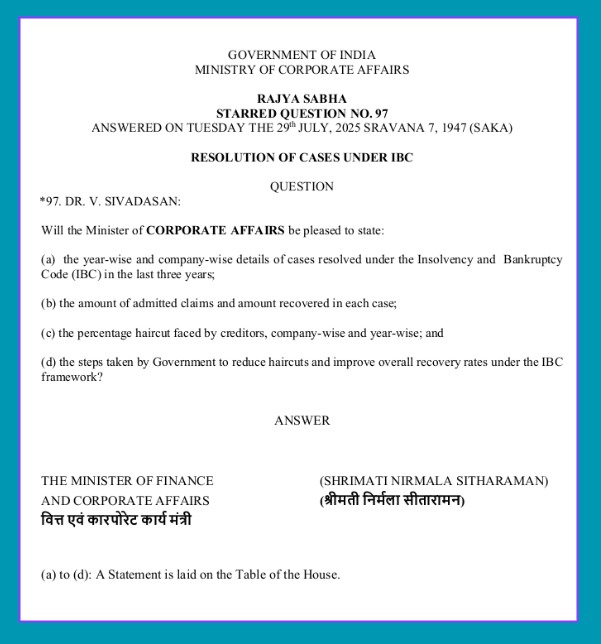 Banks had admitted claims worth Rs. 98,259.44 crore from these ten companies under the Insolvency and Bankruptcy Code (IBC). But they could recover only Rs. 44,836.04 crore. The remaining amount—over Rs. 53,000 crore—was simply written off. These were not farmers, workers or businessmen.
Take Srei Equipment Finance Ltd, for example. It defaulted on loans worth over Rs. 33,000 crore. Banks recovered only about 42%. Despite clear signs of mismanagement, the promoters faced no real consequences. The Reserve Bank had to step in and remove the board in 2021. A year later, a government-backed company took over. Still, more than half the money vanished.
Then there Reliance Naval and Engineering Ltd—part of the Anil Ambani group. It owed nearly Rs. 12,883 crore. The recovery? Less than 16%. The company had failed to deliver critical Navy contracts, its guarantees were encashed, and it eventually landed in insolvency. But Anil Ambani, once among India’s richest men, hasn’t faced any significant personal action. In fact, despite filing for bankruptcy in the UK, he continues to operate through other entities in India. Business as usual.
 Diamond Power Infrastructure Ltd had a long record of financial irregularities and was under investigation by the CBI. It owed Rs. 3,600 crore and returned just 14%. OCL Iron and Steel Ltd, another large borrower, paid back under 9%. The promoters in most of these cases either walked away clean or stayed on in restructured roles. Some even came back to buy the same assets through new shell companies.
The list goes on: Videocon Industries, Lavasa Corporation, Lanco Amarkantak Power, Amtek Auto. All were allowed to settle their debts at a fraction of what they owed. In each case, banks agreed to “haircuts” of 60% to 90%. That means most of the loans—public money, taxpayer money—were simply forgiven. And this is just the tip of the iceberg. According to the Reserve Bank of India, Indian banks—mostly public sector ones—have written off more than Rs. 16.61 lakh crore in loans since 2014. A massive chunk of that was owed by large corporate borrowers. Recovery rates remain pathetically low, yet almost none of the big corporates have gone to jail or even been disqualified from doing business. Some came back to repurchase their old companies through backdoor deals.
In Chooralmala and Mundakai, flood victims are being pursued over a few lakhs. These are not investments gone wrong or a fraudulent activity. These are survival loans—for seeds, fertilisers, house repairs, or to buy a cow or a car. People who lost their homes and land are being asked to pay every last paisa. No haircuts got them. No resolution plans. No committees of creditors. Just a bank agent at the door and the constant threat of legal action.
Why this double standard? Because our financial system is currently led by a neo-liberal regime that protect the big and squeeze the working-class. The Insolvency and Bankruptcy Code, introduced as a reform to clean up bad loans, has effectively become a safety net for the capitalist class. For them, default is a strategy—not a failure. They walk into courtrooms with lawyers and walk out with settlements. For the working class, a missed EMI is a moral failure, a crime to be punished and at times to commit death by suicide. 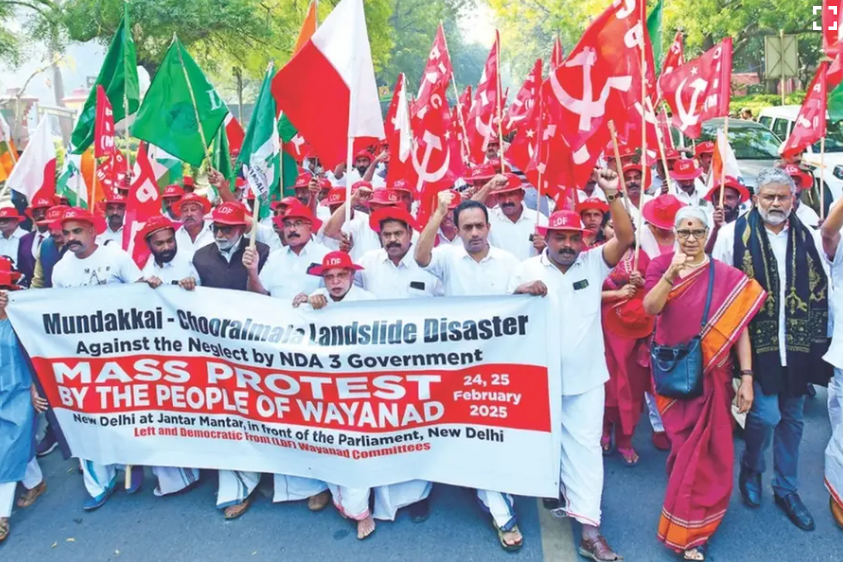
Farmers and workers unions and the state government led by the Left Democratic Front (LDF) have been protesting in the streets. MLAs have raised the issue in the Assembly. MPs have spoken in Parliament. Yet no relief has been announced. No package, no waiver, no deferment.
Meanwhile, the very same banks that show no leniency to a disaster-hit farmer are quick to settle billion-rupee loans for failed corporations behind closed doors. It is not about the process. It is about priorities. When banks write off Rs. 53,000 crore in corporate loans, that money does not disappear. It gets absorbed by the banks’ balance sheets, which are underwritten by public funds. The loss is passed on to ordinary citizens—through higher banking fees, lower credit availability, or government bailouts. Taxpayers pay for it. Depositors pay for it. And when the same institutions squeeze a disaster survivor for a Rs. 2 lakh loan, they are not protecting national finances—they are reinforcing a hierarchy. One where the rich always have options, and the poor always have dues. For India’s corporates, the financial system offers a cushion. For its poor, it offers only a countdown.



Related News
Dont Miss it







0 comments