
Interview
Kashmir: Betrayed by a Coup, Ignited by a Roar of Resistance

Anusha Paul
Published on Apr 06, 2025, 11:43 AM | 6 min read
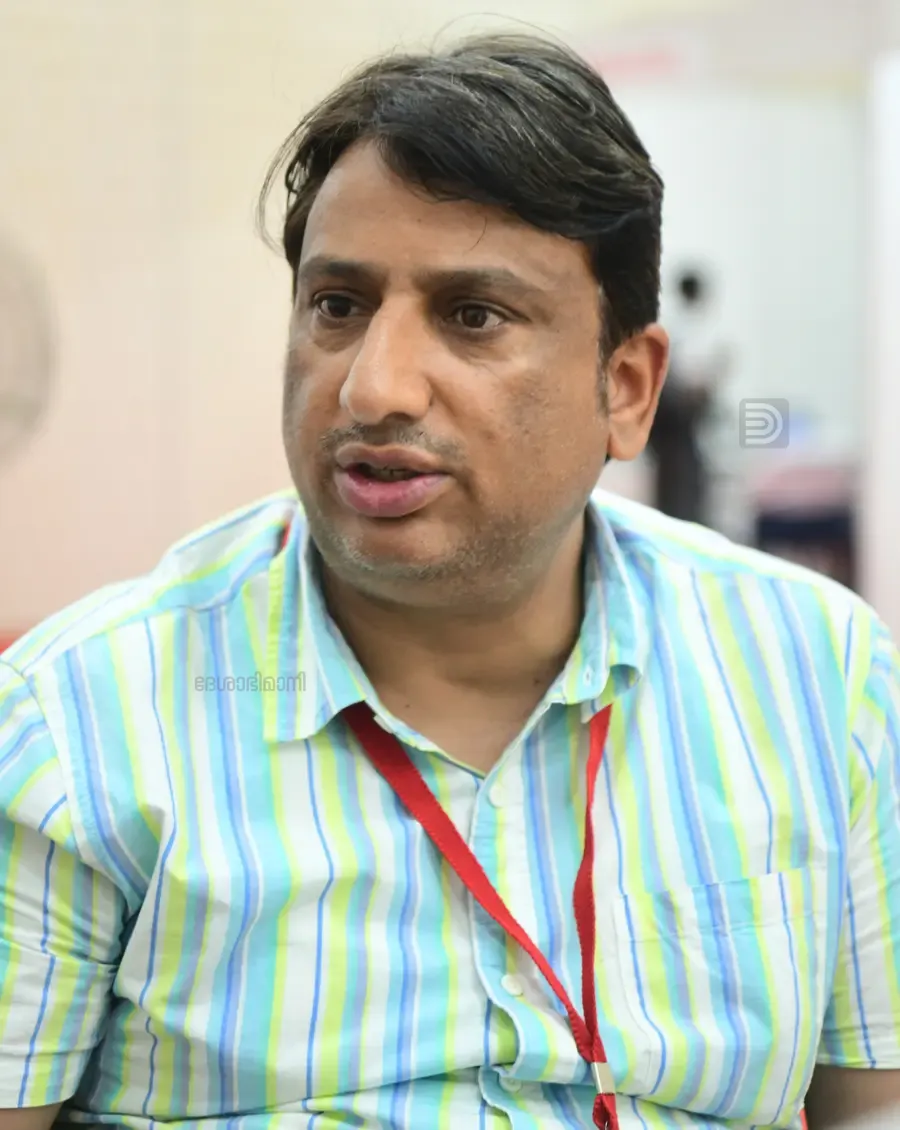
Deshabhimani is in conversation with CPIM Jammu and Kashmir State Secretary Muhammad Abbas about the current situation of Kashmir’s struggle after the abrogation of Article 370.
How do the people of Jammu and Kashmir perceive the abrogation of Article 370, the subsequent electoral changes, and the downgrading of their region to a Union Territory? Given the political, economic, and social challenges they face, what does this mean for their identity, autonomy, and future?
The people still carry the pain of that betrayal in their hearts. Article 370 and 35A were deeply connected to the lives of the people in Jammu and Kashmir. They lived with it, sacrificed for it, and it symbolized their identity and autonomy. Suddenly, a party driven by a Hindutva ideology, with the goal of transforming India into a Hindu Rashtra, came to power. They not only scrapped Article 370 but also demolished Jammu and Kashmir. This was not just an attack on the state, but on the very Constitution of India.
Article 370 did not come out of nowhere. It was the result of negotiations. In 1947, Jammu and Kashmir was briefly independent as the Maharaja was reluctant to choose between India and Pakistan. Pakistan claimed the region because of its Muslim majority, but the leadership in Jammu and Kashmir, led by Sheikh Mohammed Abdullah—who was a popular leader—convinced the Maharaja Hari Singh to accede to India. A Muslim leader who told the Maharaja to accede with India! And that accession was based on specific agreements between the Constituent Assemblies of India and Jammu and Kashmir. From that, Article 370 was created. It served as a bridge, connecting Jammu and Kashmir with the rest of India. But now, the current government has struck it down.
They did a coup on us!!! This is no longer our state; it has been turned into a Union Territory under the BJP. The aspirations and struggles of the people—our jobs, our land—are all at stake. BJP promised development, investment, and employment in Jammu and Kashmir. But look at the reality. Jammu region, once divided along communal lines, has now become a focus for the BJP. But despite their promises, the unemployment rate is soaring. In fact, the highest unemployment rate in India is found in Jammu and Kashmir. For a recent job posting, 550,000 applicants applied for only 4,000 positions. But this was only a fraction of the actual picture—many could not apply because of age restrictions. There is no public sector investment, no development, and inflation is at an all-time high. This is the worst period the region has seen in recent history.
Now, talking about the assembly elections. The current system in Jammu and Kashmir is a dual power structure, which makes a mockery of democracy. The Lieutenant Governor (LG) controls everything, often disregarding the decisions of the Chief Minister. A few days ago, the LG’s office issued an order transferring Tahsildars (revenue officers) without consulting the CM. In fact, the CM himself said that it is not ideal to be a chief minister in a Union Territory. You either need a full state or a Union Territory without a legislature. The issues of governance and political alienation are deteriorating, day by day.
The abrogation of Article 370 and the subsequent military-style crackdown were justified in the name of combating terrorism. However, we have recently learned that incidents like the Pulwama attack were orchestrated, allegedly for electoral purposes. In fact, Jammu and Kashmir has become a laboratory for the BJP’s experiments. They are testing strategies there and applying them to the rest of the country.
The BJP has constantly tried to present Article 370 as the source of terrorism and separatism. This narrative is a lie. Kashmir has always been one of the most peaceful regions in the country. In 1947, while much of the country was engulfed in communal violence, there was no such violence in Kashmir. The alienation of the people did not happen suddenly; it was the result of successive governments eroding the region’s autonomy and denying democracy.
The BJP’s actions—scrapping Article 370 and downgrading the state—have deeply affected the people of Kashmir. But the people responded in the recent elections. They gave their answer to the BJP, showing that despite their efforts, people still reject the party's narrative. The voter turnout was much higher than the BJP had expected—up to 70% in some areas—despite their attempts to manipulate the situation.
The BJP’s communal divide-and-rule strategy has failed in Jammu, where they tried to create fear by claiming that only a Hindu CM could protect the region’s interests. This worked at some extend and they managed to gather seats. The coalition parties also put up a strong fight against the BJP’s divisive tactics, and this was reflected in the results.
On the other hand, figures like Shehla Rashid, who were at the forefront of the struggle against the BJP, are now trying to shift the narrative. They claim that there is no insurgency in the state anymore. But this shift is more political than factual. Recently, we saw an attack in the Kathwa area of Jammu, which was unprecedented.
Regarding the insurgency issue, my own family has experienced the pain of losing a loved one to militant violence. Our comrades have also made sacrifices. But we don’t allow that pain to be weaponized by the BJP to further their political agenda.
As a communist party, the CPI(M), we face a unique set of challenges. On one hand, we have to fight against insurgents, and on the other, we are up against the BJP’s communal politics. And within the state itself, there are fringe groups trying to manipulate the situation. Who contested against Comrade Tarigami? It was the Jamaat-E-Islami, wasn't it? We, the CPI(M), are consistently fighting against the right-wing Islamist groups, the Hindutva forces, and the militants. Despite being a small party, we have consistently stood for the people. Our leader, Tarigami, has been vocal in criticizing the BJP. This has brought more people into the fold, as they recognize that CPI(M) remains true to its ideals, both in Kashmir and in Delhi.
Now, regarding the cultural changes the BJP is trying to impose, we have seen how they have tried to create propaganda around the Kashmir issue, especially through films like The Kashmir Files. These films are a marketing strategy—they are selling the pain and suffering of the Kashmiri Pandits while doing nothing to address their real issues.
The abrogation of Article 370 was not just a constitutional change; it was a calculated political maneuver to strip Jammu and Kashmir of its identity, autonomy, and dignity. The BJP’s actions have left scars that will not heal with propaganda or false promises. The people of Kashmir are not mere pawns in their political games. They are resilient, they are not just fighting for political rights; they are fighting for their dignity, history, and future. And that fight will continue, no matter how hard the government tries to silence it.



Related News
Dont Miss it







0 comments