
Delhi Smog Triggers Sharp Rise in Illnesses Among Pets and Birds
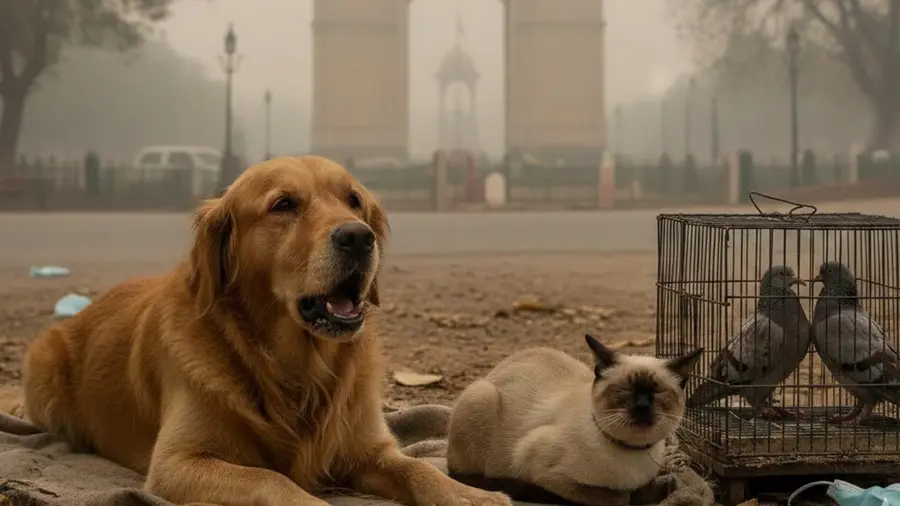
New Delhi: Rising air pollution in the national capital is taking a serious toll on animals, with veterinarians reporting a sharp increase in respiratory problems, eye infections and stomach-related ailments among pets and birds.
Veterinary doctors say animals, especially those that stay close to the ground, are more vulnerable to fine particulate matter such as PM2.5. These particles penetrate deep into the lungs and can even enter the bloodstream, leading to severe health complications.
Sanjay Mohapatra, founder of the House of Stray Animals NGO and a practising veterinarian, said dogs and cats are increasingly being brought in with serious breathing issues. Over the past one-and-a-half months, his team has treated nearly 55 to 60 cases involving lung congestion in pets. He said such conditions often progress into diseases like distemper, where animals suffer from coughing, fever, and discharge from the eyes and nose, and in some cases develop pneumonia. According to him, prolonged exposure to pollution weakens immunity and worsens viral and neurological conditions in animals.
Birds are also being affected. Rameshwar Yadav, a veterinary doctor who treats birds in east Delhi’s Shahdara area, said he has seen a noticeable increase in pollution-related illnesses. In recent weeks, he has treated around 25 birds with watery and irritated eyes. Many of them were also suffering from eye infections and loose motion, which he attributed to continuous exposure to dust and polluted air.
Princess, a veterinarian at an animal clinic in Model Town and an animal welfare activist, said pets such as dogs, cats and rabbits are particularly vulnerable because they breathe closer to the ground, where PM2.5 concentration is higher. She explained that fine particles enter their lungs and bloodstream, causing lung congestion and digestive issues. Dust settling on their fur is also ingested when animals lick themselves, leading to throat infections and loose motion. Her clinic has handled around 150 such cases since November.
The rise in animal ailments comes amid persistent smog conditions in Delhi. On Monday, the city remained under a dense layer of smog, with the Air Quality Index (AQI) recorded at 498, placing it firmly in the “severe” category. Air quality was severe at 38 monitoring stations and very poor at two others.
Jahangirpuri reported an AQI of 498, while Wazirpur touched 500 — the highest reading possible, beyond which the Central Pollution Control Board does not record data. On Sunday, Delhi’s AQI had reached 461, marking the city’s most polluted day this winter and the second-worst December air quality recorded so far. Weak winds and low temperatures have trapped pollutants close to the surface, worsening conditions.
Veterinarians have advised pet owners to limit outdoor exposure, ensure animals remain well-hydrated and seek medical attention immediately if they show signs of breathing difficulty, eye irritation or unusual behaviour.



Related News
Dont Miss it









0 comments