
12th Party Congress: A Stand Against Communalism

Research Desk
Published on Mar 27, 2025, 01:11 PM | 2 min read
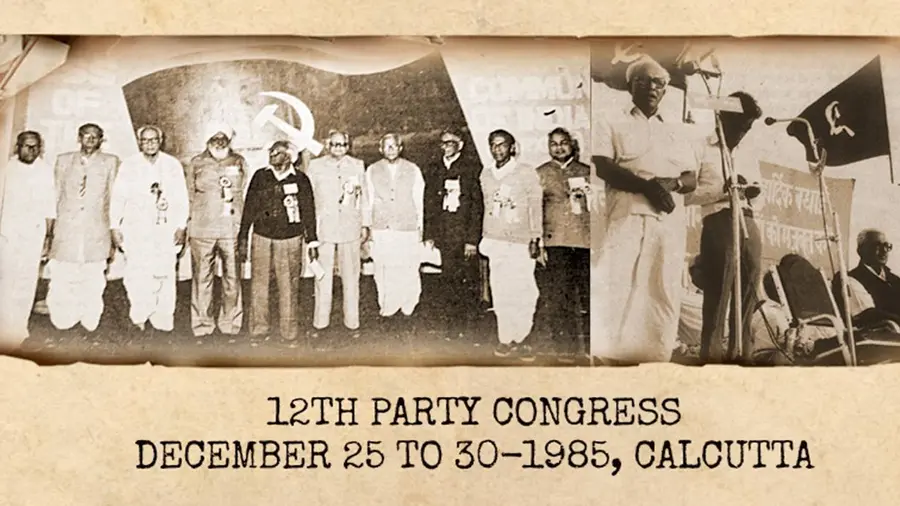
In the backdrop of a unique political climate, the 12th Party Congress took place in Kolkata from December 25 to 30, 1985. In his inaugural speech, General Secretary E. M. S. highlighted the urgent need for unity to counter divisive forces and autocratic tendencies, while also addressing crucial issues such as anti-people policies, the reservation debate, and the importance of both broad and left-wing unity.
The political resolution presented by B.T. Ranadive emphasized that the party’s stance—that the Army's Operation Bluestar during the escalating Punjab crisis would only worsen the situation—was later proven to be correct. The Party also assessed the rise of communal forces and the problems they caused in society. The resolution detailed how Hindu communalists, through the Ram Janmabhoomi issue, and Islamic fundamentalists, with foreign support, were growing in a dangerously intensified manner. It further addressed the struggle for peace, the challenges India faced, the erosion of democracy, and the urgent need for broad unity, while also touching on international concerns.
Party General Secretary E.M.S. presented an organizational report structured into three parts: the first part reviewed party policies, the second focused on the organization, and the third addressed class-mass organizations. The report analyzed these policies within the contemporary context, based on the political resolution adopted at the 11th Party Congress. The first part covered key issues such as the assassination of Indira Gandhi and its aftermath, left-wing governments as defenders of democracy, multinational corporations and joint ventures, the struggle for left unity, and the pursuit of an alternative left democratic system. The report concluded by highlighting the urgent tasks the Party needed to address.
The proposed amendments to the Party Constitution were approved. Following discussions on the draft political organizational report, the Congress entrusted the newly formed Central Committee with the responsibility of giving it final approval. Resolutions addressing national liberation struggles, gender equality, repression in Iran, the plight of Sri Lankan Tamils, and the Bhopal gas tragedy were also accepted by the Congress.
The Party Congress elected 66 members to the 70-member Central Committee, with plans to co-opt four additional members later. E. M. S. was elected as the General Secretary, and the Politburo (PB) included 10 members.
Related News



Related News
Dont Miss it






0 comments