
Privatisation, Staff Reductions, and Rising Accidents: The Troubled Tracks of Indian Railways

Anjali Ganga
Published on Mar 23, 2025, 06:30 PM | 7 min read
The Railway Board has announced a significant reduction in vacancies for the Assistant Loco Pilot (ALP) post, cutting the number of positions by nearly half. Initially, the 2024 recruitment process listed 18,799 vacancies, but a recent circular reduced this figure to 9,970. This decision has left thousands of aspiring candidates disappointed.
Currently, Indian Railways has over 21,000 vacancies for ALPs, with approximately 3,400–3,600 employees retiring annually. Southern Railway had initially planned to fill 726 positions, but this number has now been reduced to 510. In Palakkad and Thiruvananthapuram alone, more than 200 vacancies remain. The expansion of railway services, including the introduction of Vande Bharat trains, has not been matched by an increase in sanctioned loco pilot positions. Concerns over excessive working hours and safety risks have prompted the All India Loco Running Staff Association to launch protests against the decision.
Allegations of Corruption and Regional Favouritism
The recruitment of Assistant Loco Pilots has long been plagued by allegations of favouritism toward Northern Railway divisions over Southern Railway. A major controversy erupted when authorities attempted to appoint ALPs to Southern Railway from North East Railway, bypassing fully eligible candidates from RRB Chennai.
Former MP Adv. A M Ariff had strongly opposed this move, urging the General Manager of Southern Railway to consider standby candidates from RRB Chennai. Instead, 51 individuals from RRB Gorakhpur were selected, violating the rule that candidates could apply only through a single Railway Recruitment Board. A legal case resulted in a stay order, allowing 60 candidates from Kerala and Tamil Nadu to secure jobs in Southern Railway.
Recently, The Central Bureau of Investigation (CBI) has exposed a departmental exam paper leak in the East Central Railway at Mughalsarai, Uttar Pradesh. The exam, set for March 4, was intended for the promotion of candidates to Chief Loco Inspectors.
During an operation conducted on the night of March 3-4, the CBI caught 17 candidates, all working as loco pilots, with photocopies of handwritten question papers. Further investigation revealed that a Senior Deputy Electrical Engineer (Operations) was responsible for preparing the exam paper. He allegedly handed over the English version to a loco pilot for Hindi translation, which was then circulated among candidates with the involvement of other railway officials.
In total, 26 railway officials have been arrested, and searches at eight locations led to the recovery of Rs 1.17 crore in cash, reportedly collected from candidates in exchange for the leaked papers.
Unfair Recruitment Policies in 2024
The 2024 ALP recruitment notification initially advertised 18,799 vacancies, and after preliminary and main exams, around 50,000 candidates were shortlisted. However, with the sudden reduction in vacancies, many candidates face uncertainty about their selection prospects.
Adding to their concerns, the Railway Recruitment Board has introduced a new policy disqualifying candidates awaiting 2024 exam results from applying for the next recruitment cycle. Given that the recruitment process takes two to three years, many candidates could lose their chance to reapply for five or six years, further exacerbating the backlog of vacancies.
Job Cuts and Workforce Reduction in Railways
Since the COVID-19 lockdown, Indian Railways has been reducing its workforce to cut expenses. A 2020 order froze new positions except for safety-related posts, and on May 8, 2024, the Railway Board ordered all zones to cut two percent of their sanctioned strength.
Despite having over 300,000 vacancies, the Railway Board aims to eliminate 28,816 positions across all zones and production units in 2024–25. Eastern Railway will cut 2,528 positions from its 126,418 workforce, while Northern Railway will surrender 3,243 positions from its 162,142 workforce.
Railway unions have been demanding the urgent recruitment of nearly 200,000 vacancies in safety-related categories, including loco pilots, train managers, station masters, track maintainers, and signal maintainers. Without filling these positions, the burden on existing employees will increase, raising serious safety concerns.
Rising Railway Accidents and Privatisation Concerns
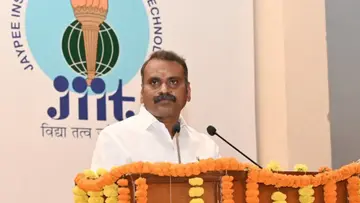
In a recent Rajya Sabha session, opposition leaders attributed the rise in railway accidents to privatisation policies. DMK MP N R Elango criticised the outsourcing of railway jobs, arguing that contractual hiring weakens safety standards.
From 2018 to 2021, there were no railway accident-related fatalities, but over 400 deaths have occurred since due to train accidents. Outsourcing infrastructure maintenance to private contractors has been blamed for negligence, and critics argue that if railway employees were directly responsible for maintenance, accidents would significantly decrease. Concerns have also been raised that privatisation priorities profits over public service, leading to higher fares and reduced accessibility for economically weaker sections.
Abolition of the Separate Railway Budget and Financial Constraints
The separate railway budget was abolished in 2017, integrating it into the central budget. The 2024 railway sector allocation stands at 2.52 lakh crore, a mere five percent increase from the previous year. Adjusted for inflation, this increase is negligible, despite the growing need for investment in safety and infrastructure.
Track doubling allocation dropped from 35,046 crore to 29,312 crore, while new railway lines received 34,410 crore. Major railway routes are now operating at 130 to 140 percent of track capacity, causing congestion. The average passenger train speed is only 50 km/h, while freight trains crawl at just 25 km/h.
The National Rail Plan was introduced to address these challenges, but inconsistent policies and the focus on Vande Bharat trains have worsened conditions for most passengers. Railway safety funding has been cut to 11,000 crore, significantly lower than 25,000 crore spent five years ago. Between 2014 and 2023, India witnessed 638 train accidents. Reports from the Railway Safety Commission repeatedly highlight safety lapses, but recommendations are rarely implemented.
While replying a question in Lok Sabha on loco pilot vacancies the reply from Union Government raises concerns about workforce management in Indian Railways. The ministry’s response highlights recruitment trends but fails to address core issues like vacancy reductions, transparency in hiring, and workforce shortages.
Between 2014 and 2024, Indian Railways recruited 51,856 ALPs and Loco Pilots, while 15,300 retired. Although hiring has increased, 21,000 ALP vacancies remain unfilled. The recruitment rate has not kept pace with retirements and operational expansion.
Post- COVID, 1,30,581 candidates were recruited following exams involving 2.37 crore applicants, yet vacancies persist. The sudden reduction in ALP posts from 18,799 to 9,970 contradicts the claim of large-scale recruitment, raising concerns about future workforce planning.
The introduction of an annual recruitment calendar from 2024 is a positive step toward streamlining hiring, but restrictive reapplication policies may cause long-term job insecurity for aspirants. Additionally, workforce rationalisation, including a two percent staff reduction, conflicts with the need for more manpower due to expanding services like Vande Bharat.
Loco pilots work 52 hours per week, regulated under the Railway Act, 1989. Though within legal limits, unions report excessive workload and fatigue due to under staffing. Compensation for extra work is mentioned, but its adequacy remains unclear.
While recruitment efforts continue, they are insufficient to meet operational demands. The reduction in vacancies, workforce shortages, and contradictory policies suggest a lack of long-term planning. If these gaps are not addressed, Indian Railways risks further inefficiency, worker fatigue, and increased safety hazards.
Indian Railways is at a critical juncture, facing increasing vacancies, recruitment controversies, staff reductions, and privatisation concerns. The reduction in ALP vacancies, outsourcing of jobs, and delays in safety measures have raised alarms among railway unions and political leaders. Protests and legal challenges highlight the urgent need for fair and transparent recruitment policies to ensure safety and efficiency in the railway sector.
Tags



Related News
Dont Miss it








0 comments