
South Indian States Face Declining Tax Devolution, Raising Concerns Over Fiscal Federalism

Anjali Ganga
Published on Mar 18, 2025, 07:05 PM | 4 min read
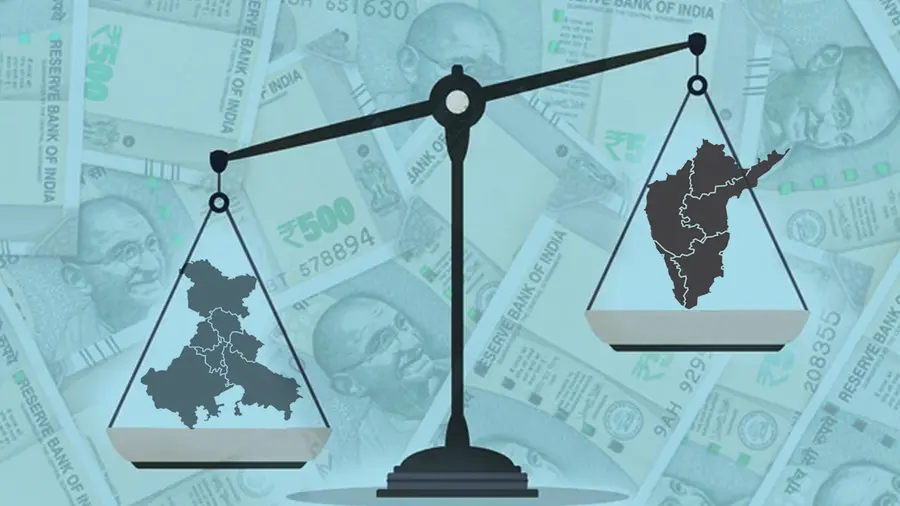
Thiruvananthapuram: The Ministry of Finance, in response to a question raised by Dr. John Brittas MP in the Rajya Sabha, has revealed a concerning trend in tax devolution. States like Kerala, Telangana, and Karnataka have seen a decline in their share of central tax transfers, while Bihar, Gujarat, and Rajasthan have witnessed an increase. This shift has raised serious concerns about the principles of fiscal federalism and regional equity in India’s tax distribution system.
According to the Finance Ministry’s data, Kerala’s share of tax devolution has dropped significantly from 2.50 per cent (2015-16 to 2019-20) to 1.925 per cent (2021-22 to 2025-26). In contrast, Bihar’s share has increased from 9.665 per cent to 10.058 per cent over the same period. This highlights a clear shift in allocation trends, with North Indian states gaining a larger share of central taxes while South Indian states experience a decline.
North vs. South: A Shift in Fiscal Priorities
The tax devolution patterns indicate a growing preference for North Indian states. Karnataka (-1.066 per cent), Kerala (-0.575 per cent), Andhra Pradesh (-0.258 per cent), and Telangana (-0.335 per cent) have all seen a decline in their share of tax devolution under the 15th Finance Commission. Meanwhile, Bihar (+0.393 per cent), Madhya Pradesh (+0.302 per cent), and Rajasthan (+0.531 per cent) have benefited from an increased share.
In absolute terms, tax transfers to Bihar (+104.1 per cent), Madhya Pradesh (+104.0 per cent), and Rajasthan (+115.1 per cent) have grown significantly faster than those to Karnataka (+51.8 per cent) and Kerala (+51.0 per cent), despite the latter contributing more to national GDP and tax revenues. Tamil Nadu is the only South Indian state that has seen a marginal increase in its share (+0.056 per cent).
Population- Based Allocation Raising Concerns
One of the key factors behind this shift is the Finance Commission’s reliance on the 2011 Census for determining tax devolution. This approach benefits North Indian states with high population growth while disadvantaging South Indian states, which have successfully controlled their birth rates. As a result, states that have implemented effective governance and economic policies are now receiving a reduced share of central taxes.
Additionally, South Indian states generate higher per capita income and own-tax revenues, which reduces their eligibility for central redistribution. Meanwhile, North Indian states, considered more fiscally dependent, are receiving larger allocations. This raises serious questions about whether tax devolution is based on economic performance or merely demographic trends.
Economic Contributions vs. Tax Distribution
States like Karnataka and Tamil Nadu, which have strong industrial bases and contribute significantly to central taxes, are now receiving a smaller share of devolution. In contrast, states with lower economic output per capita, such as Bihar and Madhya Pradesh, are being allocated more funds. Political considerations also seem to play a role in tax distribution. Historically, states with larger voter bases, such as Uttar Pradesh and Bihar, have been key focus areas for fiscal policies. Uttar Pradesh continues to receive the highest tax devolution allocation despite already having the largest share.
Rising Regional Discontent
The declining tax devolution to South Indian states has sparked concerns that the current system discourages economic efficiency. High-performing states may lose the incentive to generate more revenue if they see diminishing returns from their contributions to the central pool. If this trend continues, it could widen economic disparities between regions and lead to growing demands for a reassessment of devolution criteria. Many South Indian states have already begun advocating for greater fiscal autonomy, arguing that economic performance, not just population size, should be the key factor in tax redistribution.
Need for a Balanced Approach
The government must rethink its approach to tax devolution to ensure a fair distribution of resources. While supporting fiscally weaker states is essential for balanced development, penalizing states that have successfully controlled population growth and boosted their economies could have long-term consequences. A more equitable framework, considering both economic performance and social development indicators, is necessary to maintain fiscal federalism. Without such reforms, South Indian states may push for greater financial independence, potentially reshaping India’s fiscal policies in the years to come.



Related News
Dont Miss it










0 comments