
National
Dr. Sivadasan Demands Climate Disaster Fund as States Struggle with Rising Calamities

Anusha Paul
Published on Aug 07, 2025, 06:00 PM | 3 min read
New Delhi: In a notice submitted under Rule 267 in the Rajya Sabha, Dr. V. Sivadasan, Member of Parliament from Kerala, urged a debate on the alarming spike in natural disasters across India and called for robust and long-term strategies to manage them.
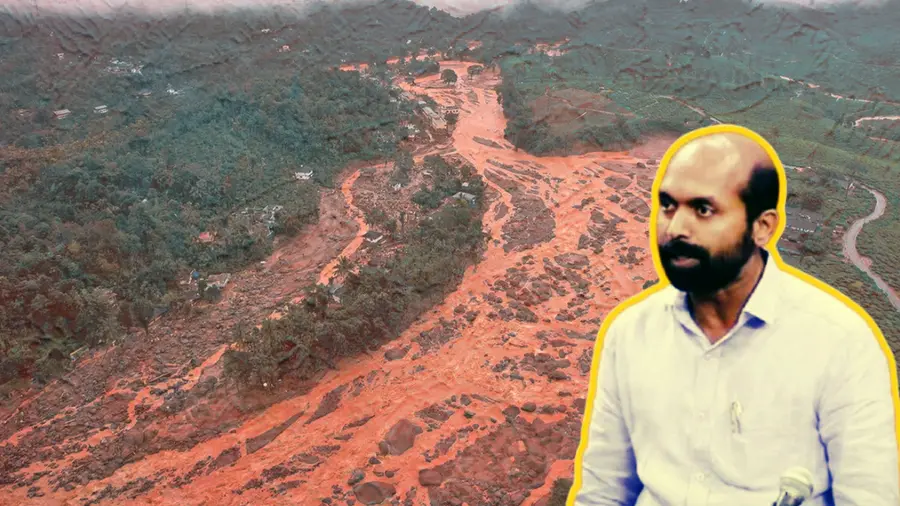
He cited recent incidents in Wayanad (Kerala) and Uttarkashi (Uttarakhand) that led to tragic loss of lives, mass displacement, and widespread destruction of homes, farmland, and infrastructure—vividly focusing how these climate-driven disasters are no longer rare, but increasingly routine.
“Natural disasters have become routine, and their impact is intensifying. Yet, central government support has been insufficient, and states are left struggling to manage recovery with limited resources,” Dr. Sivadasan pointed out.
Dr. Sivadasan criticised the Union government for charging the Kerala government for army deployments during rescue efforts in Wayanad, calling it “unjustified and insensitive.” States—from Himachal Pradesh to Assam—face delays and shortfalls, often receiving relief that barely touches the surface of actual losses. Despite repeated requests, Wayanad received no financial assistance from the union, even after submitting extensive damage reports.
Under India’s current tax structure, particularly post-GST reforms, Dr. Sivadasan pointed out that states’ capacity to raise independent revenue has been reduced. Most revenue now flows through the union government, leaving states financially vulnerable during disasters. Prior to GST, states retained a higher share of indirect taxes, but with the GST system, many, including Kerala, saw steep drops in revenues—forcing them to borrow or cut essential services.
While states are expected to manage the immediate and long-term impacts of natural calamities, they lack both the financial autonomy and guaranteed union support to do so effectively. Compounding this challenge is the absence of any legal provision to officially declare a natural calamity as a “national disaster,” which limits the scale and speed of federal assistance.
Because of these constraints, Dr. Sivadasan has demanded for the creation of a dedicated Climate Disaster Relief Fund, aimed at providing non-repayable aid during emergencies and ensuring sustained support in the aftermath of disasters.
He emphasised that such a funding system should be able to ensure scientific damage assessments and guarantee full compensation to affected communities. Presently, the State Disaster Response Funds (SDRFs) and the National Disaster Response Fund (NDRF) cover only immediate relief—not rehabilitation or rebuilding—which are expected to come from existing state or union schemes.
While India has signed major global climate agreements—such as the Paris Agreement, the Glasgow Climate Pact, and declared a net-zero target by 2070—it has struggled with timely follow-through. India missed the February 2025 UN deadline to submit updated climate plans (NDCs), delaying clarity on its 2035 commitments.
Despite existing programs to support climate adaptation, such as the National Adaptation Fund via National Bank for Agriculture and Rural Development (NABARD) and the Green India Mission, funding levels have declined significantly. For example, funds allocated to states fell from Rs. 118 crore in 2015–16 to just Rs. 27 crore by 2021–22, while central outlays on climate initiatives similarly trended downward.
Dr. Sivadasan emphasized that the burden of repeated disasters falls disproportionately on the most vulnerable—tribal, rural, women and children and economically weaker communities—who lack insurance, savings, and access to timely aid. These populations slip deeper into poverty after each disaster.



Related News
Dont Miss it










0 comments