
Kerala Police Rank Highest in Respecting Accused Rights Amid Widespread Police Brutality: Survey

Web desk
Published on Mar 28, 2025, 06:36 PM | 3 min read
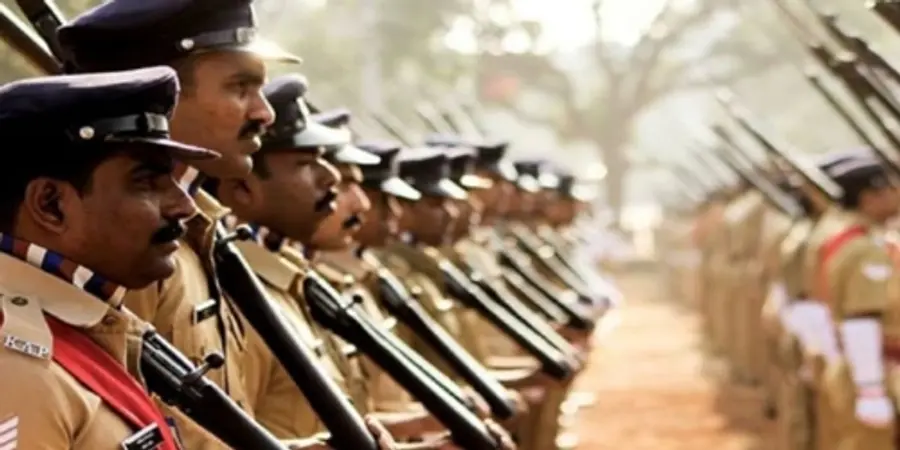
New Delhi: A recent report has highlighted concerning attitudes within India’s police force, shedding light on the widespread justification for torture, violence, and extrajudicial actions. Titled The Status of Policing in India 2025: Police Torture and (Un)Accountability, the study reveals troubling patterns of harsh and unlawful policing practices across the country. A notable exception to this trend is Kerala, where police officers demonstrated the highest awareness of the rights of arrested individuals. The state's strong commitment to legal compliance stands in stark contrast to troubling practices seen elsewhere in the country.
The study, conducted by the Centre for the Study of Developing Societies (CSDS), involved 8,276 police personnel from 17 states and union territories across India. It reveals that only 41% of police personnel report always following proper arrest protocols, while 24% admit that procedures are rarely or never followed. In terms of bail, only 62% of officers ensure that arrested individuals are granted bail for bailable offenses—despite this being a legal right. Furthermore, over half of the officers (56%) acknowledged that it is not always feasible to present detainees before a magistrate within 24 hours of arrest, directly violating legal requirements. Kerala stands out for its commitment to legal adherence, contributing to its strong performance in rights protection, while police in Jharkhand and Gujarat ranked lowest in rights awareness.
Nationally, the report reveals that 22% of officers feel that executing "dangerous criminals" without trial is justified, and 27% support mob lynching in sexual assault cases. In contrast, Kerala reported zero support for mob lynching, a stark deviation from BJP-ruled states, where support for such violence was notably higher. In Gujarat, 57% of officers supported mob lynching, with significant support also recorded in Andhra Pradesh (51%), Maharashtra (50%), Tamil Nadu (46%), and Odisha (42%). Kerala’s low support for mob violence was mirrored by Punjab (3%), Uttar Pradesh (4%), and Delhi (10%), which showed the least support.
Additionally, Kerala's police demonstrated greater restraint compared to the national average, with significantly lower justification for third-degree torture. The report revealed that 30% of police personnel nationwide believe that third-degree methods are justified in serious criminal cases, while 9% felt they were justified for petty offenses. IPS officers and those who frequently conduct interrogations were more likely to justify such methods. Alarmingly, 35% of police officers nationwide believed "tough methods" were somewhat important in their duties, and 20% considered it essential to instill fear through such practices. Furthermore, 11% of police personnel believed that hitting or slapping family members of accused individuals was absolutely justified, with 30% stating it was "sometimes justified." Additionally, 71% of officers (26% strongly, 45% somewhat) agreed that police should use force without fear of punishment.
The report also raises serious concerns about custodial deaths, highlighting discrepancies in official records. The National Crime Records Bureau (NCRB) reported 76 custodial deaths in 2020, while the National Human Rights Commission (NHRC) recorded 90 cases, and the National Campaign Against Torture (NCAT) documented 111 cases. In 2022, more than 55% of deaths in police custody involved individuals who had not yet been remanded to judicial custody, raising grave concerns about the treatment of detainees.



Related News
Dont Miss it








0 comments