
India Holds Record for Most Government- Ordered Internet Blackouts

Anjali Ganga
Published on Feb 26, 2025, 07:30 PM | 7 min read
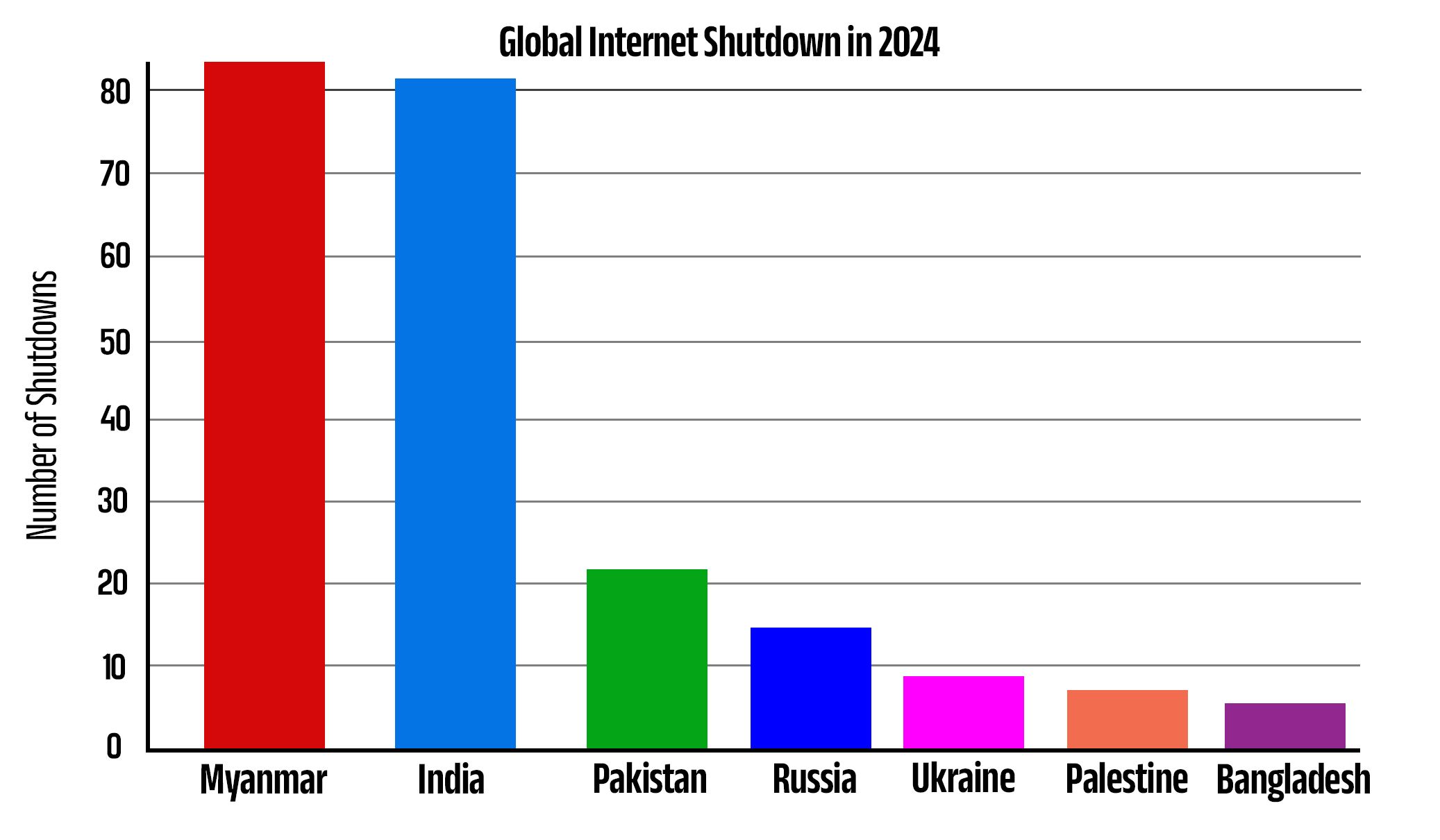
India experienced the second- highest number of internet shutdowns globally in 2024. According to a report published by Access Now, India witnessed a total of 84 internet shutdowns last year, the highest number in any democratic country around the world. Only Myanmar surpassed India with 85 internet shutdowns. Since 2018, India has consistently held the number one position for internet shutdowns globally, with 2024 being the first year it ranked second. India continues to lead globally in the government- ordered shutdowns.
The report states that 95 per cent of all internet shutdowns due to communal violence since 2018 have occurred in India. Despite a modest decrease in shutdowns from 2023, India still imposed 84 internet shutdowns in 2024, making it the most disruptive democracy that year. People in 16 states and territories experienced a shutdown, with state government officials in Manipur (21), Haryana (12), and Jammu & Kashmir (12) leading the list of offenders in India.
Of the 84 shutdowns, 41 were related to protests, and 23 were related to communal violence. According to the report, India mostly ordered shutdowns due to ethnic conflicts, communal violence, exams, efforts to stop unrest, and to cover up human rights violations in different states.
Internet shutdown worldwide
296 shutdowns were recorded in 54 countries worldwide in 2024. Myanmar, India, and Pakistan accounted for 64 per cent of internet shutdowns in the world. According to the report, the year 2024 was deemed a "year of democracy," witnessed 12 election-related shutdowns in eight countries after a year- a prolonged decrease, documenting the highest yearly
total of such shutdowns since 2019. According to the report, Myanmar reported that most shutdowns coincided with grave human rights violations. India appears to be in second position along with Ukraine, with a number of shutdowns at 6. The blocking of social media platforms surged in 2024 compared to 2019. X (formerly known as Twitter) appears to be the most blocked social media platform in 2024 by 24 times in 14 countries. The highest number for the platform since 2019. Titktok is the second platform, with 10 blocks from 10 different countries.
In India, the three laws responsible for the internet shutdown lack a clear definition. The Indian Telegraph Act (1885), which allows shutdown during a public emergency, and Section 144 of CrPC, which allows internet bans during public safety and Temporary suspension of telecom services, clearly lack the definition of what terms internet should be shut down.
In most cases, in India, internet shutdown is probably used as a political tool rather than a necessity.
According to Kris Ruijgrok''s "Understanding India''s Troubling Rise in Internet Shutdowns,'' he mentions that internet shutdowns occur most in states where BJP- led government is in power. In this article, he mentions that the rise in internet shutdowns surged when Modi came into power. In his article, he added that The BJP is traditionally less potent in India''s Southern states, which, coincidentally or not, is also the region where shutdowns seldom occur. Over the past 12 years, India has witnessed a dramatic increase in internet shutdowns, particularly in regions like Jammu and Kashmir and Manipur. These shutdowns, often described as an autocratic tool employed by the central government, have become a contentious issue, raising concerns about digital sovereignty, human rights, and democratic accountability.
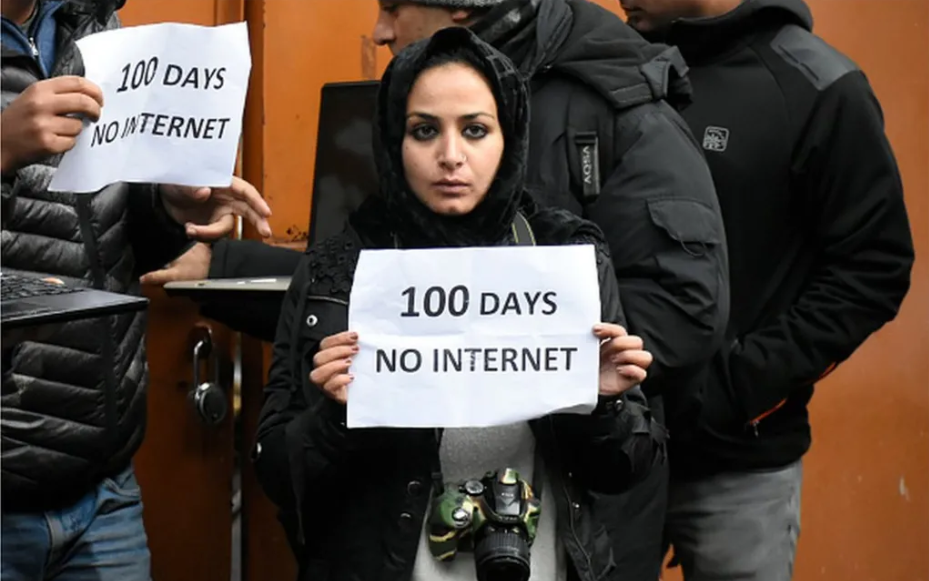 Protest in Kashmir regarding internet ban (File Photo: AFP)
Jammu and Kashmir: A Case Study in Prolonged Blackouts
Jammu and Kashmir (J&K) has been one of the most affected regions in India, with 434 internet shutdowns recorded over 12 years. The most notable shutdown occurred in August 2019, following the abrogation of Article 370, which revoked the region''s special status. The internet was shut down for a staggering 552 days, making it one of the longest internet blackouts in the world. According to a report by the Indian Council for Research on International Economic Relations (ICRIER), this shutdown resulted in an estimated economic loss of $1 billion.
The shutdown severely impacted businesses, education, and healthcare. For instance, the Kashmir Chamber of Commerce and Industry (KCCI) reported that the region suffered losses of over 40,000 crore (approximately $5.3 billion) between August 2019 and March 2020. Small businesses, particularly those reliant on e-commerce, were hit hardest. Students were unable to access online education, and healthcare services were disrupted, as hospitals struggled to access medical records and communicate with specialists.
Despite the government''s claims that the shutdown was necessary to maintain law and order, critics argue that it was used to suppress dissent and control the narrative. The shutdown effectively isolated the region, preventing journalists and activists from reporting on the ground realities. According to a 2020 report by Human Rights Watch, the blackout was a "collective punishment" that violated the fundamental rights of Kashmiris.
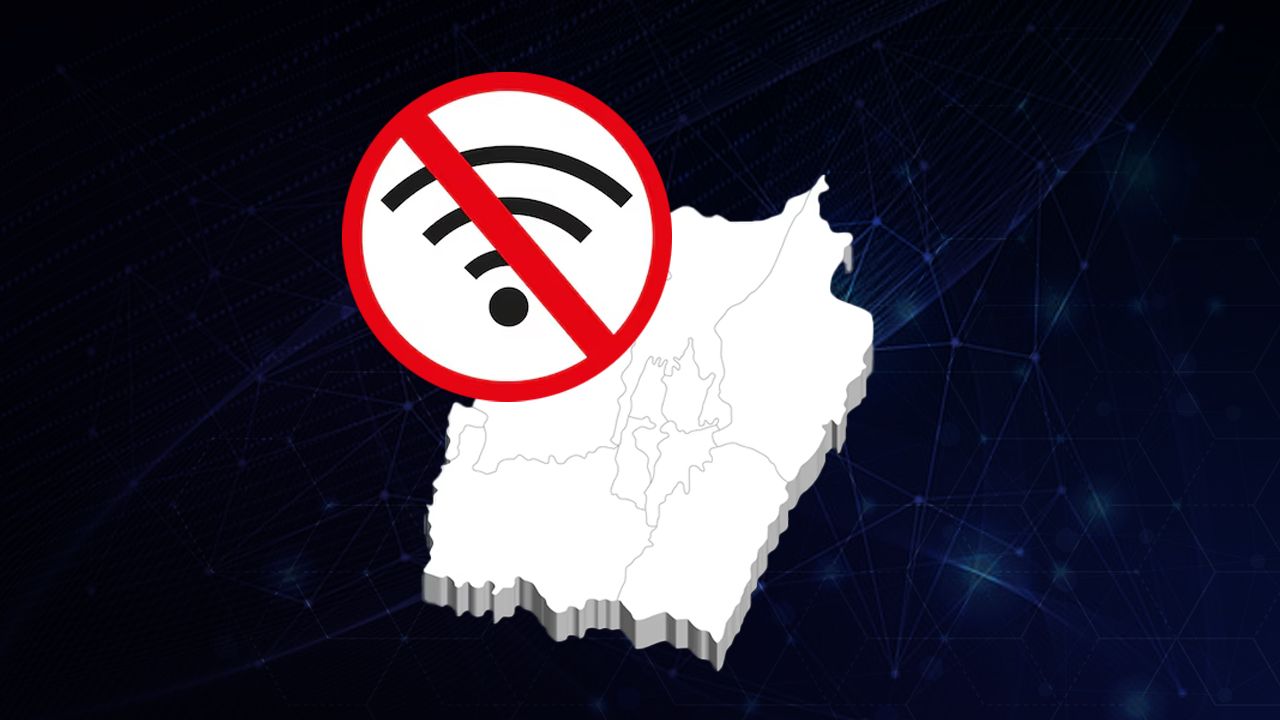
Manipur: India’s Second -Longest Internet Shutdown
Manipur, the northeastern state, has also faced prolonged internet shutdowns, particularly during periods of ethnic and political unrest. The most recent shutdown began on May 3, 2023, and lasted for 143 days, making it India’s second-longest internet blackout after Jammu and Kashmir. The shutdown was imposed following violent clashes between the Meitei and Kuki communities over the demand for Scheduled Tribe (ST) status for the Meitei community.
The economic impact of the shutdown was severe. According to a report by the Internet Freedom Foundation (IFF), the blackout disrupted trade, commerce, and daily life, costing the state millions of dollars. Small businesses, particularly those in the handicraft and tourism sectors, were severely affected. The shutdown also hindered access to essential services, including healthcare and education. For instance, students were unable to attend online classes, and hospitals faced difficulties in accessing medical records and consulting with specialists.
The shutdown also raised concerns about transparency and accountability. By cutting off communication, the government effectively silenced critics and prevented the spread of information about the unrest. According to a report by Amnesty International, the shutdown was used to "hide human rights abuses" and "suppress dissent." The lack of transparency further fueled tensions, as residents were left in the dark about the situation on the ground.
Internet shutdown as a political tool
Even though the government claims it contains community unrest, internet shutdowns can be viewed as a violation of citizens right to free speech. When an internet blackout occurs, the government acts as an autocratic machine, filtering what information goes out to the world and blocking the sharing of information with a larger community.
Internet shutdowns negatively impact trade and commerce, resulting in billions of dollars in losses for the affected nation. Fundamental rights are often curtailed when internet shutdowns are ordered, making it a harm to digital sovereignty. The realities of unrest are often kept to themselves within the state.
India''s consistent imposition of internet shutdowns can be seen as an abuse of power. While India has often led the world in the number of internet shutdowns, it can be described as a top abuser of power in this regard. The Supreme Court, in its landmark verdict on the case "Anuradha Bhasin versus the Union of India" concerning Kashmir, sought to toughen the rules against imposing internet shutdowns. The court prohibited the government from suspending the internet indefinitely and limited such shutdowns to 15 days or less, while also providing a detailed set of guidelines to regulate these orders.
Kerala Stands Apart
Unlike other parts of India, Kerala has never found itself in a situation that necessitated an internet shutdown. Over the past eight years, the state has not experienced any internet shutdowns. Even during the violent protests regarding women's entry to Sabarimala, the Kerala government managed the situation with utmost care and patience. Kerala is known for its secular societal setup, which is more adept at handling religiously sensitive issues in a cordial manner. The state also enforces strict laws that prohibit the spreading of religious hatred on social media platforms. These measures help to address issues at the grassroots level, ensuring peace and harmony within the community.












0 comments