
KITU Leads Massive Protest in Bengaluru: IT Employees Demand Right to Disconnect

Web desk
Published on Mar 10, 2025, 02:50 PM | 4 min read
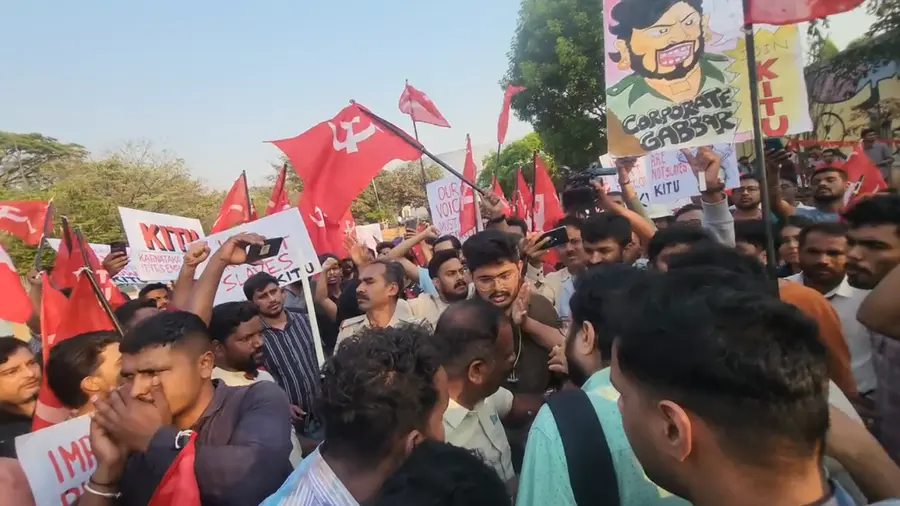
Bengaluru: The Karnataka State IT/ITeS Employees' Union (KITU) organized a large-scale protest at Freedom Park on Sunday, demanding the "right to disconnect" and an end to exploitative work practices in the IT sector. Hundreds of IT professionals participated, expressing their outrage over corporate greed, unrealistic work expectations, and job insecurity. The protest escalated into a heated confrontation as demonstrators burned effigies of corporate leaders and chanted slogans against excessive working hours and exploitative labor practices.
Long Hours, No Overtime: The Harsh Reality of IT Jobs
The IT sector, one of India's most profitable industries, is facing a crisis of exploitation and employee dissatisfaction. Many IT professionals work 12-14 hours daily without overtime pay, while job insecurity looms large due to mass layoffs disguised as "performance-based terminations."
Mental health issues, including anxiety and depression, are on the rise due to excessive workloads and inadequate employer support. Studies reveal that 45% of IT employees experience mental health challenges, while 55% report physical health issues. Extending working hours would only worsen these problems. Notably, 50% of IT employees in India work more than nine hours daily, averaging 52.5 hours per week—far exceeding the 36-40 hour workweeks common in other countries.
Women in the industry face additional challenges, including gender-based discrimination and workplace harassment. "We are expected to work like machines, with no regard for our well-being," said Priya R., a software engineer who joined the protest. "The 70-hour workweek proposal is not just impractical; it is inhuman. We are here to demand dignity and respect."
Industry Leaders’ Statements Fuel Discontent
The protest was fueled by longstanding grievances over excessive work hours, job insecurity, and corporate exploitation. These issues were exacerbated by statements from industry leaders advocating for longer workweeks.
In 2023, Infosys founder Narayana Murthy suggested that young professionals should work 70-hour weeks, citing his own experience. Although he later softened his stance, the proposal sparked widespread outrage. In January 2024, L&T Chairman S.N. Subrahmanyan faced backlash for advocating a 90-hour workweek, even implying that employees should work on Sundays instead of "staring at their wives." These remarks have further intensified the frustration among IT employees and highlighted the urgent need for labor reforms.
KITU, has been at the forefront of advocating for IT employees' rights. On March 13, 2024, the union submitted a memorandum to the Labour Minister, alleging that IT/ITeS companies routinely violate labor laws by extending work hours beyond statutory limits and failing to compensate for overtime. Despite repeated meetings and protests, KITU claims that the government has taken no significant steps to regulate working hours or enforce labor protections.
Over the past two months, KITU has organized gate meetings and street campaigns across Bengaluru to mobilize employees. Sunday's protest was part of a broader movement demanding accountability from IT corporations for exploitative labor practices.
Protesters chanted slogans such as "Narayana Murthy and Subrahmanyan, we will burn your greed in the streets; we are workers, not slaves," emphasizing that the standard eight-to-nine-hour workday is often a myth. Many IT employees are forced to work beyond official hours, including weekends, without additional compensation. Tensions flared when police attempted to disrupt the protest as workers burned effigies of Murthy and Subrahmanyan. Officers tried to intervene, but protesters stood their ground and carried out the symbolic act. KITU leaders accused the police of acting as "agents of corporate oppression."
Key Demands: A Fight for Dignity and Fairness
● Enforcement of Daily Working Hour Limits: Strict implementation of an eight-hour workday to prevent burnout and safeguard work-life balance.
● Revocation of IT Sector’s Exemption from the Industrial Employment (Standing Orders) Act: Inclusion of IT employees under labor laws to ensure job security and fair treatment.
● Stringent Action Against Labor Law Violations: Holding companies accountable for unpaid overtime, arbitrary layoffs, and unsafe working conditions.
● Right to Disconnect: Legal protection allowing employees to refuse after-hours communication without repercussions.
With protests gaining momentum and IT employees uniting against corporate exploitation, the movement for fair labor practices in India’s IT sector is stronger than ever. Whether these demands will translate into tangible policy changes remains uncertain, but the voices of IT professionals are becoming impossible to ignore.












0 comments