
Kerala’s Share in Central Taxes Drops Sharply: From 2.5% to 1.925%

Web desk
Published on Aug 05, 2025, 05:22 PM | 3 min read
New Delhi: The Union Government’s latest response to a starred question by CPI M MP Dr. John Brittas in the Rajya Sabha has brought into sharp focus a deepening crisis in India's fiscal federalism. Beneath the bureaucratic language and evasive tables lies a disturbing pattern, Kerala, a state that has consistently led the country in human development, continues to be penalised through shrinking shares of central tax devolution.
The Ministry of Finance’s reply, instead of providing clarity, sidestepped the essence of Dr. Brittas’s question. It failed to disclose the actual quantum of funds devolved to individual states and offered no meaningful explanation for the drastic percentage shifts across successive Finance Commissions. Instead, it cited broad parameters like population, income distance, area, and demographic performance, without explaining how those parameters are applied in practice, or why they disproportionately harm a state like Kerala.
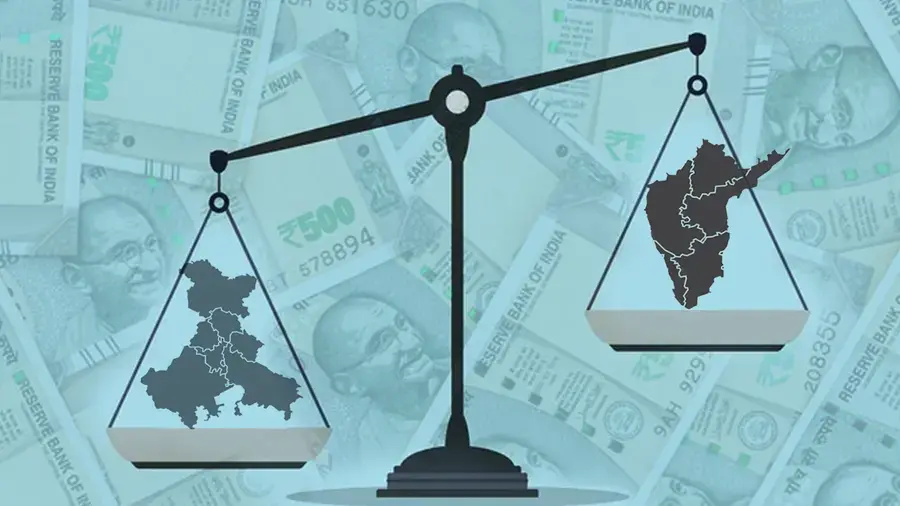
Kerala’s case is telling. In 1971, the state accounted for 3.89 per cent of India’s population and received 3.87 per cent of the tax share during the 10th Finance Commission, a near-exact reflection of its demographic weight. But by the 14th Finance Commission, this figure had dropped to 2.5 per cent, and under the 15th Commission, it has fallen even further to 1.925 per cent, despite the state's population share being 2.75 per cent as per the 2011 Census.
The pattern is not just numerical, it is ideological. Kerala, with its long-standing emphasis on health, education, social welfare, and population control, stands as a model of inclusive development. Yet instead of being recognised or rewarded, the state is financially marginalised. Its success has become the basis for punishment, not support.
This systematic denial is made more troubling when viewed in contrast. While Kerala’s share has declined, other states, including several politically aligned with the Centre, have seen their shares rise. Bihar, Madhya Pradesh, Gujarat, and Maharashtra, for example, all witnessed an increase in their tax devolution under the 15th Finance Commission. The Finance Ministry offers no clear justification for these shifts.
This is not merely a technical adjustment, it is a clear assertion of central dominance, a form of fiscal control that punishes states for ideological or developmental divergence. Kerala’s progressive governance, its left-oriented political stance, and its refusal to conform to the Centre’s policy narrative have made it an economic outlier in a system increasingly driven by political expediency.
The repeated invocation of population as a key metric only sharpens the injustice. States like Kerala, which have successfully controlled population growth, are now being penalised for their progress, as fewer people translate into fewer resources. It is a backward logic where achievement becomes the basis for denial
This is not just policy failure, it is economic discrimination. It reflects a centralised fiscal regime that prioritises political alignment over developmental achievement. Kerala’s carefully built social infrastructure, praised globally during crises like COVID and Nipah, is now under pressure, not from natural disaster, but from deliberate financial sidelining.
Worse still, this discrimination is hidden in plain sight. The Centre continues to praise Kerala internationally for its governance model, but fails to support it domestically. It refuses to explain how its own allocation formula rewards states with weaker human development metrics and penalises those that have delivered results.
Dr. John Brittas’s intervention is, therefore, not just about figures or percentages, it is a call for accountability, a reminder that constitutional principles, especially those enshrined in Article 280, are meant to ensure justice, not to enable political manipulation. The Finance Commission was never meant to become an instrument of arithmetic favouritism.



Related News
Dont Miss it










0 comments