
National
Two probes, one crash, zero clarity. Victims deserve real answers.

Anusha Paul
Published on Jun 16, 2025, 10:00 PM | 9 min read
Following the tragic crash of Air India Flight AI-171 near Ahmedabad on June 13, which took hundreds of lives, the Indian government initiated two separate investigations within 48 hours. One is led by the Aircraft Accident Investigation Bureau (AAIB) — India’s designated agency for civil aviation accident inquiries. The second — a High-Level Committee (HLC) chaired by the Union Home Secretary — was formed by the union government with a seemingly overlapping mandate.
This dual setup has triggered growing concern among aviation professionals, public policy experts, and political voices. The core question remains: why initiate a second, bureaucratically led committee when a dedicated technical body already exists to handle such investigations under international norms?
The AAIB was created in 2012, after years of delay and external pressure. Prior to its establishment, India allowed its aviation regulator — the Directorate General of Civil Aviation (DGCA) — to investigate air crashes, creating a direct conflict of interest. The DGCA was for enforcing aviation rules, and also investigating their failure.
This model was out of line with global best practices. Under Annex 13 of the International Civil Aviation Organization (ICAO), crash investigations must be carried out by an independent technical body. The AAIB was formed to correct this, and its creation required political consensus, capacity building, and the development of technical expertise from scratch. It took years to put in place investigators trained in flight data analysis, accident reconstruction, and international coordination. The AAIB is now India’s sole agency recognized under ICAO to lead air crash investigations. Its reports are expected to be thorough, evidence-based, and globally credible.
According to international standards, India’s obligations in investigating air crashes are guided by Annex 13 of the International Civil Aviation Organization (ICAO) — which governs aircraft accident and incident investigation. Annex 13 lays out clear obligations for member states, including: Designation of an Independent Investigative Authority (Article 3.2): States must ensure that air accident investigations are conducted by a body that is functionally independent from aviation regulators and other entities that could have a conflict of interest. Objective of Investigation (Article 3.1): The sole objective must be to prevent future accidents and incidents, not to apportion blame or liability.
Role Clarity (Articles 5 & 6): Only the designated accident investigation authority (in India’s case, the AAIB) may initiate and lead the investigation, analyze the black box data, and coordinate with foreign stakeholders (such as the aircraft manufacturer, engine maker, or the state of manufacture). Transparency and Publication (Article 6.6): Final reports must be made public, free from political editing or suppression.
That makes the decision to set up a second committee — the HLC — not only puzzling, but potentially disruptive.
The HLC was announced just one day after the AAIB had already begun its work. According to the government's own notification, the HLC will also examine black box data, determine the cause of the crash, and engage with foreign stakeholders — all responsibilities that fall squarely within the AAIB’s jurisdiction.
This overlap risks duplication, conflicting findings, and undermining the legitimacy of the official investigation. No explanation has been offered about how the two committees will coordinate, which will take precedence, or what legal basis the HLC operates under.
D. Raghunandan, a defence and public policy analyst with the Delhi Science Forum, said that: “The AAIB was established to prevent bureaucratic or political interference in crash investigations. When a second committee with no technical standing is asked to do the same job, it introduces ambiguity — and weakens the clarity and independence needed in such a case.”
As per international norms, the aircraft manufacturer — in this case, Boeing — is involved in supporting the AAIB's technical analysis. This is common practice, especially when the accident involves complex systems that only the manufacturer fully understands.
But this standard involvement comes with inherent tension. Boeing has faced multiple safety-related controversies in recent years, particularly involving the 787 Dreamliner — the model used in AI-171. In 2024, former Boeing quality manager John Barnett made public allegations about faulty manufacturing processes, skipped safety checks, and corporate negligence in the production of 787s. His sudden death while testifying in a related U.S. case only amplified the scrutiny on the company.
While there is no proven connection between Barnett’s claims and the AI-171 crash, the context is important. A manufacturer with an ongoing credibility crisis is now part of the team investigating one of its own aircraft.
Here lies a further source of concern: can the AAIB fully maintain independence in practice, not just on paper, while Boeing is involved in the probe? Will Boeing’s inputs be critically examined, or accepted as technical authority? Will the public get a clear view of whether any design or production flaws were considered — or ruled out?
So far, the AAIB has not publicly clarified how it will manage potential conflicts of interest arising from Boeing’s participation, or how it plans to independently verify the company’s data and conclusions.
These questions do not discredit the AAIB’s technical capacity — but they highlight the need for greater transparency. In situations involving powerful private corporations, investigators must not only be independent — they must also be seen to be independent.
The High-Level Committee, unlike the AAIB, is not a technical body. It is headed by the Union Home Secretary and includes other senior bureaucrats. Its mandate has not been precisely defined, and it is unclear whether its findings will be made public, or how its work will interface with the AAIB’s investigation.
If Boeing is under scrutiny and the AAIB is already coordinating with them, what exactly is the HLC reviewing? And who is the HLC accountable to?
Without answers, this parallel structure risks confusing the process and raising doubts about whether political priorities will interfere with technical conclusions.
The Communist Party of India (Marxist) has criticized the formation of the HLC. In a statement released today on June 16, the CPI(M) said the committee “undermines the independence of the investigation and raises doubts about possible interference.”
Party General Secretary M.A. Baby argued that: “The investigation must be handled by experts — not bureaucrats. If a technical agency like the AAIB already exists, a second probe only complicates things. It adds opacity, not clarity.”
The CPI(M) recommended limiting the HLC’s role to reviewing broader safety issues — such as why safety audits remain unimplemented or how encroachment around airports continues unchecked. In the AI-171 incident, the plane narrowly missed residential areas and hospitals near Ahmedabad airport, underlying infrastructure and planning risks.
Beyond the immediate concerns surrounding the AI-171 investigation, India’s broader aviation safety oversight model reveals systemic weaknesses. The Directorate General of Civil Aviation (DGCA) — the country’s civil aviation regulator — has routinely flagged safety lapses, yet its audit findings are often delayed in implementation or ignored altogether. Many of its reports remain confidential, limiting public accountability. Meanwhile, India’s airport infrastructure is under mounting pressure, with traffic growth outpacing capacity upgrades, leading to congested airspaces, overburdened ground handling systems, and insufficient emergency response planning. The aggressive push toward privatization — from airline ownership to airport operations — has often outpaced regulatory reform, creating gaps in enforcement and oversight. These challenges raise pressing questions about whether India’s regulatory institutions are adequately empowered and resourced to ensure public safety in an increasingly privatised aviation landscape.
After the Tata Group took over Air India in 2022, they claimed they would maintain the Maintenance, Repair and Overhaul (MRO) operations more efficiently than the public sector had. MRO is a critical function that determines whether aircraft are safe, whether components are inspected regularly, and whether ground crews have the capacity and tools to handle complex aircraft like the Boeing 787.
Aviation professionals have pointed out that a gap still exists between stated ambitions and current on-ground capacity, especially with fleet expansion outpacing support infrastructure. This raises legitimate safety questions. Were there any red flags in AI-171’s maintenance logs? Were repairs deferred or outsourced? Was the MRO system able to fully track aircraft readiness?
These are questions that need a deep technical investigation — not one overseen by a bureaucratic panel. If Air India, now under a private conglomerate, is to be held accountable for safety lapses, the process must be independent and detailed.
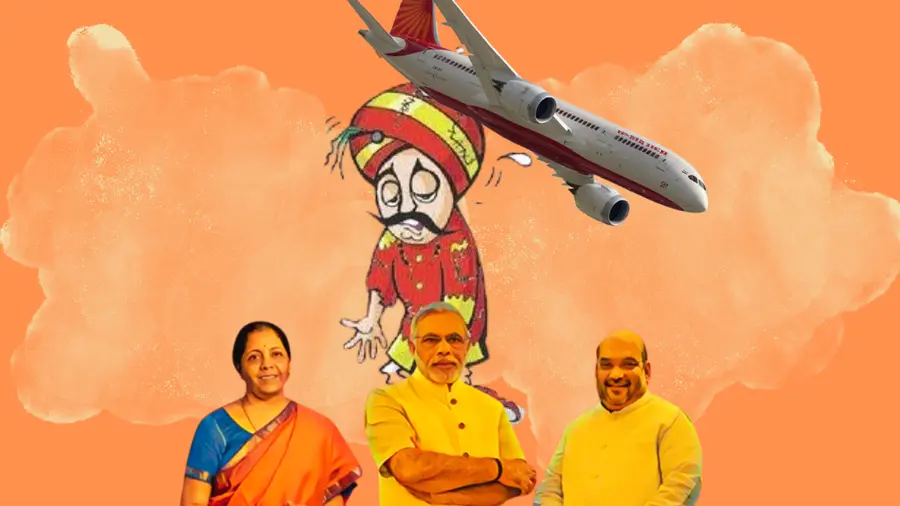
Air India’s collapse as a public carrier and its subsequent sale to the Tata Group were the result of decades of underinvestment, political interference, and poor policy decisions. The 2007 merger with Indian Airlines worsened operational inefficiencies. The airline was routinely forced to fly unviable routes while private competitors received preferential treatment.
By the time of its sale, the airline had racked up losses over Rs. 85,000 crore. The Tata Group acquired it for Rs. 18,000 crore, with only Rs. 2,700 crore paid in cash. The remaining burden — over Rs. 60,000 crore in debt — was absorbed by the public.
That history is relevant now. A crash has occurred under the operational control of a private airline, but the government that paid for its past is now overseeing a parallel probe into its present. It’s a structural conflict that cannot be ignored.
India has the institutions in place to conduct a credible, technical investigation into the AI-171 crash. The AAIB is the designated authority, with legal standing and international recognition. It must be allowed to complete its work transparently, and with independence — even from the corporations it investigates. The creation of a second committee — with no clear mandate and overlapping authority — adds more confusion than clarity. And unless the AAIB explains how it will manage Boeing’s role critically and transparently, doubts over independence will persist.
However, given the government’s long track record of systematically defunding Air India and selling off national assets to private conglomerates, it is highly unlikely that the government will now oversee a truly transparent investigation. As D. Raghunandan rightly observes, this is just the same old medicine repackaged—the High-Level Committee (HLC) replacing the DGCA, ensuring continued bureaucratic control rather than genuine independence. The privatisation agenda and the interests of the powerful are clearly prioritised over public safety and accountability. Unless the AAIB is allowed to conduct its investigation independently, free from political interference and the influence of private corporations, justice for the victims and safety in the air will remain out of reach.



Related News
Dont Miss it









0 comments