
National
50 Years of Semi-Emergency and Growing Neo-Fascism: Resistance, Repression, and the Fight for Democracy

Web desk
Published on Jun 26, 2025, 06:59 PM | 4 min read
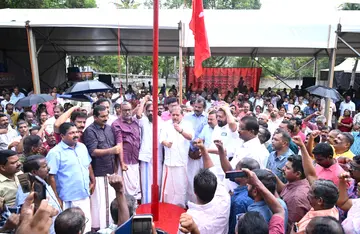
Trivandrum: On the 50th anniversary of the Emergency declared by Indira Gandhi in 1975, the A.K.G. Centre for Research and Studies hosted a national seminar titled “50 Years of Semi-Fascism” in Trivandrum, bringing together voices of resistance to reflect on the past and confront the present.
The seminar opened with an address by Communist Party of India (Marxist) CPI(M) Trivandrum District Secretary V. Joy, followed Ernakulam District Secretary C.N. Mohanan, who welcomed the participants.
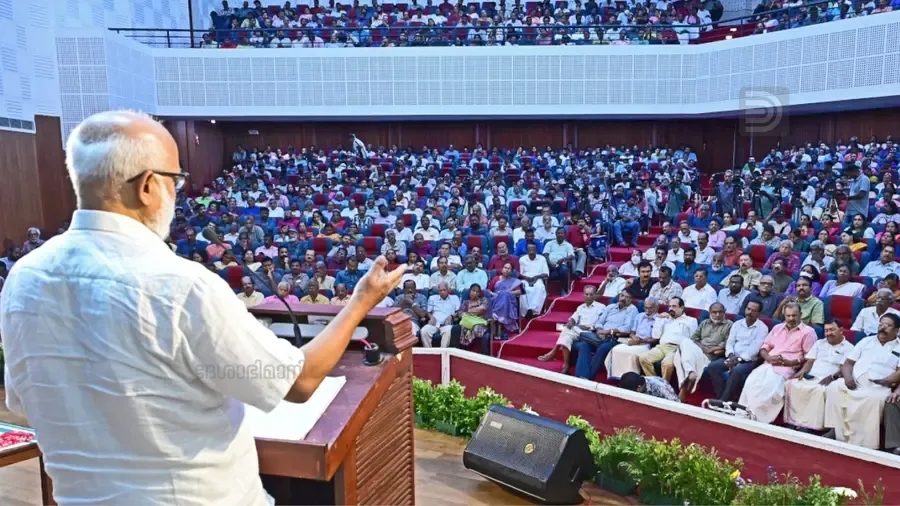
CPI(M) State Secretary M.V. Govindan, delivering the presidential address, recalled his imprisonment during the 1975 Emergency. He reflected on how that period of repression built a generation of political resilience, but warned that today’s crisis is more complex and dangerous.
“The Emergency forged resistance, but what we face today is far more insidious—an attempt to recast India as a theocratic, caste-structured state rooted in the Manusmriti,” Govindan said. “This is a neo-fascist project that seeks to dismantle democracy from within, using the very Constitution it aims to hollow out.”
CPI(M) Polit Bureau Member M.A. Baby, in his keynote address, sharply criticized the authoritarian drift of the current regime. He argued that the RSS—described as the ideological and organizational core of the ruling party—has entrenched itself across key democratic institutions, operating as an invisible hand in reshaping the Indian state.
“This undeclared Emergency is enforced not only through state power but also through a fascist ideology that has permeated the judiciary, bureaucracy, armed forces, and even opposition parties,” Baby said.
He noted that unlike the overt repression of 1975, today’s authoritarianism cloaks itself in legality and nationalism, making it harder to identify and resist.
“The seeds of neo-fascism have been sown deep into the social fabric. We cannot defeat it by elections alone—we must organize to detoxify society itself,” he added.
Baby also dismantled the widely circulated myth that the RSS opposed the 1975 Emergency. Citing letters from then-RSS chief Balasaheb Deoras to Indira Gandhi, he exposed the organization’s willingness to collaborate in exchange for lifting the ban imposed on it.
“Deoras wrote to Gandhi, offering support for the Emergency and disassociating the RSS from anti-government protests. Their posturing as defenders of democracy is not just false—it is revisionist history meant to shield their complicity,” he asserted.
NewsClick editor and political prisoner Prabeer Purkayastha, who was recently released after being jailed under the draconian Unlawful Activities (Prevention) Act, delivered a stirring address drawing parallels between India’s current trajectory and the early days of Nazi Germany.
“In Nazi Germany, the question was: who were the real Germans and who were not? Today, in India, the same divisive question is asked: who are Indians and who are not?” Purkayastha said. “Fear prevails across the nation, and those who criticize the government are being jailed. But the Indian people have survived colonialism, the trauma of partition, and the Emergency — they can face today’s challenges as well.”
He pointed out a key difference between the Emergency era and today’s regime: “Back then, Indira Gandhi did not want to divide people in the name of race, language, caste, or religion. The current regime, however, actively seeks to deepen these divisions. That is the stark difference.”
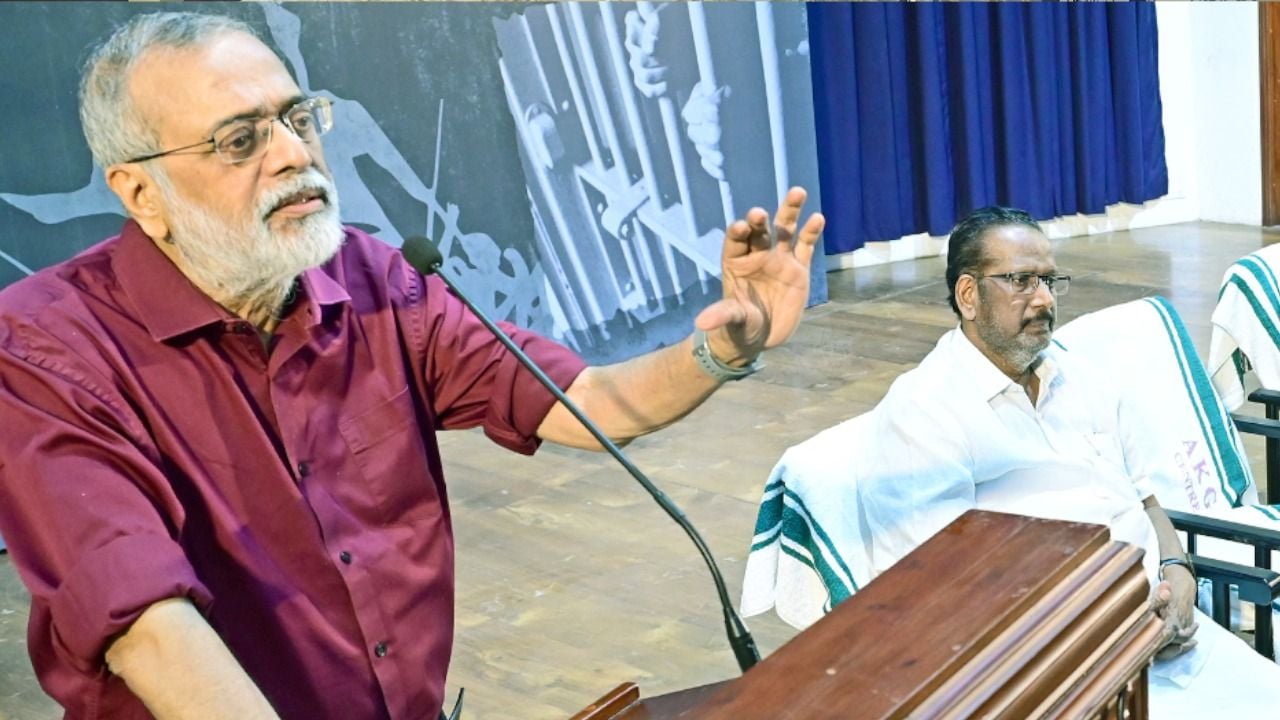
He emphasized the roots of India’s unity in anti-colonial struggles, noting that the nation’s identity and Constitution were forged through this shared history.
Reflecting on the Emergency period, Purkayastha said, “The middle class was content and aligned with the regime. The political leadership learned that keeping the people under control was key.” Highlighting resilience, he added, “Every generation has its own struggle. We must never lose faith in the people’s ability to change the system and continue to resist.”
Calling out the government’s economic narrative as a smokescreen, Purkayastha said, “While millions face malnutrition and lack of education, the government claims India is becoming an economic powerhouse. So where is the money going? The central government governs for the wealthy elite, despite claims to empower the poor. The soul of the republic, born out of anti-colonial struggle, is under siege.”
During the seminar, Chintha Publishers launched “Expressions of Dissent,” a new book chronicling voices of resistance in today’s political landscape. The book was released by Purkayastha and handed to CPI(M) District Secretary V. Joy.
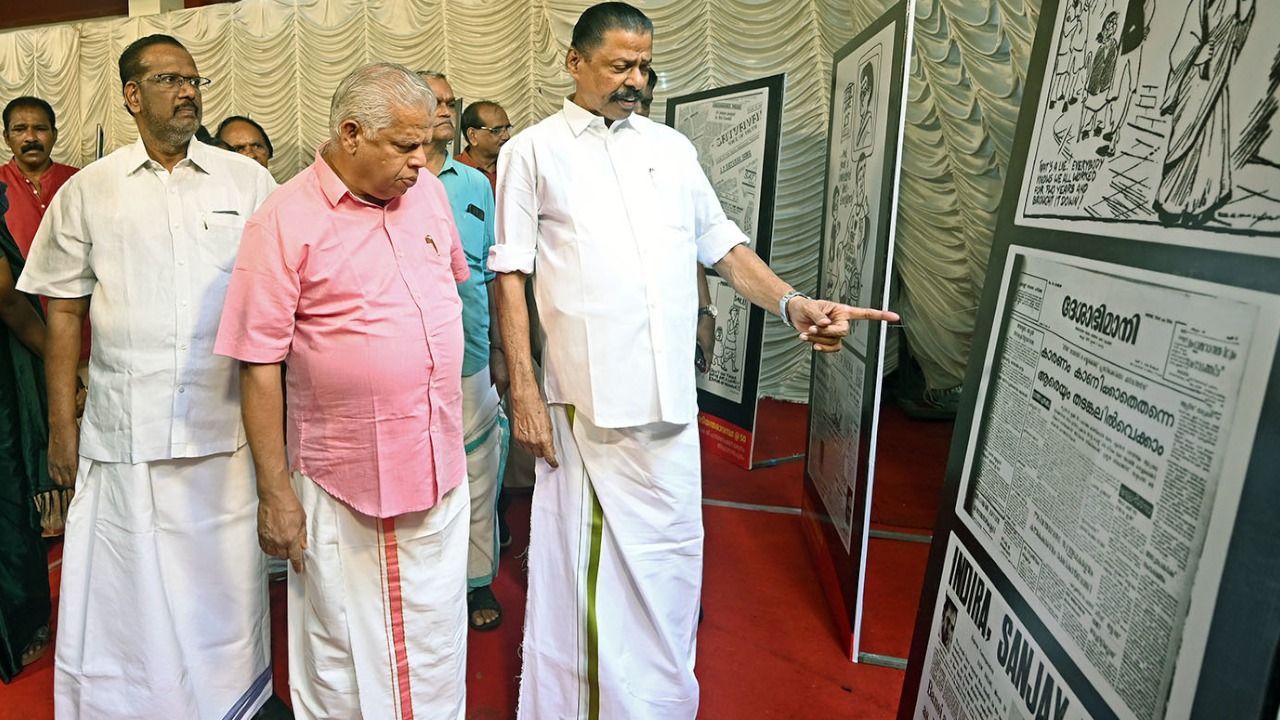
The gathering concluded with closing remarks from A.K.G. Centre Director C.N. Mohanan and a vote of thanks delivered by R. Parvathi Devi.The gathering concluded with closing remarks from A.K.G. Centre Director C.N. Mohanan and a vote of thanks. A media exhibition focusing on the Emergency period under Indira Gandhi was also organized as part of the event, showcasing various works highlighting resistance and dissent from that time.








0 comments