
Kerala Assembly
Kerala Assembly Passes Resolution Against Voter List Revision

Web desk
Published on Sep 30, 2025, 11:39 AM | 4 min read
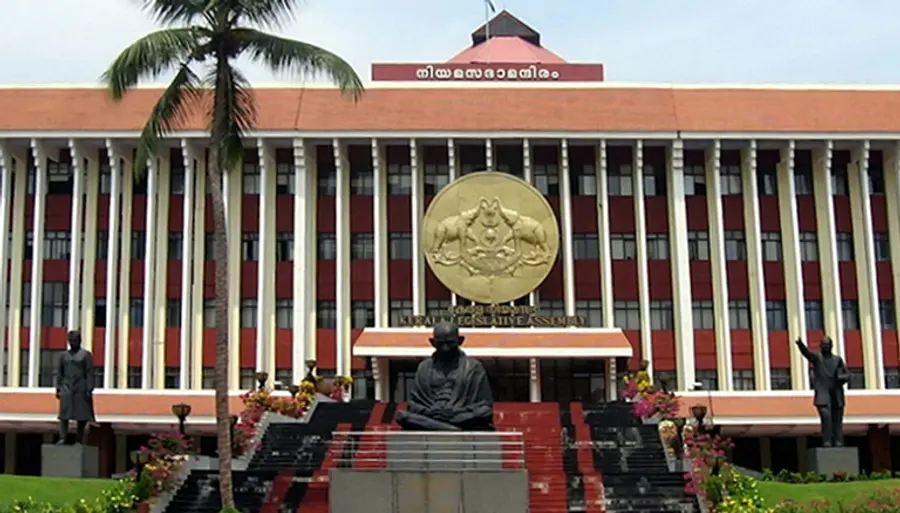
Thiruvananthapuram: In a strongly-worded and unanimous resolution passed, the Kerala Legislative Assembly urged the Election Commission of India (ECI) to withdraw from its decision to conduct an intensive revision of the voter list without adequate preparation or consultation. The Assembly, while expressing grave concern over the process, called for a transparent and inclusive approach to electoral roll revision, warning that the current methodology risks undermining the constitutional right to vote.
The resolution, moved by Chief Minister Pinarayi Vijayan, alleged that the ongoing exercise is not merely administrative but politically motivated, pointing to parallels with similar processes in other states like Bihar.
"This is not an isolated incident. What we are seeing in Bihar is part of a broader, dangerous political agenda — one that seeks to reshape the very idea of citizenship through selective disenfranchisement," the Chief Minister stated during the Assembly session.
The resolution further linked the hurried revision of the voter list to the contentious Citizenship Amendment Act (CAA), suggesting that the electoral roll update could be a covert attempt to implement the tenets of CAA by the back door.
“This intensive revision, devoid of long-term planning and public consultation, appears to be an effort to undermine secular citizenship and impose religious criteria by stealth,” the resolution stated.
The resolution highlighted the apprehensions shared by various political and civil society groups across the country. It raised alarm over the requirement, under the current revision process, for individuals born after 1987 to submit either their father's or mother's citizenship documents — and for those born after 2003, to submit both parents’ citizenship documents.
"This is a direct violation of Article 326 of the Constitution, which guarantees universal adult franchise. The new documentation requirements disproportionately affect the poor, marginalised, and those living in remote or conflict-affected areas, many of whom do not possess such legacy documents," the Chief Minister said.
He warned that this could lead to large-scale exclusion from the electoral rolls on questionable grounds.
The resolution also flagged concerns about the timing of the revision exercise. With the state set to hold local body elections in the near future, followed closely by the Assembly elections, the rushed nature of the process has raised eyebrows. The Assembly stated that it would be naive to consider the timing of this revision as mere coincidence.
“There are credible fears that this is an attempt to manipulate the electoral process by skewing the voter base under the guise of administrative reform,” the resolution read.
The Standard Operating Procedures (SOPs) being applied in the revision process — known as the Special Summary Revision (SSR) — have bypassed the customary period of public consultation and awareness, the government claimed.
The Kerala Assembly's resolution has placed the Election Commission under a cloud of suspicion. The resolution accused the Commission of operating without sufficient transparency and warned that such actions could erode public trust in democratic institutions.
“The credibility of the Election Commission is at stake. In a democracy, even the perception of bias can cause irreparable harm. The Commission must step back from actions that compromise the fundamental rights of citizens and reassert its commitment to fairness and transparency,” the Chief Minister emphasised.
The resolution concluded by urging the Election Commission to suspend the ongoing revision process until all stakeholders are adequately consulted, proper procedural safeguards are in place, and the constitutional rights of all citizens are protected without discrimination.
The voter list revision in question is part of a nationwide exercise initiated by the Election Commission of India in the lead-up to the 2024 general elections. However, the process has drawn widespread criticism, particularly over its stringent documentation requirements and alleged attempts at religious profiling — especially in states governed by opposition parties.
Civil liberties organisations and legal experts have raised red flags over the use of legacy documents to determine eligibility, arguing that such requirements echo the controversial NRC (National Register of Citizens) process carried out in Assam, which led to the exclusion of nearly two million people from the citizen registry.



Related News
Dont Miss it








0 comments