
Building a Bridge Home: NORKA Schemes as Kerala Government’s Lifeline for Non- Resident Keralites

Web desk
Published on Jun 10, 2025, 12:49 PM | 6 min read
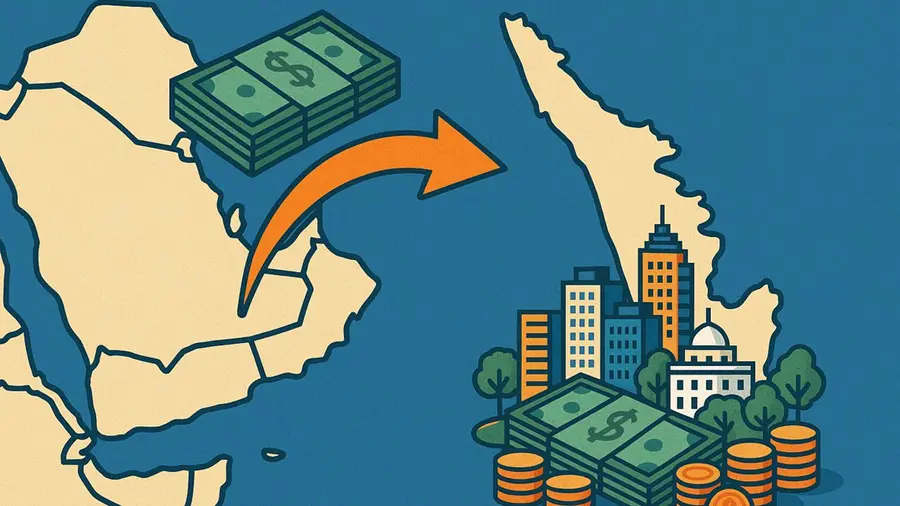
Thiruvananthapuram: The backbone of Kerala’s economy has long been reinforced by the relentless efforts of Non-Resident Keralites (NRKs). Their remittances have driven the state’s development, sustained countless households, and enabled vital investments in education, healthcare, and infrastructure. Even during global economic downturns, the unwavering financial contributions of the diaspora have helped Kerala maintain economic stability. In return, the state government has made it a priority to recognise and support these individuals, those who built their futures abroad but never let go of their roots.
Over the past two decades, NRKs have consistently shaped Kerala’s financial and social landscape through steady remittances and deposits. This continuous inflow has significantly boosted the Net State Domestic Product (NSDP), per capita income, and government revenue receipts, underscoring the vital economic link between Kerala and its global diaspora.
According to the Kerala Migration Survey (KMS) 2023, released during the Loka Kerala Sabha in Thiruvananthapuram, remittances played a crucial role in Kerala's economic growth between 1998 and 2023. The state's per capita income rose to 2,63,945 rupees in 2023, while government revenue receipts increased from 7,198 crore rupees in 1998 to 1,32,724 crore rupees in 2023, highlighting the positive economic impact of NRK remittances.
Historically, remittances made up nearly a quarter of Kerala’s NSDP until 2008. Although this share declined to 19.2 percent in 2013 and further in later years, the absolute value of remittances has continued to rise, reflecting the improved financial status of Keralites abroad.
The consistent rise in remittances has paralleled Kerala’s broader economic growth, demonstrating the extraordinary contribution of its expatriate community. Acknowledging this, the Kerala government, through its nodal agency NORKA Roots, has implemented a broad spectrum of welfare schemes for NRKs and returning emigrants. These initiatives encompass economic rehabilitation, healthcare, legal aid, education, and emergency services, underscoring the state’s strong commitment to supporting the global Malayali community.
The Santhwana Scheme, introduced in 2016, provides financial aid to returning migrants and their families during crises, including illness, death, or other hardships. Assistance is extended for medical treatment, marriage, and the purchase of assistive devices. As of March 2025, 33,458 families have benefited, receiving a total of 201.74 crore rupees.
The NORKA Department Project for Returned Emigrants (NDPREM) encourages self-employment through capital subsidies of up to 3 lakh rupees and an interest subsidy of 3 percent for four years. Between April 2016 and March 2025, more than 10,500 ventures were supported, with total assistance of 106.37 crore rupees.
The Pravasi Bhadratha Scheme was launched in 2021 in response to the economic impact of COVID-19, which forced thousands of NRKs to return after job losses abroad. It supports their rehabilitation through self-employment and consists of three components,Pearl, Micro, and Mega. Under this scheme, 118.98 crore rupees was distributed to over 21,800 beneficiaries. Pearl offers loans up to 2 lakh rupees through Kudumbashree. Micro provides loans up to 5 lakh rupees, including a 1 lakh rupees subsidy and a 3 percent interest subsidy. Mega supports industrial-scale projects with loans up to 2 crore rupees and a 3.5 percent interest subsidy.
To create job opportunities for returnees, the NORKA Assisted and Mobilised Employment (NAME) scheme matches them with suitable employment in Kerala. Applicants must have worked abroad for at least two years and remained unemployed for six months.
The NORKA Pravasi ID Card, issued to Malayalis in 181 countries, offers accident death insurance of 4 lakh rupees and disability coverage of 2 lakh rupees. Between 2016 and March 2025, 7.53 lakh cards have been issued.
The Pravasi Raksha Insurance Policy, introduced in 2021, provides coverage for critical illness, accidental death, and disability. With an annual premium of 649 rupees, it has enrolled 47,749 members to date.
In the education sector, the NORKA Directors' Scholarship supports children of financially backward NRKs. Since 2019, 2,347 students have received a total of 3.8 crore rupees, with each student receiving 15,000 rupees annually for higher education.
Legal support is provided through the Pravasi Legal Aid Cell (PLAC), which offers free legal advice via Malayali lawyers based in Gulf countries. The services cover employment disputes, jail cases, visa issues, healthcare problems, and more. Currently, seven consultants are active, with plans to expand to Bahrain, Qatar, and Malaysia.
The Emergency Ambulance Service, operational since 2018, offers free 24-hour transport to carry returnees or mortal remains from airports to homes. Since 2021, 1,846 individuals have availed the service.
The Emergency Repatriation Scheme ensures that the mortal remains of deceased migrants are brought home when employers or sponsors are unwilling or unable to bear the costs.
Understanding the unique challenges faced by migrant women, the NRK Women’s Cell operates a 24x7 helpline and email support system. In March 2025, a global workshop on migrant women’s issues was held as part of the International Women’s Day observance.
The state also supports Pravasi organisations. Under the Financial Assistance for Pravasi Organisations scheme, one-time grants of up to 3 lakh rupees are provided. So far, 2 crore rupees has been sanctioned to 81 organisations.
The Loka Kerala Sabha serves as a people’s platform connecting NRKs with governance and development initiatives in Kerala. Since 2018, four general sessions and three regional sessions have been held in Dubai, London, and New York. The number of participating countries has grown from 35 in the first session to 105 in the most recent one.
The NORKA Business Facilitation Centre (NBFC) has become a key hub for returnee entrepreneurship. Since 2021, 31 training programs have been held, resulting in the creation of 501 business units with a combined investment of 208 crore rupees. The Business Clinic initiative was launched in 2024, and 12 handbooks were published to guide aspiring entrepreneurs.
The Kerala Pravasi Welfare Board, created under the 2008 Act and 2009 scheme, provides registered NRKs with a range of benefits, including monthly pensions, family pensions, maternity and disability aid, educational support, and posthumous benefits.
Kerala’s model of Pravasi welfare remains unmatched in the country. No other Indian state offers such a comprehensive, institutionalised, and inclusive framework for its emigrant population. It is a model built on both gratitude and vision, recognising that those who built their fortunes abroad have always remained invested in Kerala’s future. The state's approach is not just about sending its people abroad, but also about welcoming them home with dignity, opportunity, and unwavering support.
Tags



Related News
Dont Miss it





0 comments