
A Year After the Landslide, Mundakkai Rebuilds Hope
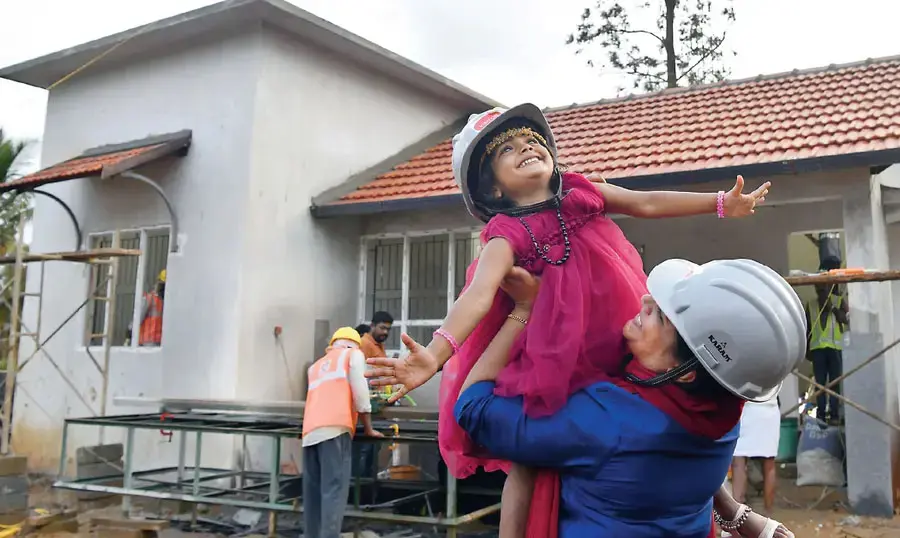
Kalpetta, Wayanad: “Can I give you a hug?” asked Sultan from Kaakathode, Mundakkai, his eyes brimming with gratitude, the moment he saw Ministers O.R. Kelu and K. Rajan at the model house built for landslide survivors in Kalpetta. The model house, opened to the public yesterday, drew dozens of survivor families who arrived with hope and emotion to see the promise of a new beginning made real.
“We came down from Chooralmala with nothing but the clothes we wore. Though the government had promised to stand with us, we never imagined we’d get such a beautiful house. My heart is full, thank you,” Sultan said, before embracing both ministers tightly. The ministers were attending the Mundakkai annual remembrance event, marking one year since the deadly landslide that uprooted entire communities from the slopes of Chooralmala.
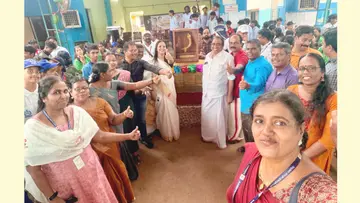
Around them stood dozens of other survivors, many of whom had travelled to Kalpetta from their temporary shelters just to witness the model house firsthand. 'We saw everything ourselves. Now we know the things spreading on WhatsApp are all lies,' said Ramani, Smitha, and Sreelatha, residents of Chooralmala, expressing relief and newfound trust.
“This is a house I could never have built in my lifetime,” said Vijayakumar, another Chooralmala resident who, like many others, had no land of his own before the disaster.
From Rescue to Rehabilitation: The Model of Kalpetta
It was on the night of July 29, 2024, that the landslide swept through Mundakkai and Chooralmala, burying homes, cutting off roads, and displacing hundreds of families in an instant. In the face of such destruction, the Kerala government acted without waiting for anyone—especially not the Centre.
Rehabilitation efforts began even before the final rescue operations were completed. By August, survivors were relocated to rented accommodations. At the same time, the state began scouting land for permanent resettlement. A special committee headed by geologist John Mathai surveyed 25 potential sites and identified nine viable estates—including Elston in Kalpetta and Nedumpala in Meppadi.
The cabinet gave in-principle approval to acquire the land under the Disaster Management Act on October 3, and the official order followed the very next day. Estate owners challenged the move in court, but legal proceedings concluded by December 27. That very night, the government transferred Rs 26 crore to the High Court Registrar’s account and appointed a special officer to survey and value the land.
Even as the court proceedings continued, the state pressed forward. Township designs were finalized, a construction agency selected, and groundwork initiated. On January 1, the Chief Minister held a meeting with house sponsors and presented the township model. The very next day, the Revenue Minister convened another meeting to fast-track geological, topographical, and soil surveys.
When a second court petition was filed, the judiciary allowed construction to continue. The state deposited an additional Rs 17.78 crore as directed. The Chief Minister inaugurated the township on March 27, and construction officially began on April 13. The first model house was completed on July 30—almost exactly one year after the tragedy.









0 comments