
Rijiju Admits Munambam Dispute Can’t Be Resolved by New Waqf Act, Exposes BJP’s Double Standards
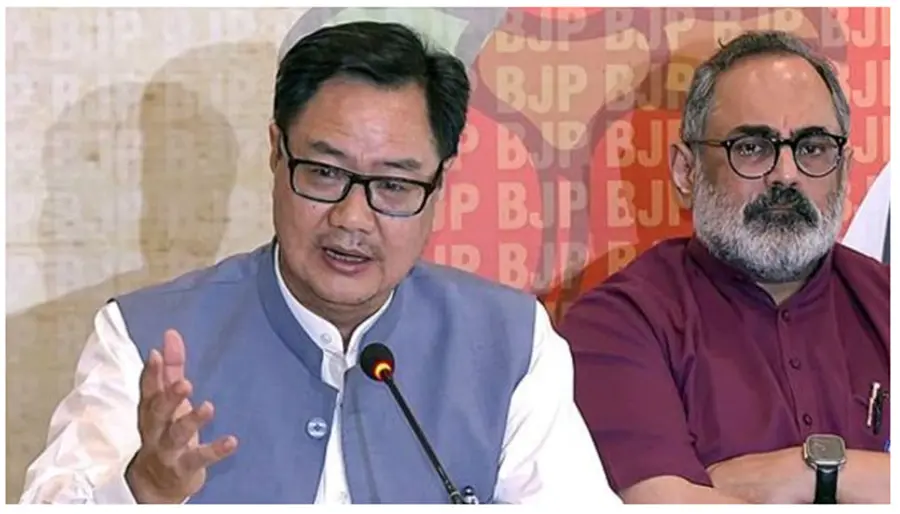
Kiren Rijiju is addressing the media here in Kochi on Tuesday

Anjali Ganga
Published on Apr 16, 2025, 01:38 PM | 3 min read
In Munambam, Kerala, the BJP is once again being accused of using its 'divide and rule' strategy—this time by stoking tensions over a long-standing land ownership conflict between the Christian community and the Waqf Board. The BJP initially promised that the newly passed Waqf Amendment Act would resolve the issue for local residents. However, this narrative began to unravel after Union Minister Kiren Rijiju made a contradictory statement during a press conference in Kochi on Tuesday. While he had earlier claimed that the Waqf Amendment Act would help Munambam residents reclaim their land, Rijiju later stated that the issue cannot be resolved through the Act and must instead be settled through legal means, potentially in the Supreme Court.
His remarks have been criticised for revealing the BJP’s underlying political motives. Critics argue that the BJP is trying to create rifts between religious minorities and disrupt Kerala’s secular social fabric by presenting hollow legislative solutions and then shifting responsibility to the courts. The timing of Rijiju’s statement—made during a meeting held to thank Prime Minister Modi for passing the Waqf Amendment Bill—only added to the political tension of persisting issues in BJP's leadership.

Backtracking, Legal Loopholes, and Local Reactions
It was Rijiju who introduced the Waqf Amendment Bill in both houses of Parliament. During discussions, BJP leaders linked the Bill directly to the Munambam issue, suggesting it would help resolve such conflicts and prevent future ones. Prime Minister Narendra Modi repeated these claims in the Lok Sabha.
Yet, when asked which specific section of the Act would enable Munambam residents, over 610 fishermen family, to legally secure ownership under revenue laws, Rijiju failed to provide a clear answer. Instead, the Union Minister offered a vague assurance that legal relief might come through ongoing court proceedings. The minister’s comments appeared more like damage control aimed at calming protesters. He also remarked that Munambam is just one of thousands of similar disputes across India.
His statements marked a sharp shift from the central government’s earlier narrative, retreating from legislative promises and placing the onus on the judiciary. Further adding to the controversy, Rijiju stated that all Waqf tribunals and boards across the country would be restructured. Meanwhile, the Waqf Amendment Act has been accused of fuelling communal tensions and being used as a political tool to turn public sentiment against the state government, with Munambam at the centre of this effort. BJP Kerala chief Rajeev Chandrasekhar clarified that the amended Act is "not a magic wand" capable of resolving the Munambam land dispute. However, his statement has only intensified criticism, further highlighting the BJP’s perceived double standards in addressing the sensitive issue of land ownership in Munambam.
Church leaders also raised their voices. Kottappuram Bishop Ambrose Puthenveettil expressed concern that Munambam was at risk of being politically exploited. He noted that he had previously advised the community not to react emotionally and urged people to avoid making provocative statements against the protest committee. The Bishop emphasised that the issue should be resolved through legal channels.



Related News
Dont Miss it









0 comments