
Kerala to launch sanitary waste plants, eyes next frontier in waste fight

Web desk
Published on Sep 14, 2025, 12:41 PM | 3 min read
Thiruvananthapuram: Kerala which has already achieved self- sufficiency in solid waste management, is now turning its attention to the more stubborn challenge, liquid and sanitary waste. Local Self- Government Minister M B Rajesh announced that the state will soon operationalize four regional sanitary waste treatment plants with a combined capacity of 120 tonnes, enough to process the state’s daily sanitary waste generation of 100 tonnes.
“Liquid will take more time, but we are confident about achieving total treatment facilities. Within the next four months, all four plants will be ready,” Rajesh said, calling the step a critical expansion of Kerala’s waste strategy.
The announcement marks a new phase in Kerala’s decentralised waste management experiment, which has already transformed solid waste disposal. The state no longer depends on landfills or centralised dumps, instead processing biodegradable waste at source through home-level compost pits, biogas plants and community facilities. As of June 2025, over 25 lakh households have installed source- level treatment devices, supported by 271 community biogas plants and 1,303 composting centres.
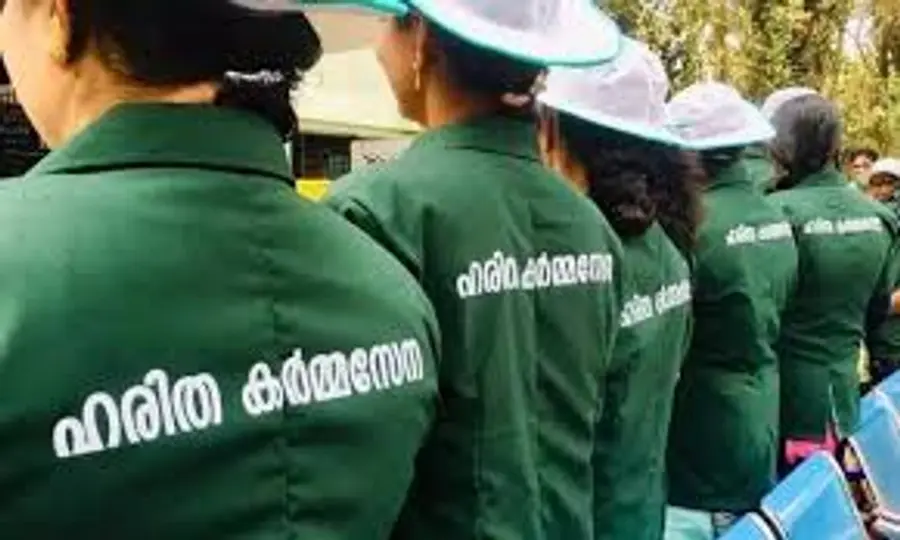
At the heart of this system is the Haritha Karma Sena, a network of over 37,000 women, mostly from the Kudumbashree mission, who go door to door collecting non-biodegradable waste. They segregate and transfer it to local collection centres, earning income from user fees, compost sales and recycling contracts. In 2024-- 25 alone, the sena collected 1.52 lakh tonnes of non-bio waste, covering 95 per cent of Kerala’s homes and shops.
Supporting them is the Clean Kerala Company Ltd, which aggregates and sends non- biodegradable waste to recycling agencies and cement factories, where it is used as Refuse-Derived Fuel (RDF).
But Rajesh admitted that while door-to-door collection has doubled in two years, civic sense remains weak. “People still throw away waste… our next focus will be on educating people,” he said. In the last five months alone, the state collected Rs 9.55 crore in fines for littering.
Strict enforcement has been key: those who refuse to hand over non-biodegradable waste risk denial of local body services, while unpaid user fees are added to property tax bills with fines. The government also incentivises compliance, offering a 5 per cent property tax rebate to households treating bio-waste at source.
The state’s model gained momentum after the 2023 Kochi dump yard blaze. Rajesh said Kerala is now close to clearing the entire 9 lakh metric tonne of accumulated waste from the site, with 90 per cent already removed. The area will soon be converted into a garden and modern waste management hub.
“Our success in solid waste management was built on decentralisation, women’s participation and strict enforcement. Liquid waste will be our next milestone,” Rajesh said.



Related News
Dont Miss it









0 comments