
Environment
Kerala’s Escalating Human-Wildlife Conflict and the Call for Reform

Anusha Paul
Published on Jul 26, 2025, 11:36 AM | 5 min read
Thodupuzha / New Delhi : Human-wildlife conflict continues to intensify across Kerala, with the latest incident in Mullaringad exposing the growing vulnerability of forest-edge communities. On July 25, 2025, a temporary forest watcher named Saju was injured while trying to drive away a wild elephant that had entered farmland near the Amayalthotti Muslim mosque — a densely populated part of the Mullaringad region. The elephant, which had broken through forest fencing, caused widespread panic and crop damage before being driven back, though it remains near the settlement.
Saju is currently being treated at a local hospital. His injury marks yet another escalation in a series of dangerous encounters that have plagued the area for over three years. Residents of Mullaringad — located along the border of the Kothamangalam Forest Division — report frequent elephant intrusions into farmlands, leading to crop destruction, property damage, and, in some cases, human casualties.
In December 2023, Mullaringad witnessed the death of 22-year-old Amar Ibrahim during a similar elephant intrusion. Despite protests and repeated appeals from local communities and elected representatives, the issue remains unresolved. Makeshift solutions like bonfires and firecrackers offer little deterrence, and fencing along forest borders has proven inadequate.
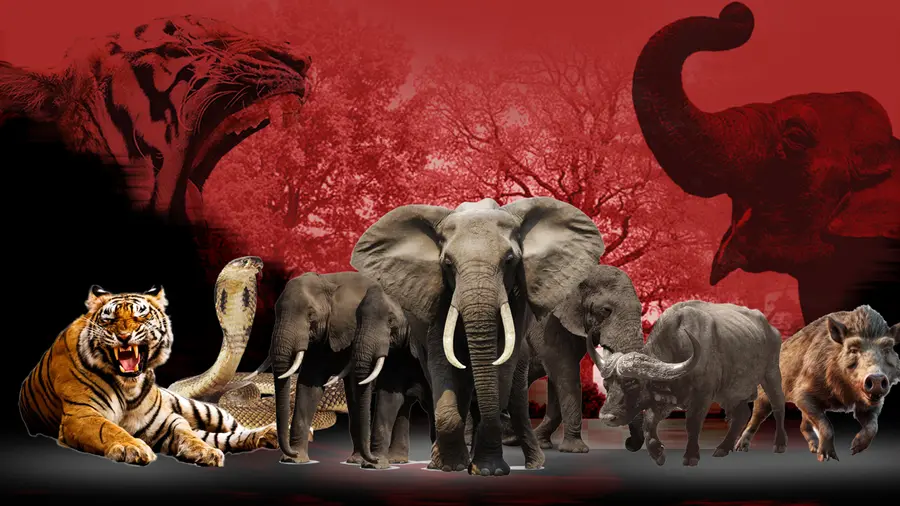
The threat from wild animals is not limited to Mullaringad. Across Kerala, there has been a sharp rise in wildlife-related incidents, particularly involving elephants. Over the past five years, more than 100 people have lost their lives in elephant attacks in the state, with fatalities nearly doubling since 2019-20. According to data shared in Parliament by Minister of State for Environment Kirti Vardhan Singh, 23 people were killed in elephant encounters in 2023-24 alone, bringing Kerala’s total to 102 deaths since 2019.
Nationally, elephant attacks claimed 2,869 lives between 2019-20 and 2023-24, with Odisha reporting the highest number of deaths at 624, followed by Jharkhand with 474, West Bengal with 436, Assam with 383, and Chhattisgarh with 303. The annual toll from such incidents has steadily risen, increasing from 595 deaths in 2019-20 to 629 in 2023-24. Kerala’s neighbouring states, Tamil Nadu and Karnataka, reported 256 and 160 deaths respectively over the same period.
However, when the figures are considered in relation to the size of these states and their forest areas, Kerala’s situation appears especially precarious. Kerala covers just 38,863 square kilometres, with forest cover amounting to roughly 11,524 square kilometres, or about 30 percent of the state. Odisha, which recorded the highest fatalities, is more than three times larger at 155,707 square kilometres and has a forest area exceeding 51,600 square kilometres. Karnataka, another neighbouring state, is nearly five times bigger than Kerala, spanning 191,791 square kilometres with over 38,500 square kilometres of forest.
Therefore, Kerala’s elephant-related death toll is alarmingly high. The state’s dense population, with around 859 people per square kilometre — far above the national average — and fragmented forest patches interspersed with human settlements mean that the interactions between people and wildlife are far more frequent and often deadly. Forest-edge communities in districts such as Wayanad, Idukki, Palakkad, and Pathanamthitta are especially vulnerable, as elephants often move through narrow forest corridors that are closely bordered by farms and villages.
Another critical factor exacerbating Kerala’s human-wildlife conflict is the state’s unique ecological landscape. Kerala’s forests are richly endowed with water bodies, with streams and rivers occurring every two to four kilometres in forested areas. This abundant availability of water and forage attracts elephants and other animals from neighbouring states like Karnataka and Tamil Nadu, especially during the dry season when water becomes scarce in those regions. These elephants regularly cross porous borders in search of food and water, leading to frequent incursions into Kerala’s farmlands and settlements.
Unlike in many other states where large contiguous forest blocks exist, Kerala’s forests are fragmented and closely intertwined with human habitation. This proximity results in minimal buffer zones, increasing the risk of dangerous wildlife encounters. The ecological conditions, combined with a very high population density, create a situation where human-wildlife conflict is not just frequent but also unpredictable and severe.
Tiger attacks, though less frequent than elephant incidents, remain a significant concern. Between 2020 and 2024, tiger attacks claimed 378 lives across India. Kerala recorded two such deaths in 2020, while Maharashtra experienced the highest toll with 218 deaths, followed by Uttar Pradesh with 61 and Madhya Pradesh with 32. In 2022 alone, 110 people were killed by tigers, with Maharashtra accounting for 82 of these fatalities.
Despite the rising toll and intensifying conflict, the Union government has so far declined to amend the Wildlife Protection Act to grant states greater autonomy in managing human-wildlife conflicts. Kerala’s proposals for more flexible management — including stronger fencing, quicker response mechanisms, and targeted interventions to handle problem animals — have been rejected. Currently, only the State Chief Wildlife Warden holds the authority under Section 11 of the Wildlife (Protection) Act, 1972, to manage conflict situations. There are no plans to allow states to independently declare animals as vermin, a power briefly exercised in 2020 for rhesus macaques in Himachal Pradesh.
Affected communities and policymakers in Kerala argue that while the Act has been essential for conservation, it does not adequately address the challenges faced by regions where human and wildlife habitats overlap so closely. The frequent and escalating encounters with elephants and other wildlife have created an urgent need for laws and policies that better balance wildlife protection with the safety and livelihoods of forest-edge populations.
Meanwhile, local forest departments and authorities overstretched by increasing wild animal attack and struggling to respond effectively to the ongoing crisis. Without urgent legislative reform and stronger support from the Union, Kerala’s human-wildlife conflict is likely to worsen. For residents of Mullaringad and other vulnerable areas, each day carries the fear of the next encounter.



Related News
Dont Miss it










0 comments