
Kerala
ASHA Workers in Kerala Get Full Honorarium Despite Central Government Fund Shortfall

Web desk
Published on Jun 23, 2025, 12:31 PM | 4 min read
Thiruvananthapuram: The Kerala government has sanctioned Rs. 54.86 crore to disburse three months’ honorarium to Accredited Social Health Activists (ASHA workers) across the state. The sanctioned amount will cover the months of June, July, and August, benefiting 26,125 ASHA workers, each receiving Rs. 7,000 per month.
The ASHA program, launched by the Central Government in 2005, has seen Kerala emerge as a front-runner in both the number of workers and the remuneration provided. The state currently employs over 26,000 ASHA workers. Initially, the monthly honorarium stood at Rs. 500, which was raised to Rs. 1,000 in 2016. It was the Left Democratic Front (LDF) government that later increased it to Rs. 7,000 — the highest honorarium paid to ASHA workers in the country.
While the honorarium is fully funded by the state, ASHA workers also receive performance-based incentives. As per guidelines, 60% of these incentives are to be paid by the Centre and 40% by the state. However, the Centre reportedly owes Kerala Rs. 100 crore in pending dues under this scheme. Despite this shortfall, the state government has continued to distribute the full incentive amounts, ensuring that ASHA workers are not deprived of their rightful earnings.
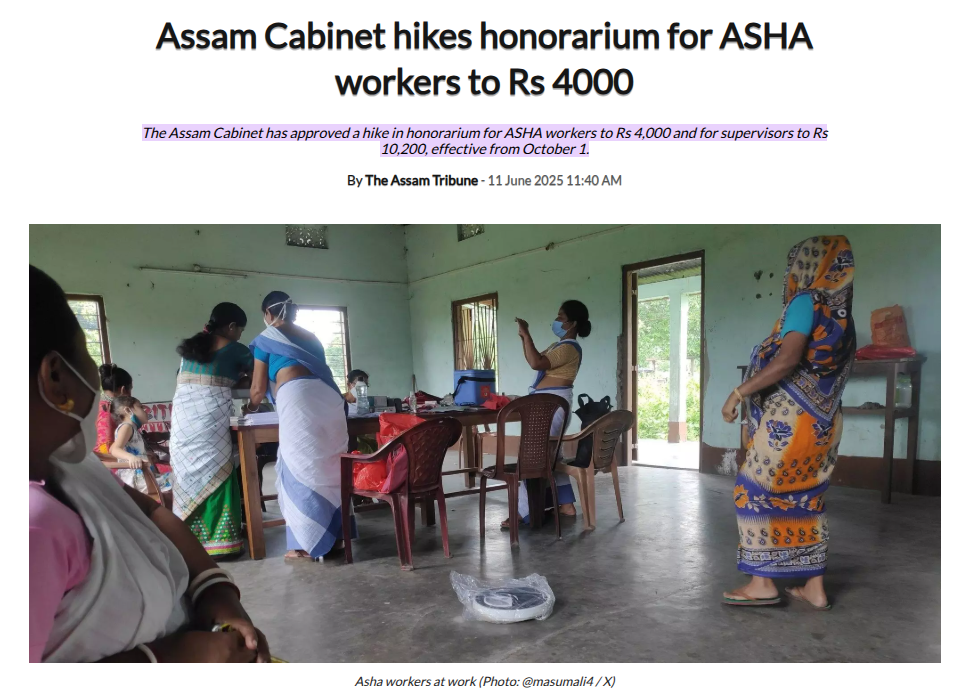
Kerala continues to set a national benchmark in safeguarding the rights and livelihoods of ASHA workers. Those who fulfil their performance targets can earn up to Rs. 13,200 per month — including incentives — the highest in the country. This stands in stark contrast to other states, such as Bharatiya Janata Party (BJP)-ruled Assam, which only last week raised the ASHA honorarium from a paltry Rs. 3,000 to Rs. 4,000.
The LDF government in Kerala has consistently strengthened the ASHA network — increasing the honorarium from Rs. 500 to Rs. 7,000, fully funded by the state. Moreover, despite the Union government defaulting on its 60% share of the incentive component, amounting to Rs. 100 crore in dues, the state government has ensured uninterrupted payment by covering even the Centre’s responsibilities.
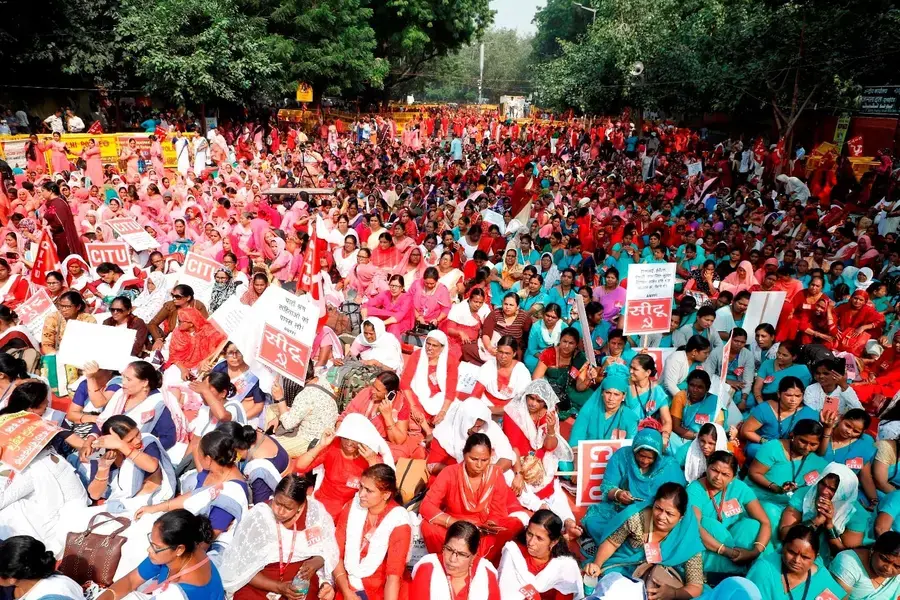
The ASHA Workers’ Union affiliated with the Centre of Indian Trade Unions (CITU) had organized a powerful and legitimate sit-in protest against the Union government, demanding immediate disbursal of pending central funds and improved support for front-line workers. In response, Congress, SUCI, and BJP-backed forces launched diversionary agitations targeting the Kerala government in an attempt to undermine and dilute the impact of the CITU-led struggle.
Thousands of Accredited Social Health Activists (ASHA) across the country continue to protest demanding fair wages, regularisation of their services, and recognition as government employees. Despite playing a vital role in India's public healthcare system—especially during the COVID-19 pandemic—ASHA workers remain underpaid and overworked, often receiving only nominal honorariums with no job security or social protection.
Opposition union representatives have repeatedly raised their concerns, emphasising the essential nature of their work in rural health delivery, maternal and child care, and immunisation programs. In many states ASHAs are paid less than Rs. 3,000 a month by the central government, with state governments occasionally adding modest top-ups. This has led to long-standing frustration and discontent among scheme workers.
Despite several rounds of protests, negotiations, and assurances, meaningful changes remain elusive. Protesting workers argue that the union government continues to ignore their fundamental demands, pushing them into prolonged cycles of agitation. The national strike called by the Joint Committee of Trade Unions on July 9, 2025, is being organised with 17 key demands, including fixing a monthly wage of Rs. 26,000 for all unorganised, contract workers, and scheme workers.
Ahead of the last Union Budget, during discussions held by Union Finance Minister Nirmala Sitharaman with representatives of trade unions, organisations including CITU demanded that scheme workers employed under various government programs be recognised as workers and that a monthly wage of Rs. 26,000 be ensured for all unorganised, contract, and scheme workers. However, not only was this demand rejected, but the union government also refused to provide any form of financial assistance to workers in these schemes. Moreover, successive budgets have seen a significant reduction in the allocations for scheme workers by the central government.



Related News
Dont Miss it









0 comments