
Decentralized Waste Processing in Kerala Prevents Severe Air Pollution
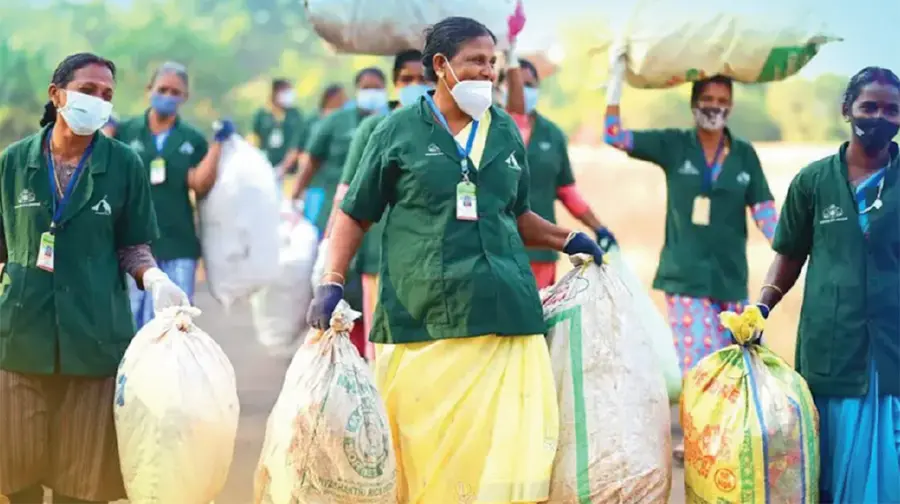
Thiruvananthapuram: Kerala’s decentralized waste management initiatives have played a key role in reducing air pollution that could have posed serious health risks. By processing waste instead of burning it, the state has avoided approximately 2.8 lakh tonnes of carbon dioxide emissions over the past five and a half years.
From the 2020–21 financial year until October 2025, the Clean Kerala Company, under the Local Self-Government Department, has collected a total of 2,15,724.5 tonnes of waste. According to guidelines from the Intergovernmental Panel on Climate Change (IPCC), burning one tonne of plastic-mixed waste emits roughly 1.3 tonnes of carbon dioxide. By preventing open burning, Kerala has successfully averted a major environmental hazard.
G. K. Suresh Kumar, MD of Clean Kerala, said that the “Waste-Free New Kerala” public campaign has significantly increased waste collection across the state. In the 2024–25 financial year, 61,681 tonnes of waste were collected, and up to October of this year, 42,997 tonnes have been removed. The Harithakarma Sena is leading these efforts on the ground.
The Clean Kerala Company provides financial support to the Harithakarma Sena for handling recyclable inorganic materials. So far, 33 crore rupees have been transferred to the accounts of 37,183 Sena members. Non-recyclable waste is being sent to cement companies, and measures are underway to process it within the state.
In addition, a plant capable of handling 100 tonnes of sanitary waste is under development. Initial work has also been completed for a 500-tonne waste-to-energy plant, which will convert collected waste into energy.



Related News
Dont Miss it








0 comments