

Kerala
Global Ayyappa Sangamam Unites Devotees

Anusha Paul
Published on Sep 20, 2025, 01:18 PM | 5 min read
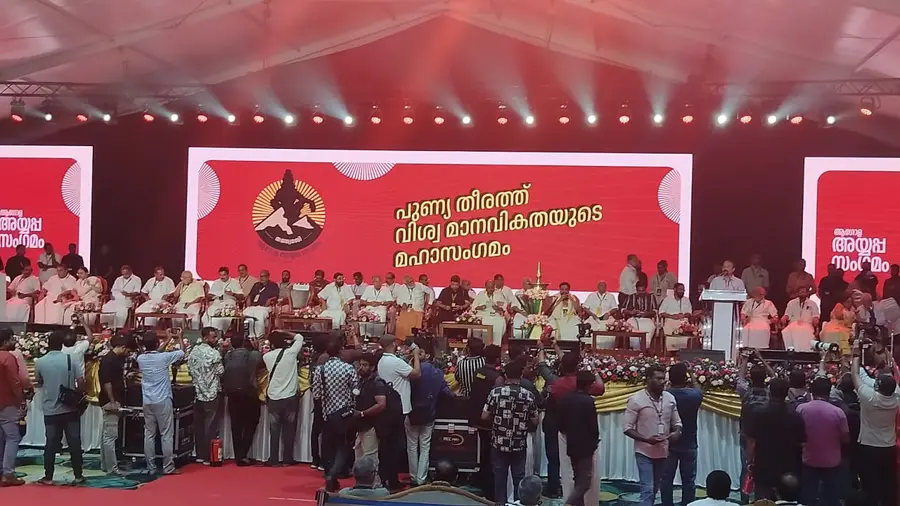
Pathanamthitta: The three-day Global Ayyappa Sangamam, which began at Pampa on Saturday, has drawn both wide participation and political controversy. Organised by the Travancore Devaswom Board as part of its platinum jubilee celebrations, the event has brought together thousands of Ayyappa devotees and cultural organisations from across India and abroad. While political parties have raised questions about the timing and motive of the event, the organisers assert that the summit is a long-term initiative to improve the Sabarimala pilgrimage experience and promote global dialogue around Ayyappa devotion.
Held on the banks of the Pampa river, just below the Sabarimala hill shrine, the summit is being attended by an estimated 3,000 to 3,500 registered delegates. These include Ayyappa devotees, spiritual scholars, writers, artists, and members of Ayyappa Seva Sangams from various parts of the world. Participants have travelled from the United States, the United Arab Emirates, Singapore, Malaysia, Sri Lanka, and from across India, particularly from the southern states of Kerala, Tamil Nadu, Karnataka, Andhra Pradesh, and Telangana.
The venue — a newly constructed semi-permanent pavilion near Pampa — has been specially built for the occasion. It features a main conference stage, seminar halls, exhibition areas, and rest areas for delegates. The structure was developed with engineering support from a German firm and is designed to withstand large crowds and Kerala’s monsoon climate. Officials said that the structure would remain in place after the summit and could be used in the future for pilgrim management and cultural events.
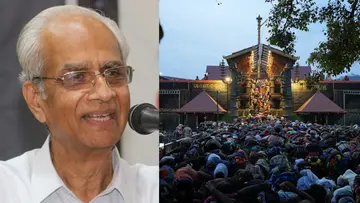
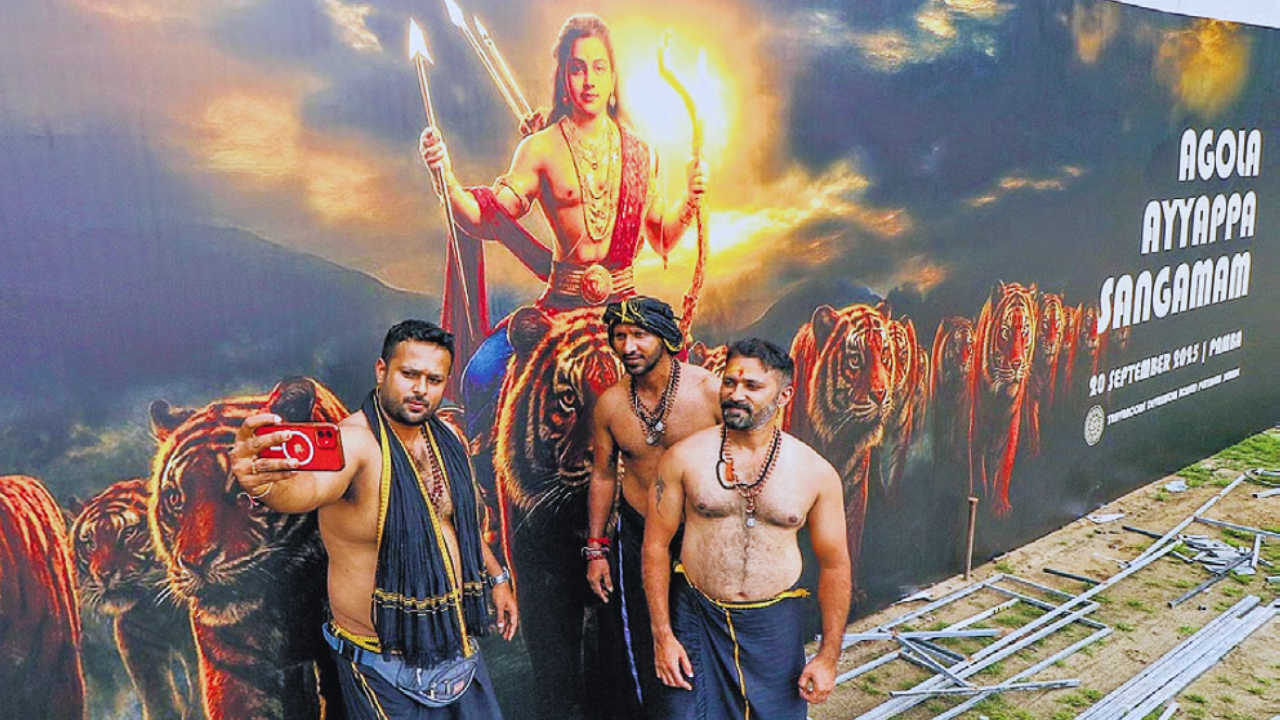 Image courtesy: Google
The stated aim of the summit, according to the Kerala Devaswom Department, is to initiate a global conversation about the future of Sabarimala as a spiritual, cultural, and ecological destination. The summit includes discussions on the Master Plan for Sabarimala, a long-term development strategy drawn up to improve infrastructure, ensure environmental protection, and enhance the safety and comfort of pilgrims. The plan spans multiple phases and stretches across various points of the pilgrimage route — including Nilakkal, Pampa, Sannidhanam (the temple precinct), and the trekking paths.
As part of this plan, the government has proposed an investment of Rs. 1,033.62 crore. Of this, Rs. 778 crore has been allocated for the three-phase development of Sannidhanam, which includes improved sanitation facilities, crowd management systems, and emergency response infrastructure. The Pampa riverfront, which plays a critical role in the pilgrimage, has been allotted Rs. 207 crore for redevelopment. This includes environmental conservation efforts, waste management systems, and pilgrim amenities. A further Rs. 48 crore is designated for improving trekking paths, resting points, and medical aid stations along the forest trail to the temple.
Since 2016–17, the government has already invested Rs. 220.78 crore in Sabarimala-related development works. This includes improvements in sanitation, temporary accommodation, transport connectivity, and the virtual queue system. Devaswom officials have clarified that the costs incurred for the ongoing summit, estimated to be around Rs. 7–8 crore, are being met through corporate sponsorships and voluntary contributions. They have stated that no temple funds are being diverted for the event.
Despite the infrastructure and planning involved, the summit has attracted criticism from political parties and certain Hindu groups. The opposition Congress party has accused the ruling Left Democratic Front (LDF) government of using the event for “majority appeasement” and attempting to reshape its public image ahead of the upcoming pilgrim season. The BJP has gone further, alleging that the event is an attempt to “whitewash” the government’s handling of the 2018 Sabarimala protests, when the entry of women into the temple following a Supreme Court verdict led to widespread unrest.
Legal challenges were also raised. Public Interest Litigations (PILs) were filed both in the Kerala High Court and the Supreme Court, asking for a stay on the event. Petitioners argued that the event violated principles of state secularism and that public funds may be misused. However, the Supreme Court, and the Kerala High Court allowed the event to proceed after seeking clarifications from the Devaswom Board and the state government. The court stated that the event did not appear to breach any legal provisions and did not interfere with the rights of pilgrims, provided that basic services and access remained unaffected.
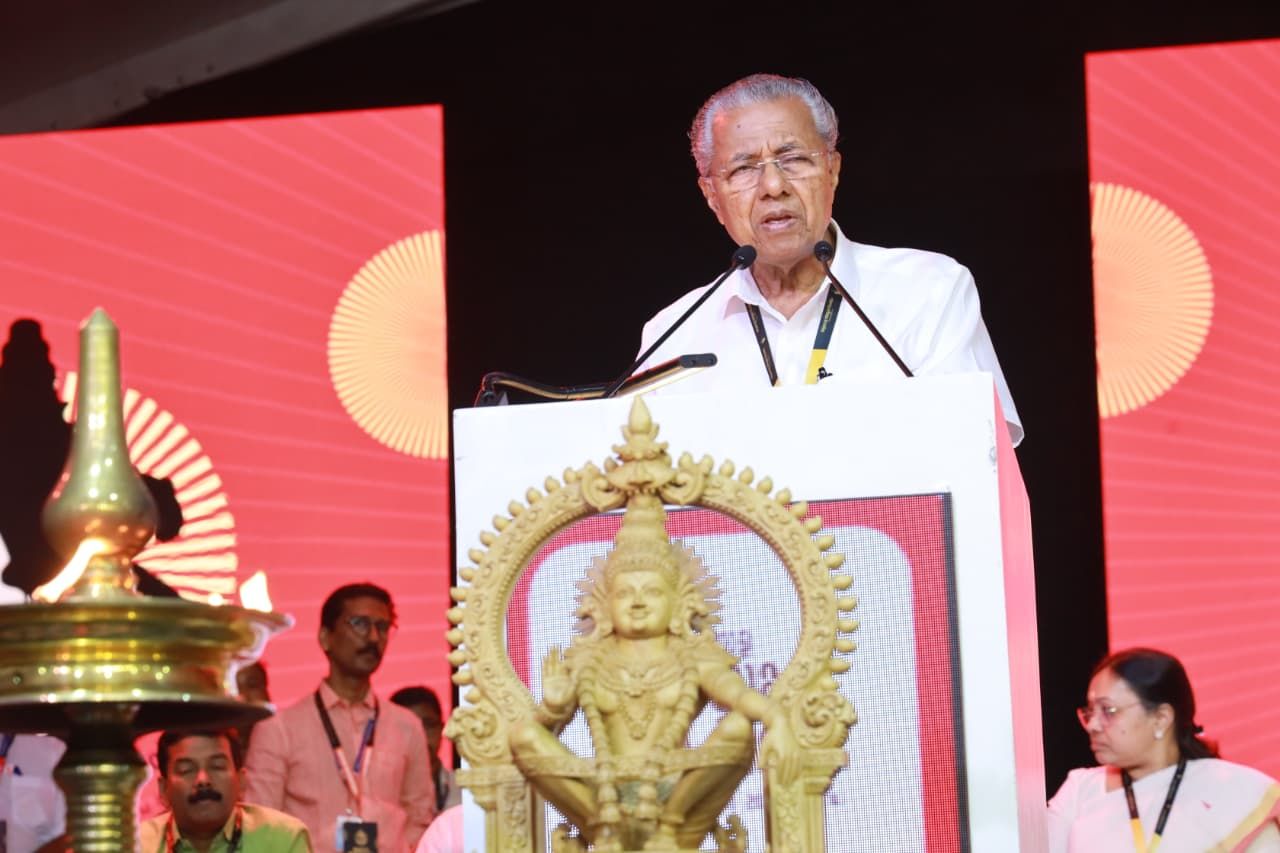
Speaking at the inaugural session, senior government officials reiterated that the summit was not a one-time showcase, but the beginning of a larger process of global engagement.
“This is a vision-oriented event. We are trying to bring together Ayyappa devotees from across the world to discuss how to preserve the sanctity of the pilgrimage while improving the infrastructure and safety of lakhs of devotees,” said K R Jyothilal, Principal Secretary of the Devaswom Department.
Chief Minister Pinarayi Vijayan, who inaugurated the summit, said the event was about ensuring a balance between tradition, accessibility, and environmental preservation:
“We aim to make Sabarimala more universally accessible, take forward development projects in ways that do not harm the environment, and make the pilgrimage less burdensome for devotees.”
With the Mandala-Makaravilakku pilgrimage season just weeks away, the summit also functions as a preparatory exercise. Officials have said that lessons learned and feedback collected during the summit will be used to fine-tune logistics for the upcoming season, which is expected to draw over 60 lakh pilgrims — one of the highest in recent years. New proposals for digital crowd management, safety measures on the trekking routes, and medical aid coordination are also on the discussion table.
The event includes cultural performances, panel discussions, and exhibitions on the history and traditions of Ayyappa worship. Several spiritual organisations and social service groups associated with the pilgrimage are presenting papers on topics ranging from ecological sustainability to crowd psychology and safety.
While controversy may continue to surround the motivations behind the summit, the scale of participation and the government’s long-term planning indicate that the Global Ayyappa Sangamam is more than just a symbolic gesture. Whether it will succeed in creating a blueprint for a safer, cleaner, and more organised Sabarimala pilgrimage remains to be seen — but it has undoubtedly brought the issues to the fore.



Related News
Dont Miss it







0 comments