
Trump’s Tariff and Kerala

Dr. T M Thomas Isaac
Published on Aug 09, 2025, 11:13 AM | 5 min read
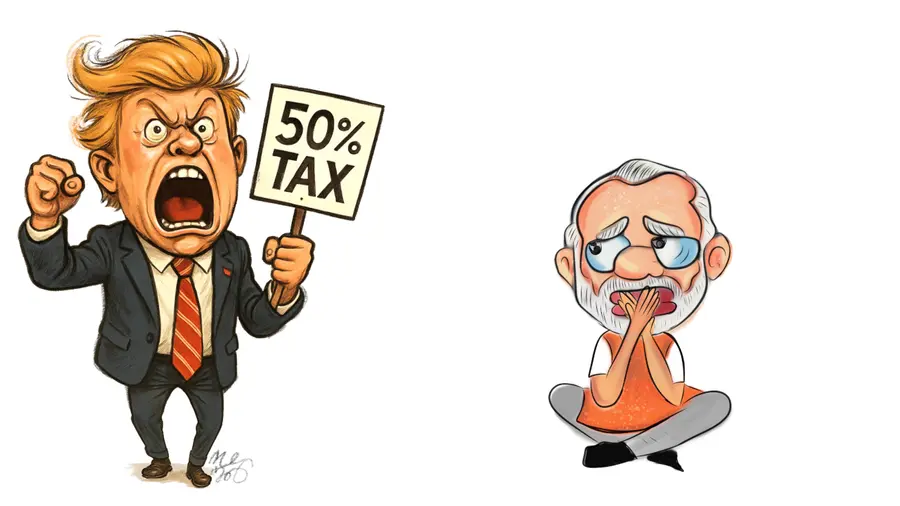
Is it better to be an enemy of Trump or a friend? China, America’s top adversary, faces an average tariff of 30 percent. India, supposedly a friendly nation, is hit with a 50 percent tariff, 25 percent as the base rate and another 25 percent as a penalty for purchasing oil from Russia. Among all Indian states, Kerala is set to be one of the hardest hit by Trump’s latest move.
After the ASEAN Agreement
Some think this is an exaggerated fear. In 2024, India’s exports to the US were worth 800 billion dollars, of which Kerala’s share was only about 23 percent. But what must be understood is that Kerala’s agricultural sector has not yet recovered from the blow dealt by the ASEAN agreement. Back when Kerala’s agricultural sector was growing at a steady 5 percent annually, the ASEAN deal was signed, and that growth was abruptly halted. Growth in rubber, coconut, and other plantation crops came to a standstill. The very sectors that somehow held their ground back then are now the ones Trump is targeting.
The ASEAN agreement damaged imports, which in turn hurt Kerala’s commercial crops that once dominated India’s domestic market. Trump’s tariffs, however, will hit sectors that survive mainly through exports.
An Export Loss of 5,300 Crore Rupees
About 30 percent of Kerala’s exports of pepper, cardamom, turmeric, nutmeg, and similar crops go to the US. That market is now poised to be taken over entirely by Southeast Asian countries. Nearly 2,900 crore rupees worth of Kerala’s exports are being blocked by Trump’s decision.
A similar blow will hit the fisheries sector. In 2023–24, Kerala exported marine products worth 7,200 crore rupees. Of this, 27 percent, that is 1,080 crore rupees, went to the US. With prices there going up by 50 percent, not a single American is likely to buy Kerala’s shrimp or squid. The crash in exports and the consequent fall in prices will disrupt the lives of nearly one million people dependent on the fisheries sector.
Traditional industries like cashew kernels and coir have their largest export market in the US. Forty-six percent of cashew kernel exports and 37 percent of coir exports from Kerala go there. Together, these account for more than 1,080 crore rupees. Tens of thousands of livelihoods are at risk.
Around 20–30 percent of the tea and coffee that go to the US come from Kerala. Because of Trump’s move, Kerala will lose at least 250 crore rupees worth of exports in this sector. Adding all this up, Kerala is looking at a total export loss of 5,300 crore rupees.
Demand Collapse and the Service Sector
Some of these products might find buyers in other countries or even within India. But undoubtedly, prices for all these goods will drop sharply. This price drop will affect not just the exported share but the entire production. The resulting national income loss is not something that can be calculated right now.
There’s another ripple effect. Kerala’s economy is service -driven, and service consumption depends on people’s income. The fall in income caused by the export crash and price slump will hurt not only the agricultural and traditional sectors but also the growth of the service sector.
The Rupee’s Fall and Price Inflation
Trump’s tariff will add to price inflation not only in the US but here at home. With a drop in India’s export earnings, foreign currency inflows will shrink, pulling down the value of the rupee. In January, one US dollar was worth 83.12 rupees; by August 7, it had slipped to 87.70 rupees. If the tariff continues, by November the rupee could drop to 95 rupees to the dollar . A weaker rupee will push up the cost of imports.
If India stops importing oil from Russia, oil prices will rise further. All this will add to inflation in India. Anticipating this, the Reserve Bank has already paused its plan to cut interest rates. Inflation will make life harder for the people.
The Madness Behind Trump
Why is Trump taking these reckless steps, disregarding every international norm? The US lost in the competition of free trade. Imports into the US from China and other countries soared, and industries shut down. America today is more a service -based country than a manufacturing powerhouse. Trump’s aim is to reindustrialise America. To do this, he’s imposing tariffs to restrict imports and urging manufacturers to produce goods within the US.
But it is becoming clear that bullying cannot generate industrial investment. With Trump changing tariffs almost daily, investors feel they cannot trust him. On what certainty will they invest based on his words? This is what’s driving Trump to frustration.
There’s another hidden motive. The tax cuts Trump granted have worsened the fiscal deficit due to higher spending. Raising import tariffs is seen as an easy way to reduce the deficit. The huge sums collected from tariffs could, Trump thinks, both cut the deficit and provide further benefits to the wealthy.
A Coalition Against America
There’s yet another aim. Brazil, Russia, India, China, and South Africa, the BRICS nations, are growing faster than the US. Trump sees the strengthening of BRICS as a threat to American dominance and to the dollar-based monetary system. Weakening BRICS is another hidden goal behind his actions against India.
What can we do? We can’t defeat the US alone. That’s why India must take a strong stance against America’s arrogance, just as Brazil and others are doing. India once led the Non-Aligned Movement. But Modi has abandoned that, becoming a servile follower of the US. This will lead India nowhere.
Kerala must rise united against America’s tariffs. The central government must provide financial support to farmers hit by the collapse. Together, we must urge the Prime Minister to mount an international resistance against America’s manipulations.



Related News
Dont Miss it










0 comments