
Trump Administration's National Security Breach: Classified Military Plans Leaked in Signal

Web desk
Published on Mar 25, 2025, 02:41 PM | 5 min read
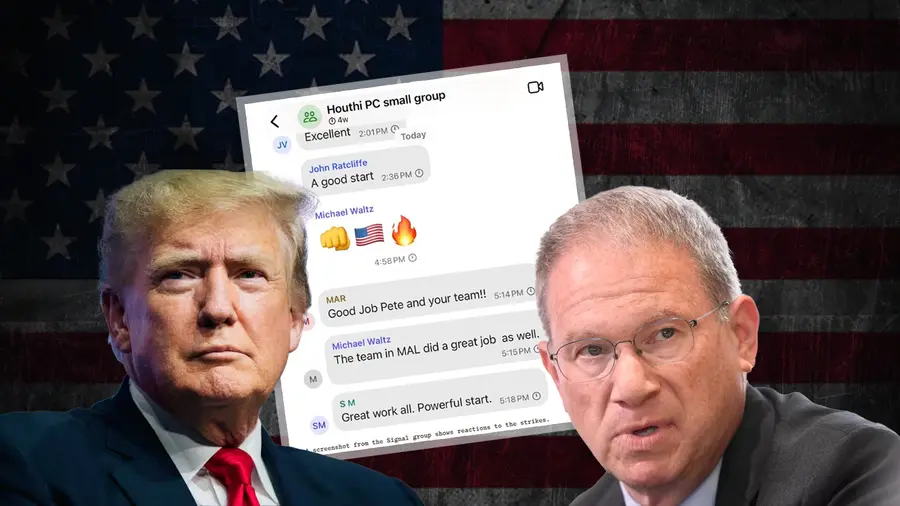
The Trump administration is facing a major national security scandal after inadvertently leaking classified military plans to a journalist at The Atlantic. The breach occurred through a Signal group chat, where The Atlantic’s editor-in-chief, Jeffrey Goldberg, was mistakenly added. The leaked information pertained to a planned US strike on Houthi rebels, sparking nationwide outrage and raising serious concerns about government oversight of classified communications.
The incident has been widely condemned across the political spectrum, with both Democrats and Republicans labelling it a severe national security failure. The White House has since confirmed the breach, marking it as one of the most significant intelligence leaks in recent history.
A Journalist’s Accidental Access to Military Secrets
Goldberg detailed the incident in an article titled 'The Trump Administration Accidentally Texted Me Its War Plans.' He recounted how he received a connection request from a Signal user named “Michael Waltz” — later confirmed to be Trump’s National Security Adviser, Michael Waltz. The group chat included high-ranking officials such as Vice President J D Vance, Defence Secretary Pete Hegseth, Secretary of State Marco Rubio, Director of National Intelligence Tulsi Gabbard, and other key figures in national security and defence.
“I have never seen a breach quite like this,” Goldberg wrote. “While Signal is commonly used by national security officials for logistical matters, it is highly unusual—if not completely unprecedented—for such a platform to be used for detailed discussions of an imminent military operation. And, of course, I have never heard of a journalist being invited to such a conversation.”
The Signal group, named 'Houthi PC Small Group,' contained explicit discussions about the planned strike, including weapons packages, target locations, and the operation’s timing—just two hours before execution. Screenshots shared by Goldberg also revealed internal disagreements within the administration over the operation, particularly between Vice President Vance and President Trump.
Internal Conflict Exposed
A message attributed to Vice President Vance at 8:16 AM on March 14 read: “Team, I am out for the day doing an economic event in Michigan. But I think we are making a mistake.” Vance’s account further expressed concern over the potential economic and geopolitical ramifications of the strike, particularly its impact on global trade and oil prices:
“Three percent of US trade runs through the Suez. Forty percent of European trade does. There is a real risk that the public doesn’t understand this or why it’s necessary. The strongest reason to do this is, as POTUS said, to send a message.”
The most striking part of the exchange came when Vance noted:
“I am not sure the president is aware of how inconsistent this is with his message on Europe right now. There’s a further risk of a moderate to severe spike in oil prices. I am willing to support the consensus of the team and keep these concerns to myself, but there is a strong argument for delaying this a month, doing the messaging work on why this matters, seeing where the economy is, etc.”
In response to the controversy, the White House released a statement defending the administration’s national security team. William Martin, a spokesperson for Vance, insisted that the vice president was fully aligned with the president, stating:
“The Vice President’s first priority is always making sure that the President’s advisers are adequately briefing him on the substance of their internal deliberations. Vice President Vance unequivocally supports this administration’s foreign policy.”
Legal and Security Ramifications
The leak raises serious concerns about the administration’s handling of classified information. Sharing national security details on an unauthorised platform is a potential violation of the Espionage Act. Moreover, Goldberg reported that Waltz had set some messages in the Signal group to disappear after a week, while others were timed to delete after four weeks. This raises additional questions about whether officials violated federal records laws, as text messages discussing official acts are considered government records that must be preserved.
Brian Hughes, a spokesperson for the National Security Council, later confirmed the authenticity of the Signal group messages. “This appears to be an authentic message chain, and we are reviewing how an inadvertent number was added to the chain,” Hughes said. “The thread is a demonstration of the deep and thoughtful policy coordination between senior officials. The ongoing success of the Houthi operation demonstrates that there were no threats to troops or national security.”
Trump’s Response: Distancing Himself from the Scandal
President Trump has attempted to distance himself from the incident, claiming he was unaware of the breach. “I don’t know anything about it,” Trump told reporters when asked about The Atlantic’s report.
However, this breach raises urgent national security concerns regarding the administration’s use of encrypted messaging platforms for classified discussions. The incident underscores vulnerabilities in the government's communication protocols and highlights the potential for human error to cause catastrophic security lapses. With lawmakers demanding accountability, this scandal is likely to have far-reaching implications for how national security information is handled in the future.
Tags



Related News
Dont Miss it










0 comments