
The Tariff War and the Crumbling Mask of Free Trade

Anjali Ganga
Published on Aug 01, 2025, 03:15 PM | 5 min read
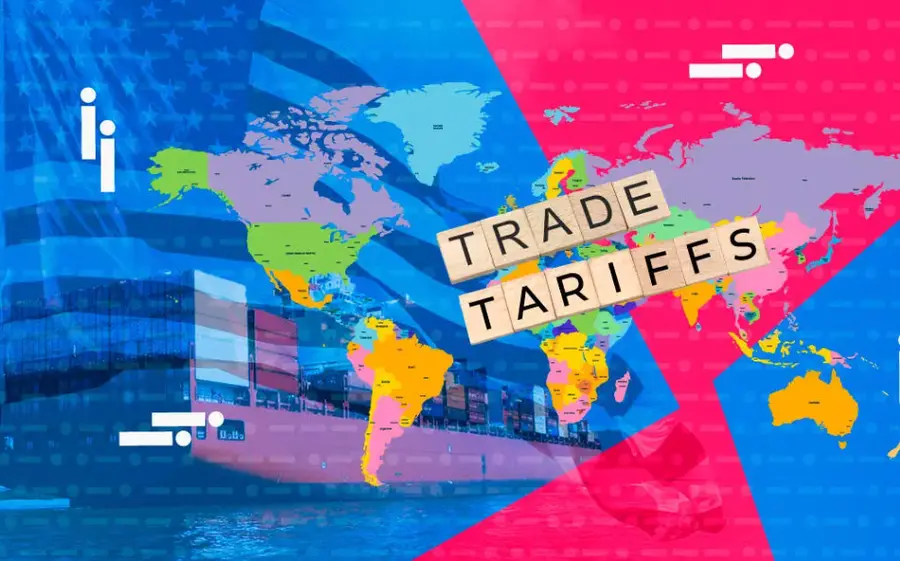
Washington: The United States has once again revealed the true face of imperialism. Under the false banner of protecting domestic industry President Donald Trump has unleashed a new wave of tariffs targeting countries across the world with rates as high as 39 percent. This is not about trade balance or negotiation. It is the violent assertion of dominance by a capitalist core that cannot maintain control without punishing the periphery. These tariffs are not mere numbers. They are weapons. And they will inflict real suffering on real people in real places.
Switzerland a country deeply embedded in global financial flows woke up on its national day to a 39 percent tariff. It had expected 31. Now its pharmaceutical exports its watch industry and high value precision goods face ruinous costs entering the US market. Jobs will be lost. Factory output will slow. And yet Switzerland is one of the least politically combative trade partners. The message is clear. Even submission offers no protection under a system where profit trumps principle.
Canada is punished even more directly. Tariffs have jumped from 25 to 35 percent. Trump accused Ottawa of failing to curb drug trafficking. In truth this is economic revenge masked as moral outrage. Canadian lumber steel machinery and vehicle components now face a sharp drop in competitiveness. Working class Canadians in manufacturing hubs will pay first with job cuts and then with rising costs of consumer goods as producers shift losses onto households.
In Southeast Asia the picture is equally grim. Malaysia managed to bring down its tariff to 19 percent but the cost is hidden in concessions. Halal certification and government procurement became bargaining chips. These are not trade issues. They are sovereignty issues. Malaysia must now import American goods it did not choose while its exporters face thin margins in a dollar -dominated market. Local industries will struggle to compete. Food processing electronics agriculture, all will feel the pinch.
Cambodia hailed the reduction from 49 to 19 percent as a victory. In truth it was a rescue from the edge of the cliff. Cambodia agreed to drop all tariffs on US goods. It will buy ten Boeing jets. It will accept American surveillance of its economic policy under the guise of cooperation. The Cambodian people will see imported goods flood their markets undermine local producers and tighten the grip of dependency. This is not a deal. It is submission wrapped in ribbon.
Thailand followed a similar path. From 36 percent to 19 percent. But the terms are opaque. A recent ceasefire with Cambodia helped secure the agreement. Trump had threatened to block the deal if fighting continued. Trade here was used not as diplomacy but as coercion. The result is a reduction in revenue for Thai exporters. Electronics textiles and processed food companies face profit erosion. The Thai peasantry will see none of the benefit and much of the burden.
Australia kept its 10 percent rate. It celebrated. But celebration hides the quiet violence of complicity. Australia never imposed tariffs on US goods. It stayed quiet did not resist and received the minimum penalty. Yet its exporters remain tied to an empire that dictates terms without reciprocity. Wine wheat meat and mining exports will still see reduced profit margins and job volatility. Australia remains the obedient junior partner in the imperial club.
Japan’s tariff was lowered to 15 percent. But the damage is already done. Auto parts electronics precision instruments, all now costlier in the US market. Small manufacturers will lose contracts. Workers will be laid off. Japan was forced to accept the deal while still demanding the US implement its own promises. This is the illusion of partnership under US hegemony. Japan is not an equal actor. It is a dependent node in the imperialist value chain.
Taiwan negotiated down from 32 to 20 percent. It calls the current rate unacceptable. Taiwan’s entire economy is built around exports to the US and China. Tariffs here threaten the fragile tech sector. Semiconductor firms face pressure to relocate. Small businesses will be hit hardest. Meanwhile Taiwan ties trade to security pleading for continued American support as it walks the line between annexation and abandonment. In a capitalist world even national survival becomes a commodity.
New Zealand is furious. Its tariff rose from 10 to 15 percent. The country has a modest trade deficit with the US. It exports meat dairy and agricultural machinery, sectors highly sensitive to pricing. A five percent rise could destroy profit margins for hundreds of small farmers. Rural regions may see closures of processing units layoffs and increased emigration. And yet New Zealand has no bargaining power. It is small and dependent. That is all that matters under global capital.
These countries are not victims of random policy. They are the casualties of a decaying imperial core that can no longer extract enough value from labour at home and must now do so abroad. Tariffs are not protective measures. They are extraction mechanisms. They force weaker states to accept more expensive market access make unilateral concessions and open their borders to American surplus. They hollow out local industries to keep Wall Street and corporate America profitable.
What Trump calls a trade reset is in fact a global shakedown. It is the methodical redistribution of crisis downward from the capitalist core to the periphery. And every tariff imposed is ultimately paid not by governments but by workers. In factories in farms in ports in shops. Jobs will be lost. Prices will rise. Public revenue will shrink. The IMF and World Bank will follow close behind offering loans that will chain these countries deeper into the system that just wounded them.
This is how monopolist state functions in the twenty first century. Not always through bombs though they are ready but through spreadsheets contracts tariffs and aircraft deals. This is not the failure of capitalism. It is its natural expression. Profit through domination growth through plunder peace through submission.



Related News
Dont Miss it









0 comments